By John Breech | CBS Sports
October 13, 2026
The Buffalo Bills secured one of the most exhilarating victories of the 2026 NFL season on Monday night, edging out the Los Angeles Rams in a 37-34 overtime thriller. However, in a stark reminder that professional football is as much about psychological warfare as it is physical prowess, the most significant fireworks occurred not during the game, but moments after the final whistle. As the adrenaline of a hard-fought contest lingered, a post-game jersey exchange spiraled into an ugly, physical confrontation that has now placed Rams starting left tackle Alaric Jackson under the microscope of the league office.
The Anatomy of an Altercation: A Chronology of Events
The atmosphere at Highmark Stadium was electric as the clock hit zero, marking a pivotal win for Buffalo. Following the standard post-game pleasantries, players from both sidelines began the ritualistic jersey exchange—a symbol of mutual respect between professionals.
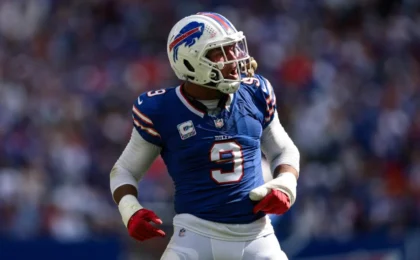
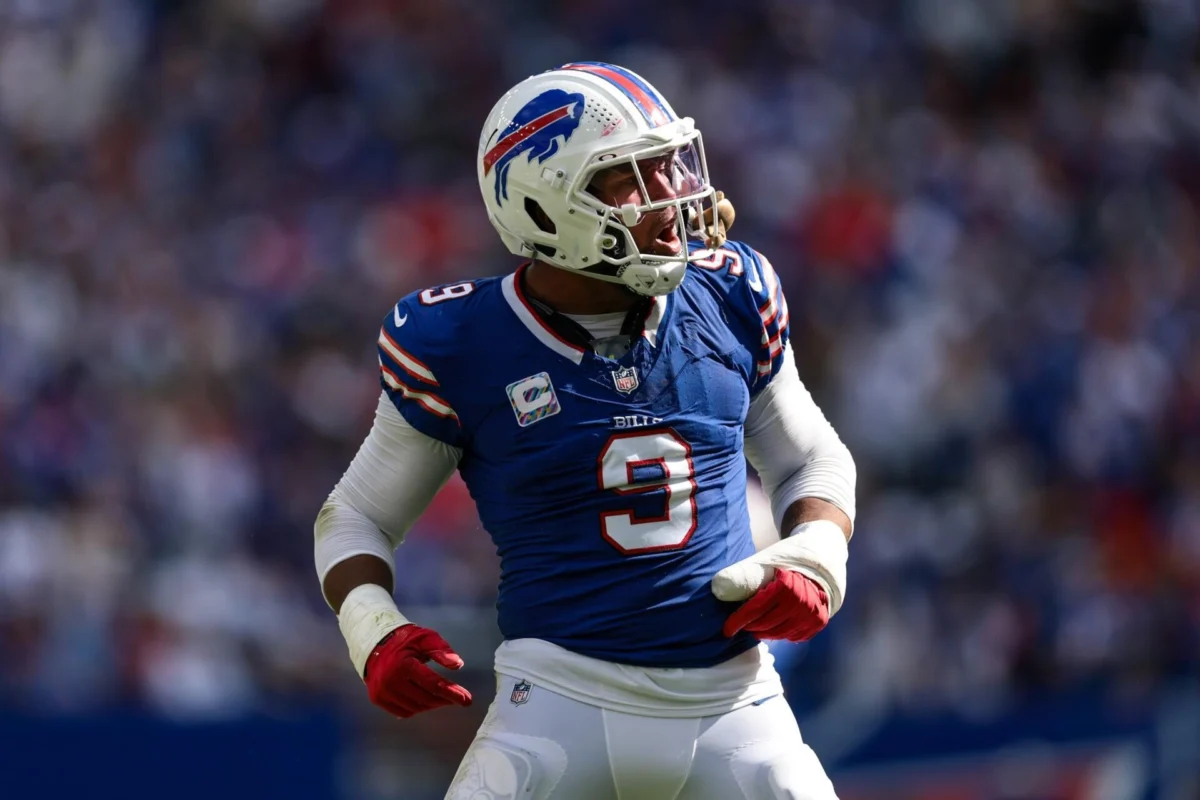
According to eyewitness accounts and high-definition broadcast footage, Rams offensive lineman Alaric Jackson was in the process of swapping jerseys with Bills defender Deone Walker. The exchange appeared cordial until Bradley Chubb, the Bills’ formidable pass-rusher, began directing sharp, inflammatory remarks toward Jackson.
What began as standard post-game trash talk escalated rapidly. Jackson, seemingly agitated by Chubb’s commentary, abandoned his exchange with Walker. He strode purposefully toward the Bills’ sideline, invading Chubb’s personal space. The verbal jousting intensified, with both players exchanging heated words in the center of the field.
The situation deteriorated into physical violence when Jackson delivered a blatant, sudden sucker-punch to Chubb’s face. The impact was clear, and the immediate reaction from surrounding personnel prevented a full-scale bench-clearing brawl. Teammates from both squads swarmed the area, physically restraining the combatants and shielding them from further conflict. The incident effectively soured the conclusion of what had been an exemplary display of competitive football.
Supporting Data and Historical Precedent
The NFL has long maintained a "zero-tolerance" policy regarding post-game conduct that threatens the safety of players and officials. The league’s disciplinary committee is now expected to weigh the severity of Jackson’s actions against established precedents.
The timing of the incident is particularly ironic. Exactly one year to the day prior—October 12, 2025—the NFL issued a one-game suspension to Detroit Lions safety Brian Branch for his role in instigating a post-game brawl against the Kansas City Chiefs. The league’s decision in that case was intended to send a message that the game’s conclusion does not serve as a "safe harbor" for extracurricular violence.
Furthermore, Alaric Jackson is not a stranger to league disciplinary scrutiny. In 2024, Jackson served a two-game suspension following a violation of the NFL’s personal conduct policy. This history of disciplinary issues will likely weigh heavily on the league’s final determination. Repeat offenders are typically subject to more stringent penalties, and the league may view this latest outburst as a disregard for the behavioral standards expected of a veteran starter.
The Players’ Perspectives
Following the skirmish, both Chubb and Jackson were subjected to media scrutiny regarding their roles in the incident. Bradley Chubb, speaking with reporters as he exited the locker room, adopted a somewhat dismissive tone, attributing the volatility to the intensity of the matchup.
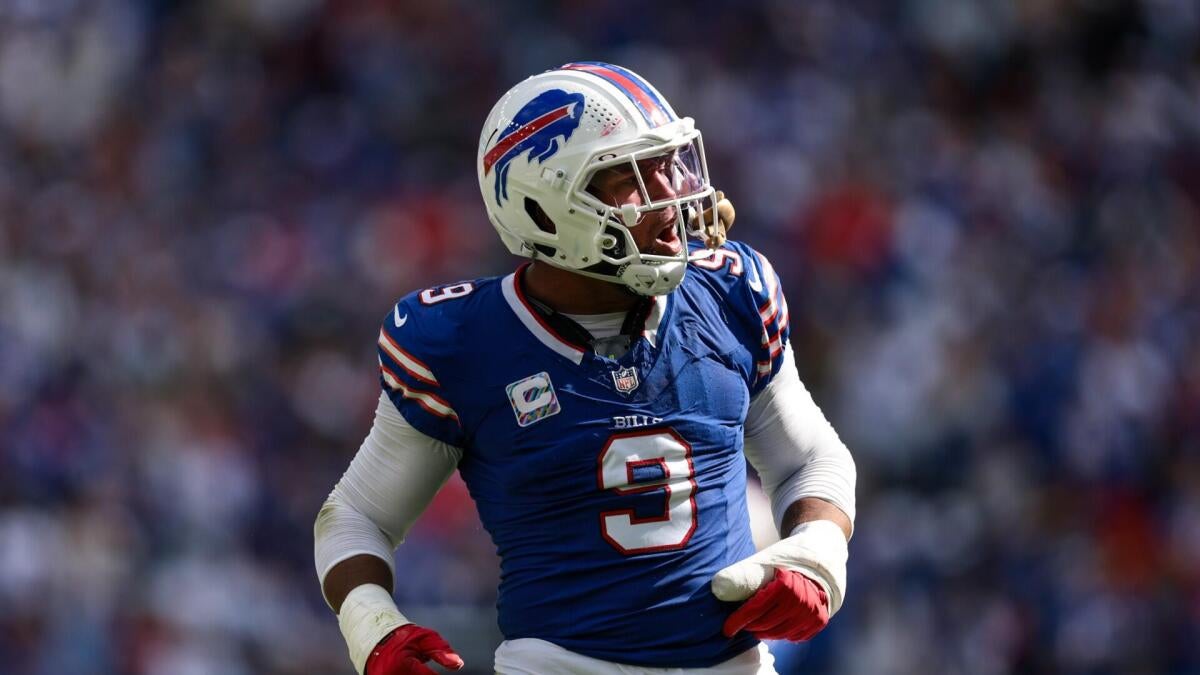
"Just emotions. You know what I mean," Chubb stated in an interview with the California Post. "It was a close game. They always catch the second guy, so I let him swing and my teammates held me back, so I just chilled."
When pressed on whether the hostility was directed solely at Jackson, Chubb revealed that his trash talk was widespread. "It was just the whole team," he admitted. While Chubb finished the contest with a relatively modest stat line—recording only two tackles—his contribution to the Bills’ defensive strategy was clearly intended to unsettle the Rams’ offensive line throughout the evening. His admission suggests that the confrontation was the culmination of a four-quarter psychological battle rather than an isolated moment of anger.
Official Responses and League Implications
As of early Tuesday morning, the NFL has not released a formal statement detailing the specific sanctions Jackson might face, though an investigation is widely considered to be underway. The league office is currently reviewing broadcast angles, stadium security footage, and reports from the officiating crew present on the field.
The implications of a potential suspension are significant for the Los Angeles Rams. Losing a starting left tackle—a premier position on the offensive line—during the middle of the season poses a substantial challenge to the team’s continuity and protection of the quarterback. Should the NFL opt for a multi-game suspension, the Rams will be forced to shuffle their roster, potentially destabilizing an offense that is already fighting to stay relevant in a crowded NFC playoff picture.
For the Bills, the incident serves as a distraction in what should be a week of celebration. Head coach Sean McDermott will likely face questions regarding his team’s involvement in the exchange, specifically regarding Chubb’s role as a provocateur. While the NFL rarely suspends players for "talking," the league may evaluate whether Chubb’s persistent trash talk violated the spirit of the NFL’s sportsmanship guidelines, even if it does not reach the threshold of a physical offense.
The Broader Culture of Post-Game Conduct
This incident raises deeper questions about the "wild" nature of the modern NFL. As the league continues to prioritize player safety—implementing strict rules regarding helmet-to-helmet contact and unnecessary roughness—the culture of post-game behavior remains a gray area.
The "jersey swap" tradition, meant to cultivate camaraderie, is increasingly becoming a flashpoint for tension. When players are still vibrating with the adrenaline of a 37-34 overtime result, the transition from "warrior" to "colleague" is not always seamless. Analysts have suggested that the league may consider implementing stricter protocols for post-game interactions, perhaps requiring players to return to their respective locker rooms before interacting with opponents, or keeping a larger security presence on the field until both teams have cleared the playing surface.
Conclusion: A Lingering Shadow
As the NFL moves forward with its review, the incident at Highmark Stadium serves as a stark reminder of the thin line between intense competition and prohibited conduct. Alaric Jackson’s decision to throw a punch has effectively eclipsed the athletic achievements of the night, shifting the conversation from the Bills’ overtime heroics to the league’s disciplinary mandates.
Whether this results in a fine, a suspension, or a stern warning remains to be seen. However, one thing is clear: in the NFL, the game is never truly over until the players are safely inside the locker room. For Alaric Jackson and the Rams, the fallout from Monday night’s final play may prove to be far more damaging than the loss on the scoreboard. The league’s final ruling will be highly anticipated, as it will signal just how much authority the NFL intends to exercise over the post-game environment for the remainder of the 2026 season.