As autumn leaves settle across the country, the traditional seasonal cooling of the housing market is taking on a different character in 2026. For the past two years, analysts have pointed to a "sluggish" environment, but as the final quarter of 2026 approaches, the trends that defined the previous year have not only persisted—they have calcified. With prospective buyers sidelined by prohibitive monthly costs and sellers hesitant to relinquish their pre-existing low-rate mortgages, the American housing market is currently caught in a complex web of geopolitical, economic, and logistical friction.
The State of the Market: A Summary of Key Realities
The current housing landscape is defined by a paradoxical "push-pull" dynamic. While sales volumes have plummeted to their lowest levels in over a decade, inventory is beginning to creep upward, creating a fragile environment that is neither a pure buyer’s market nor a seller’s domain.
- Median Sale Price: $393,895 (a 1.3% increase year-over-year).
- Mortgage Rates: Hovering at a 30-year fixed average of 7.48% as of mid-October.
- Inventory Levels: Over 1.5 million homes are currently listed, the highest volume since the pandemic-era lows.
- Market Sentiment: High levels of caution among consumers due to AI-driven labor fears, tariff uncertainty, and global inflationary pressures.
For the average American, the central question—"Should I buy now or wait?"—has become increasingly difficult to answer. While financial experts generally agree that the market is currently "unfrozen" in terms of inventory, the cost of entry remains a formidable barrier for the middle class.
A Chronology of the 2026 Housing Stall
To understand why the market is currently in this state, one must look at the progression of the last 24 months.
2025: The Slow Descent
The year 2025 began with the hope that mortgage rates would stabilize after the volatility of 2024. However, the market entered a period of stagnation. Transaction volumes remained low as the "lock-in effect"—where homeowners with 3% interest rates refused to sell—tightened its grip on the available housing stock.
Early 2026: The Geopolitical Shock
The landscape shifted dramatically in March 2026. Escalating conflicts in the Middle East sent global oil prices into a tailspin. As energy costs rose, so did inflation expectations. This, coupled with bond market jitters, forced mortgage rates out of the 6.1%–6.3% range they had occupied for months, pushing them toward the 7.5% threshold.
Mid-2026: The Economic Whiplash
By the summer of 2026, the housing market began to feel the full weight of external economic forces. Concerns over the integration of Artificial Intelligence in the workforce created a climate of job insecurity for potential first-time buyers. Simultaneously, new trade tariffs introduced uncertainty into the construction sector, slowing the pace of new housing starts and complicating supply chains for home builders.
Fall 2026: The Current Equilibrium
We are currently in a state where inventory is slowly accumulating—partly because buyers are retreating—but prices are refusing to crater. This is largely because sellers, while recognizing the cooling demand, are not yet desperate enough to offer significant price cuts, except in specific regions like the Sun Belt.
Supporting Data: The Mechanics of Affordability
The primary driver of the current market paralysis is the direct relationship between mortgage rates and monthly debt service. With the 30-year fixed rate at 7.48%, the cost of borrowing has fundamentally altered the math of homeownership.
Price Growth vs. Historical Norms
While headlines often focus on high prices, the rate of appreciation has decelerated. From 2012 to early 2020, home prices grew at a consistent clip of roughly 7% annually. Today, that growth has slowed to approximately 1.5% year-over-year. This deceleration suggests that the market is undergoing a prolonged, uneven reset.
The Inventory Imbalance
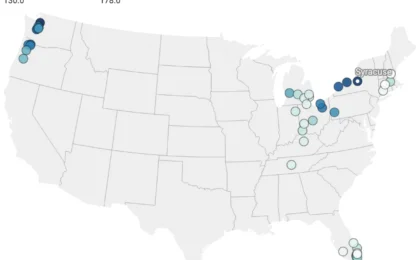
There is currently a bifurcation in the market. In regions like Austin, Texas, and parts of Florida, new construction has led to a surplus of inventory, shifting power to the buyer. Conversely, in the Northeast and the Midwest, particularly in cities like Rochester and Buffalo, supply remains scarce. In these regions, high demand for entry-level, affordable housing continues to drive competition and maintain elevated price floors.

Official Responses and Expert Analysis
Daryl Fairweather, Chief Economist at Redfin, suggests that the market is not necessarily "broken," but rather "highly segmented."
"Now is a good time to buy a home, if you can afford it," Fairweather notes. "High prices are keeping many buyers on the sidelines, which ironically gives those who remain much more leverage to negotiate. We are seeing a market where the ultra-wealthy are continuing to transact, while the middle class is being squeezed by both rates and a lack of inventory."
Chen Zhao, Head of Economics Research at Redfin, emphasizes the role of the global energy crisis. "Mortgage rates have skyrocketed since March almost entirely because of the conflict in the Middle East and its effects on energy prices and bond yields. As oil prices have shot up, investor skittishness has risen in tandem. This has created a bind where neither buyers nor sellers feel they have the upper hand, leading to the current stalemate."
The Strategic Implications for Buyers
For those currently navigating the market, the strategy has shifted from "finding a deal" to "ensuring long-term financial stability."
1. The Power of Negotiation
Because demand has dropped significantly, buyers who are prepared—with pre-approval and a clear financial runway—are finding that they have more leverage than they have had in years. Sellers are increasingly open to concessions, such as covering closing costs or funding repairs, to close a deal that might otherwise fall through.
2. The Risk of Waiting
While some buyers are waiting for rates to fall, economists warn that this strategy carries its own risks. If inflation subsides and rates do drop, it is likely that a "flood" of sidelined buyers will re-enter the market simultaneously. This surge in competition could trigger a new round of price appreciation, potentially negating the savings gained from a lower mortgage rate.
3. Climate and Geographic Risk
A critical, often overlooked factor in 2026 is the impact of environmental risk on homeownership costs. As insurance companies in states like California and Florida adjust to the realities of climate change, the cost of homeowners’ insurance has become a significant, non-negotiable line item. Buyers must now perform "climate due diligence" as rigorously as they perform a home inspection.
Conclusion: Is Now the Right Time for You?
The decision to buy a home in late 2026 should be predicated on personal circumstances rather than market timing. The macroeconomic environment—characterized by fluctuating tariffs, labor market volatility, and geopolitical instability—is unlikely to resolve in the immediate future.
If you have a stable income, a robust emergency fund (ideally 3–6 months of expenses), and a long-term commitment to a specific location, the current market offers a rare opportunity to purchase without the "frenzy" conditions of previous years. You may pay a higher interest rate than in 2021, but you are also less likely to be forced into an over-asking-price bidding war.
Ultimately, the housing market of 2026 is a test of preparation. For the buyer who is well-capitalized and informed, the lack of competition is an advantage. For the buyer stretching their budget to the limit, the current economic climate demands extreme caution. As the year closes, the most successful buyers will be those who view their purchase not as a short-term investment, but as a decade-long commitment to their financial and personal future.