Main Facts
More than a year after the permanent statutory authority for federal cybersecurity information-sharing protections officially expired, a high-stakes legislative standoff in the United States Senate continues to stall long-term reauthorization. The law in question—the Cybersecurity Information Sharing Act of 2015 (CISA 2015)—serves as the foundational legal bedrock enabling private companies and public agencies to exchange real-time cyber threat intelligence without the fear of civil liability or regulatory prosecution.
Despite widespread bipartisan and bicameral consensus regarding the legal framework’s strategic necessity, the statutory protections expired at the close of fiscal year 2025. Since the original sunset, the program has survived solely through a patchwork of short-term extensions attached to broader continuing resolutions (CRs). This stopgap approach leaves the nation’s public-private cybersecurity defense posture tethered to recurring fiscal cliffhangers and volatile government funding battles.
+-----------------------------------------------------------------------------------+
|                            CISA 2015 STANDOFF AT A GLANCE                         |
+-----------------------------------------------------------------------------------+
|  Original Sunset:           End of Fiscal Year 2025                               |
|  Current Status:            Kept alive through temporary Continuing Resolutions   |
|  Primary Senate Stumbling:  Amendment demand by Sen. Rand Paul regarding executive |
|                             agency communication with social media platforms       |
|  Bipartisan Target:         10-year reauthorization through fiscal year 2035      |
|  Industry Impact:           Chilled adoption by new members, delayed statutory     |
|                             modernization for Artificial Intelligence threats     |
+-----------------------------------------------------------------------------------+
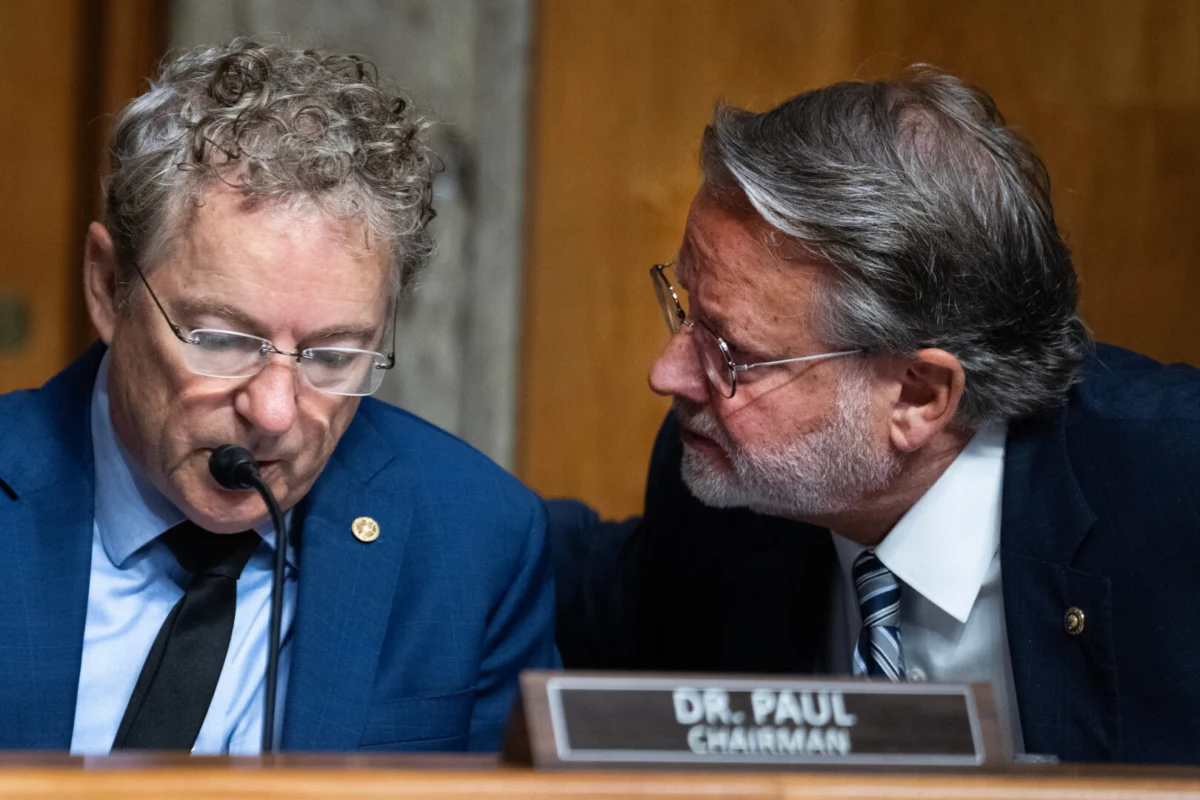
At the core of the ongoing Senate gridlock is Senate Homeland Security and Governmental Affairs Committee (HSGAC) Chairman Rand Paul (R-Ky.), who has single-handedly blocked long-term extension bills from reaching the floor. Senator Paul is conditioning his support on the adoption of an amendment designed to strictly restrict federal law enforcement and intelligence agencies—specifically the Federal Bureau of Investigation (FBI) and the Department of Homeland Security (DHS)—from communicating with social media platforms regarding content moderation.
Meanwhile, federal cybersecurity infrastructure faces compounding operational pressures under the second Trump administration. A leadership vacuum at DHS’s Cybersecurity and Infrastructure Security Agency (CISA)—which has lacked a Senate-confirmed director since President Donald Trump’s second inauguration—coupled with federal budget cuts, has diminished public threat alerts and slowed technical analysis at the National Institute of Standards and Technology (NIST). Consequently, cybersecurity professionals warn that political inertia in Washington is exposing critical national infrastructure to heightened operational risks.
Chronology
The legislative trajectory of CISA 2015 reflects a decade-long evolution of federal cybersecurity policy, marked by growing political friction over government surveillance, online speech, and federal agency oversight.
CISA 2015 LEGISLATIVE TIMELINE

  2015                     Late FY2025             Fall 2025                 Present / Midterms
---|----------------------------|-----------------------|----------------------------------|--->
   |                            |                       |                                  |
 Enactment of               Original Sunset         Partial Government         Standoff persists;
 CISA 2015                  Expires; Shift to       Shutdown; Competing        Action likely pushed
 Statute                    Short-Term CRs          Reauthorization Bills      to 120th Congress
1. Enactment and Operational Foundation (2015)
Congress enacted the Cybersecurity Information Sharing Act in 2015 to solve a persistent corporate dilemma: private organizations hesitated to share technical indicators of cyber breaches with government authorities or market competitors due to severe legal exposure. CISA 2015 created explicit legal safe harbors, offering immunity from civil lawsuits and regulatory antitrust actions for companies that share standardized threat metrics through designated government portals.
2. Statutory Sunset and Emergency Stopgaps (Late FY2025)
When the statute’s primary sunset clause took effect at the end of fiscal year 2025, efforts to pass a multi-year extension stalled. To prevent an abrupt total lapse in legal protections for private sector partners, lawmakers resorted to rolling short-term extensions embedded within emergency Continuing Resolutions.
3. Committee Escalation and Escalating Standoff (Fall 2025)
During a partial government shutdown in the fall of 2025, legislative friction reached a flashpoint. HSGAC Ranking Member Sen. Gary Peters (D-Mich.) introduced renewed multi-year extensions, while House Homeland Security Committee Chairman Andrew Garbarino (R-N.Y.) advanced a parallel bipartisan measure through his chamber. However, Senator Paul abruptly canceled a planned Senate committee markup session that was slated to address the reauthorization, cementing a legislative impasse that lasted through the remainder of the session.
4. Pushed to the 120th Congress
With the congressional calendar heavily constrained following the midterm elections, senior lawmakers acknowledge that a permanent resolution for CISA 2015 will inevitably be deferred to the incoming 120th Congress.
Supporting Data and Technical Analysis
While the baseline mechanics of threat-sharing have survived under temporary CR extensions, industry leaders emphasize that statutory instability creates real-world operational friction.
Corporate Uncertainty and the Market "Chilling Effect"
According to Michael Daniel, President and CEO of the Cyber Threat Alliance—a non-profit industry coalition enabling automated operational threat exchange—the primary damage caused by short-term extensions is structural rather than immediate.
"Uncertain status possibly discourages new organizations from starting or ramping up their cybersecurity information sharing."
— Michael Daniel, President & CEO, Cyber Threat Alliance
While established cyber defense networks continue routine operations, risk-averse legal counsel at prospective member companies hesitate to clear new information-sharing protocols without a permanent statutory guarantee.
OPERATIONAL IMPACT OF STATUTORY UNCERTAINTY
+-----------------------------------------------------------------------+
| Impact Area              | Direct Effect                              |
+--------------------------+--------------------------------------------+
| Established Exchanges    | Maintain core threat-sharing operations    |
| New Market Entrants      | Chilled participation due to legal uncertainty|
| Statutory Definitions    | Outdated; excludes specialized AI threats |
| Vulnerability Management | Slower NIST NVD enrichment timelines      |
| Public Sector Alerts     | Reduced output from DHS CISA               |
+-----------------------------------------------------------------------+
The Urgent Requirement for AI-Specific Modernization
A major limitation of relying on an unamended 2015 statute is its inability to account for modern threat vectors, particularly those driven by Artificial Intelligence (AI).
Cybersecurity researchers note that while the original 2015 definitions broad-spectrum cover traditional malicious code, IP addresses, and phishing indicators, the law lacks explicit safe harbor parameters for modern AI-centric attacks, such as:
- Model Distillation Attacks: Attempts by adversaries to reverse-engineer proprietary frontier AI models by systematically querying their application programming interfaces (APIs).
- Data Poisoning and Prompt Injection: Tactic-level attacks aimed at compromising machine learning training pipelines and operational guardrails.
Daniel pointed out that while existing statutory language could be interpreted by courts to cover AI threats, statutory updates are crucial:
"Could I make a good argument that the definitions in the existing CISA statute could cover a lot of what we need for AI? Yes. Do I think the statute would benefit from being updated, to include definitions related to things like distillation attacks? Absolutely."
Public Sector Resource Depletion
The statutory delay occurs alongside structural resource shifts across federal cyber entities. During the second Trump administration, fiscal year 2026 budget negotiations resulted in reduced appropriations for DHS’s CISA. The White House had sought deep spending reductions, and while Congress ultimately passed a smaller cut, the structural budget decrease has had immediate ramifications:
- Decreased Alert Volume: Lower staffing levels at CISA have slowed the processing and public release of situational cyber alerts.
- NIST Vulnerability Lag: Reduced federal resources forced the National Institute of Standards and Technology (NIST) to limit context-enrichment services within the National Vulnerability Database (NVD), focusing only on a subset of high-priority technical vulnerabilities.
Official Responses and Political Statements
The debate over CISA 2015 reauthorization highlights conflicting interpretations of free speech, executive authority, and national security responsibilities.
KEY LEGISLATIVE PLAYERS & POSITIONS

+---------------------------+---------------------------+---------------------------+
| SEN. RAND PAUL (R-KY)     | SEN. GARY PETERS (D-MICH) | REP. ANDREW GARBARINO     |
| HSGAC Chairman            | HSGAC Ranking Member      | House Homeland Chairman   |
+---------------------------+---------------------------+---------------------------+
| Demands anti-censorship   | Opposes non-pertinent     | Authored bipartisan House |
| amendment blocking federal| riders; calls Paul the    | bill reauthorizing CISA   |
| agencies from contacting  | primary impediment to     | 2015 through 2035 with    |
| social media platforms.   | long-term extension.      | updated provisions.       |
+---------------------------+---------------------------+---------------------------+
Senator Rand Paul (R-Ky.)
Chairman Paul has maintained an unwavering hold on long-term reauthorization bills, centering his resistance on executive branch interactions with digital platforms. Paul’s position stems from anger over Biden administration attempts to advise social media platforms on removing dis- or misinformation related to COVID-19 and the 2020 presidential election.
In a recent interview, Senator Paul outlined his longstanding condition for releasing his hold:
"The amendment would protect freedom of speech and prevent the government from trying to restrict speech by sending the FBI to Twitter headquarters or sending the FBI to Facebook and threatening them. That would become illegal."
Paul stated he has offered this amendment for "over two years" during discussions with committee leadership, but complained that those talks have yielded no consensus. He has also frequently conflated the CISA 2015 statute with CISA the agency, viewing both through the lens of potential government overreach.
Senator Gary Peters (D-Mich.)
Ranking Member Peters, who authored two separate bipartisan reauthorization bills, strongly rejected Paul’s tactics, arguing that introducing free-speech riders into a purely technical cyber liability law paralyzes critical national defenses.
Addressing the ongoing legislative block, Peters stated:
"[Paul] has not allowed any kind of long-term extension to be put forward. He continues to be the impediment. Unless he changes his mind, it’ll still be difficult."
Peters’ proposed legislation includes two legislative tracks:
- Clean Reauthorization: A straightforward 10-year extension through fiscal year 2035.
- The Protecting America from Cyber Threats Act: A fall 2025 bill introduced during the partial government shutdown that reauthorizes the law through 2035, renames the program, and applies liability protections retroactively to close any legal gaps experienced during statutory lapses.
Representative Andrew Garbarino (R-N.Y.)
House Homeland Security Committee Chairman Garbarino has led parallel efforts in the House of Representatives. His committee unanimously advanced a bipartisan reauthorization bill through 2035 with targeted structural updates.
Titled the Widespread Information Management for the Welfare of Infrastructure and Government Act, Garbarino’s bill offers a compromise solution by updating operational frameworks while avoiding broad, unrelated social media mandates. However, the House leadership has yet to bring the bill to the floor for a full vote.
Implications
The continued legislative stall over CISA 2015 carries significant policy implications for public-private security posture, industry confidence, and congressional committee organization.
+-----------------------------------------------------------------------------------+
|                        POTENTIAL SCENARIOS FOR THE 120TH CONGRESS                 |
+-----------------------------------------------------------------------------------+
| Scenario A: GOP Retains Senate Majority                                           |
|   • Sen. Rand Paul remains HSGAC Chairman OR moves to HELP Committee chair.        |
|   • If Paul stays, CISA 2015 extension remains blocked without speech amendment.   |
|                                                                                   |
| Scenario B: Democrats Win Senate Majority                                         |
|   • Democratic leadership takes control of HSGAC (Sen. Gary Peters retiring).      |
|   • Sen. Maggie Hassan (D-N.H.) positioned as potential chair to advance bill.    |
|   • Higher probability of passing an AI-ready, 10-year clean extension.          |
+-----------------------------------------------------------------------------------+
1. Shifts in Congressional Leadership
The ultimate fate of CISA 2015 depends heavily on the organizational composition of the incoming 120th Congress following the midterm elections:
- If Republicans maintain control of the Senate: Senator Paul could remain as Chairman of the Homeland Security Committee, extending the current impasse unless a compromise is reached on his speech amendment. Alternatively, Paul could choose to take the chair of the Senate Health, Education, Labor and Pensions (HELP) Committee, a vacancy created by the departure of Sen. Bill Cassidy (R-La.). Such a committee shift would open the door for a new Republican HSGAC chairman who might prioritize passing a clean cyber bill.
- If Democrats capture the Senate majority: Control of HSGAC would flip. With Senator Peters retiring from the Senate, Sen. Maggie Hassan (D-N.H.)—the second most senior Democrat on the committee and a primary co-sponsor of the 10-year extension bill—would be a top contender to lead the committee and champion the reauthorization effort.
2. Emerging AI Threats vs. Outdated Statutory Frameworks
Delaying a comprehensive reauthorization prevents Congress from adapting federal cyber laws to counter emerging AI risks. Without explicit statutory updates protecting intelligence-sharing related to algorithmic vulnerabilities, machine learning model theft, and automated threat vectors, private technology firms face heightened legal uncertainty when defending modern software architecture.
3. Degradation of Strategic Public-Private Partnerships
Relying indefinitely on temporary Continuing Resolutions undermines trust between corporate entities and the federal government. Private sector defense operators require long-term statutory certainty to justify continuous financial and structural investments in automated threat sharing. If CISA 2015 remains tied to broader political battles over government funding and social media moderation, public-private cybersecurity integration risks fragmenting just as sophisticated cyber threats continue to accelerate.