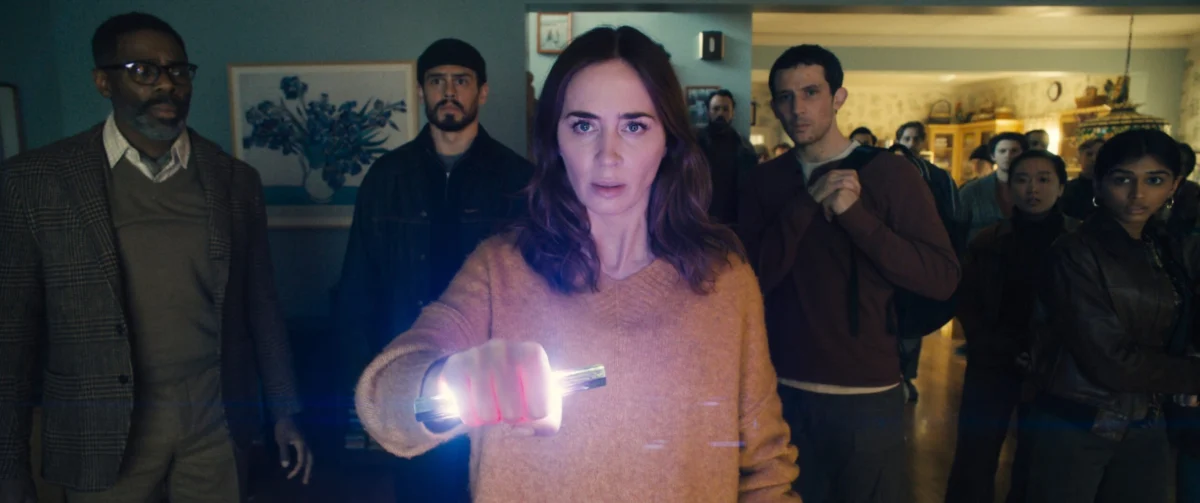
In the pantheon of cinema history, few partnerships have achieved the mythic status of Steven Spielberg and John Williams. For over half a century, their collaboration has defined the soundscape of modern film, from the ominous, two-note warning of a stalking shark in Jaws to the sweeping, adventurous motifs of Indiana Jones. Now, with the release of Disclosure Day, this historic duo marks a monumental milestone: their 30th feature film collaboration, a partnership that traces its roots back to 1974’s The Sugarland Express.
Yet, there is a palpable sense of finality—or at least transition—surrounding this latest project. At 94 years old, John Williams remains the undisputed titan of film scoring, but the production of Disclosure Day was handled with a level of care and reverence usually reserved for national treasures. While no formal retirement has been announced, the industry is watching closely, fully aware that each new score from the maestro could well be his last.
A Legacy Written in Notes: The 30th Collaboration
The genesis of Disclosure Day was anything but routine. Three years ago, following the emotionally resonant, semi-autobiographical The Fabelmans, whispers circulated that Williams had finally set down his baton for good. He had even gone so far as to suggest a shortlist of successors to Spielberg, perhaps hoping to step away from the grueling demands of feature film composition.
However, Spielberg—a man who has often spoken of his reliance on Williams’ musical intuition to find the "soul" of his films—would not take no for an answer. The director’s persistence paid off, resulting in a score that critics are already calling one of the most restrained and haunting works in the composer’s storied career.
The Production: A Study in Patience and Precision
Understanding that the 94-year-old composer required a more sustainable pace than the industry standard, Spielberg took the extraordinary step of restructuring the production timeline. While most composers are granted a few weeks to deliver a complete score, the Disclosure Day team implemented a six-month recording schedule. This luxury allowed Williams to compose, refine, and record across seven distinct sessions between September 2025 and February 2026.
The sessions took place at the recently christened "John Williams Music Building" at Sony, a fitting venue for the maestro’s latest endeavor. The production process was a masterclass in collaboration, with Spielberg maintaining a constant, active presence. According to those on the soundstage, the dynamic between the two was nothing short of magical—a shorthand developed over 50 years that allowed them to make real-time creative adjustments to the score’s architecture.
The Anatomy of the Sessions
The recording process was marked by extreme secrecy and technical ingenuity. Because the film deals with classified government secrets and extraterrestrial phenomena, no footage was projected in the studio. Instead, Williams, Spielberg, and music editor Ramiro Belgardt worked from a private, shared screen, ensuring that the visual elements of the film remained shielded from the orchestra and technical staff.
The instrumentation was equally deliberate. Williams utilized a traditional 96-piece symphonic ensemble, but with specific, unconventional choices:
- The Bassoon Section: One particularly ominous cue required four bassoons, creating a thick, subterranean texture.
- The Keyboard Palette: Beyond the traditional piano and celeste, Williams incorporated synthesizers to bridge the gap between organic orchestral sound and the film’s "alien" subject matter.
- The Harp Duo: Doubling the harps provided a shimmering, ethereal quality that balanced the darker, more industrial sounds of the brass and strings.
- The Vocal Element: On December 19, a 30-voice female choir joined the ensemble. In a move that defied modern digital mixing trends, Williams insisted that the choir record alongside the orchestra in real-time, capturing a raw, unified resonance that has become a hallmark of his "old-school" approach to film music. Soloist Holly Sedillos was chosen after an extensive search, her voice serving as a haunting through-line from the film’s narrative into the end credits.
The Maestro at Work: Beyond the Podium
Despite health challenges that have seen the composer utilize a wheelchair in recent public appearances, participants in the Disclosure Day sessions report that Williams’ intellectual acuity remains razor-sharp. While the film’s credits formally acknowledge orchestrators William Ross and Randy Kerber—who provided essential support and adaptations—sources close to the production emphasize that Williams orchestrated the entire score himself.
"He was always so gracious and humble," one musician noted. "He was acutely aware of rhythmic flaws and nuances. Sometimes he would obsess over a single note until it felt perfect. Steven was absolutely delighted by the process."
Implications: The Future of the Partnership
At the conclusion of the final recording session on February 20, the atmosphere was one of celebration. As the team shared cake and champagne, Spielberg remarked on the longevity of their bond: "This is our 30th movie together, and we’re still in love."
When asked about the future, Spielberg reportedly shared an idea for his next project, and according to those present, "John just said yes." While Williams’ representatives have maintained that the composer is focusing his energies solely on his writing obligations, the message from the inner circle is clear: as long as his health permits, the partnership that defined the sound of the 20th and 21st centuries will continue.
A Career Without Equal
Disclosure Day marks the 105th theatrical film of John Williams’ career—a career that began in 1958. With 54 Oscar nominations, 5 wins, and 27 Grammys, he is arguably the most decorated composer in the history of the medium. Yet, his influence extends beyond the silver screen. His latest concert piece, "Bravo Gustavo," recently debuted at the Los Angeles Philharmonic, demonstrating that even while scoring blockbusters, his commitment to pure, concert-hall composition remains undiminished.
Mike Knobloch, president of NBC-Universal Music and Publishing, summarized the industry’s collective awe: "This legendary composer, the godfather of modern film scoring, did what we hoped he would do… he created a distinctive, unique, original, and transcendent score. It’s a character in the movie—exhilarating, scary, poetic."
Conclusion: The Soundtrack of Our Lives
As audiences prepare to experience Disclosure Day, they are witnessing more than just a film score; they are witnessing the continuation of a dialogue between two of the greatest creative minds in history. Whether or not this is truly the final chapter for John Williams, the score serves as a powerful reminder of his ability to elevate a narrative from simple storytelling to a profound emotional journey.
In a world of rapidly evolving technology and changing tastes, the "Williams sound"—with its Americana-tinged melodies, sophisticated dissonances, and precise orchestration—remains a gold standard. Should he decide that his work here is finished, he leaves behind a body of work that is not merely an accompaniment to film, but the very heartbeat of modern cinema. For now, however, we can take solace in the fact that, as Spielberg and Williams have proven, some relationships are simply too vital to end.