For those raised within the hallowed, echo-filled halls of conservatories and concert stages, the cinematic depiction of classical music is often a source of quiet—or vocal—agony. We are a demographic that demands authenticity; we wince at the "miming" of a violinist whose bow never quite touches the string, and we scoff at the dramatic flourishes that bear no resemblance to the grueling, often monotonous reality of the profession.
There is a reigning hierarchy in this niche genre. Todd Field’s Tár stands as a titan, a masterpiece that not only understood the ecosystem of high-level conducting but allowed the audience to inhabit its cold, sterile, and brilliant corners. Then there are the films that hit different registers: Mr. Holland’s Opus, which captured the poignant, communal struggle of musical education, and Maestro, Bradley Cooper’s polarizing yet deeply felt portrait of Leonard Bernstein. While the latter skipped over vast swaths of Bernstein’s actual conducting career, its internal logic was strong enough to invite the viewer to fill in the gaps.
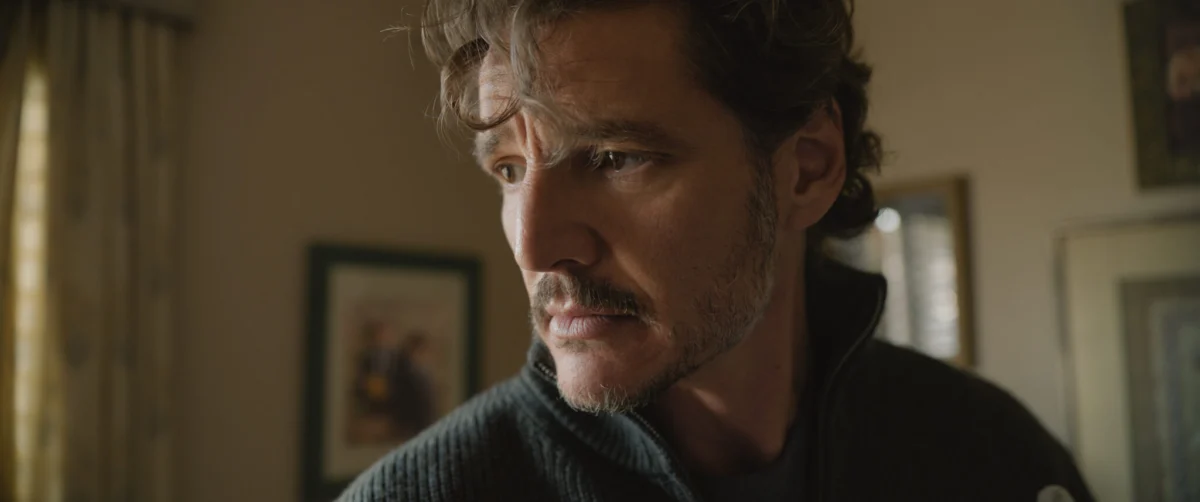
Into this lineage steps Behemoth!, the latest directorial effort from Tony Gilroy. Following his triumphant run as the showrunner for Andor, Gilroy turns his gaze to the life of a professional cellist, played with a disarming, perky mystery by Pedro Pascal. It is a film that demands to be judged by the high standards of the genre—and, remarkably, it succeeds where most fail.
The Modern Reality: From Symphony to Soundtrack
Behemoth! centers on Alex Serian, a renowned musician whose pedigree is as impeccable as it is burdensome. Serian is a former staple of the world’s elite symphony circuits, including a celebrated tenure in Chicago. However, the film wisely steers away from the romanticized, dusty vision of the 20th-century virtuoso. Instead, it places Serian in the precarious reality of the modern freelance musician.
In an era where major symphony orchestras are facing dwindling endowments and stagnating salaries, even the most gifted instrumentalists find themselves chasing "the ink." For Serian, this means pivoting to the high-pressure, high-maintenance world of film score recording. The film presents this transition not as a descent, but as a different kind of performance art. The recording studio is depicted as a corporate battlefield where conductors act as demanding perfectionists—at one point, a prima donna conductor played by Thomas Kretschmann evokes the frantic, mercurial energy of Klaus Kinski on a deadline.
The film’s opening sequence is a masterclass in immersion. It wastes no time, plunging the audience into a sonic environment where the vocabulary is a frantic hybrid of old-world European instruction—pianissimo, sforzando—and the cold, bottom-line jargon of Hollywood: "new ink," "take four," and "fix the sync."
The Commitment to Craft: Pascal’s Virtuosity
The most common failing in musical dramas—the "mimes of the concert hall"—is entirely absent here. Tony Gilroy made the uncompromising decision to have Pedro Pascal actually learn to play the cello. This was not a stunt; it was a foundational creative choice.
Because Pascal truly learned the instrument, his physicality is authentic. We see the genuine tension in his wrist during a difficult passage, the subtle shift in his weight during a vibrato, and the natural, lived-in posture of a lifelong player. This level of dedication transforms the character of Alex Serian. He feels less like an actor playing a musician and more like a professional athlete or a master chef. We understand that for Alex, virtuosity is as natural as breathing.
His backstory, revealed through snippets of his past as a child prodigy playing Bach on The Tonight Show, provides the necessary context for his current malaise. His pedigree is a heavy coat he cannot shed, and the "family craziness" that defined his childhood has left him in a state of perpetual, if elegant, disarray.
A Scherzo, Not a Symphony
If Tár was a dark, brooding symphony, Behemoth! is a sharp, playful scherzo. Gilroy’s direction is marked by a palpable enthusiasm for the mechanics of filmmaking. He employs an "impish" meta-device throughout the film: we hear an orchestra recording a score for an unseen project, only for the music to seamlessly bleed into the actual score of Behemoth!.
This playfulness extends to the soundtrack itself. Gilroy commissioned the "Behemoth! Collective," featuring nine acclaimed composers, including industry giants like James Newton Howard and Alan Silvestri. The result is a sonic landscape that mirrors the film’s central conceit—the blurring lines between the life a musician lives and the music they are paid to create. While one might argue that this "meta" trick is more clever than essential, it underscores Gilroy’s desire to experiment with form.
Chronological Complexity and Character
The narrative structure of Behemoth! is elliptical, leaping across time in a way that occasionally threatens to alienate the audience. We follow Alex through a series of fractured relationships, most notably a tense, lingering entanglement with Carol, the wife of a Chicago symphony patron (played with chilling, stalker-esque intensity by Olivia Wilde).
Alex remains the "eye of the storm." Pascal portrays him as a man who has perfected the art of detachment. With his signature mustache and impeccable hair, he exudes a classic, silver-screen charm—a modern-day, passive Brando drifting through life, drinking, and collecting experiences without ever being truly touched by them.
However, the film’s non-linear editing poses a challenge. In a sequence involving a violinist named Nadia (Eva Victor) and a sudden, tragic aftermath, the audience is left scrambling to determine if these events occur days or years apart. While the confusion is likely intended to mirror Alex’s own drift, it occasionally hinders the emotional stakes of the second act.
Family Dynamics and the Climax
As Alex returns to his roots in Los Angeles, the film begins to coalesce around his search for meaning. His connection to Viviana (Alexa Swinton), a 15-year-old internet sensation and the daughter of his former flame, adds a layer of mystery. The interplay between Alex and his brother—a cynical, scruffy podcast host played with startling vulnerability by Will Arnett—provides the most human moments of the film.
The story builds to a high-tension climax that feels like a nod to the heist thrillers Gilroy is famous for. Alex infiltrates a mansion, not to steal money, but to recover something far more abstract. As he navigates the halls of a private estate, the tension is underscored by the very "movie music" he spends his days recording. It is a moment of perfect irony that crystallizes the film’s thesis: in a life defined by performance, even the most private moments become part of the score.
Implications: The Search for a New Masterpiece
Behemoth! is, at its heart, a midlife-crisis drama wrapped in the skin of a musical procedural. Despite its title—a word that is admittedly difficult to pronounce and slightly confusing in its thematic application—the film is a fascinating exercise in form.
It is a movie about the loss of status, the transition from the concert hall to the recording booth, and the difficulty of finding one’s rhythm when the melody has changed. Tony Gilroy, nineteen years removed from the searing focus of Michael Clayton, is clearly still searching for that perfect alignment of intellect and emotion.
Behemoth! may not be the definitive masterpiece of the classical music genre, but it is a vital, stylish, and deeply authentic contribution to it. It asks us to look at the professional musician not as a saint of the arts, but as a person—a flawed, talented, and drifting figure—who is simply trying to find their place in an industry that no longer knows how to value them. For that alone, the film deserves to be heard.