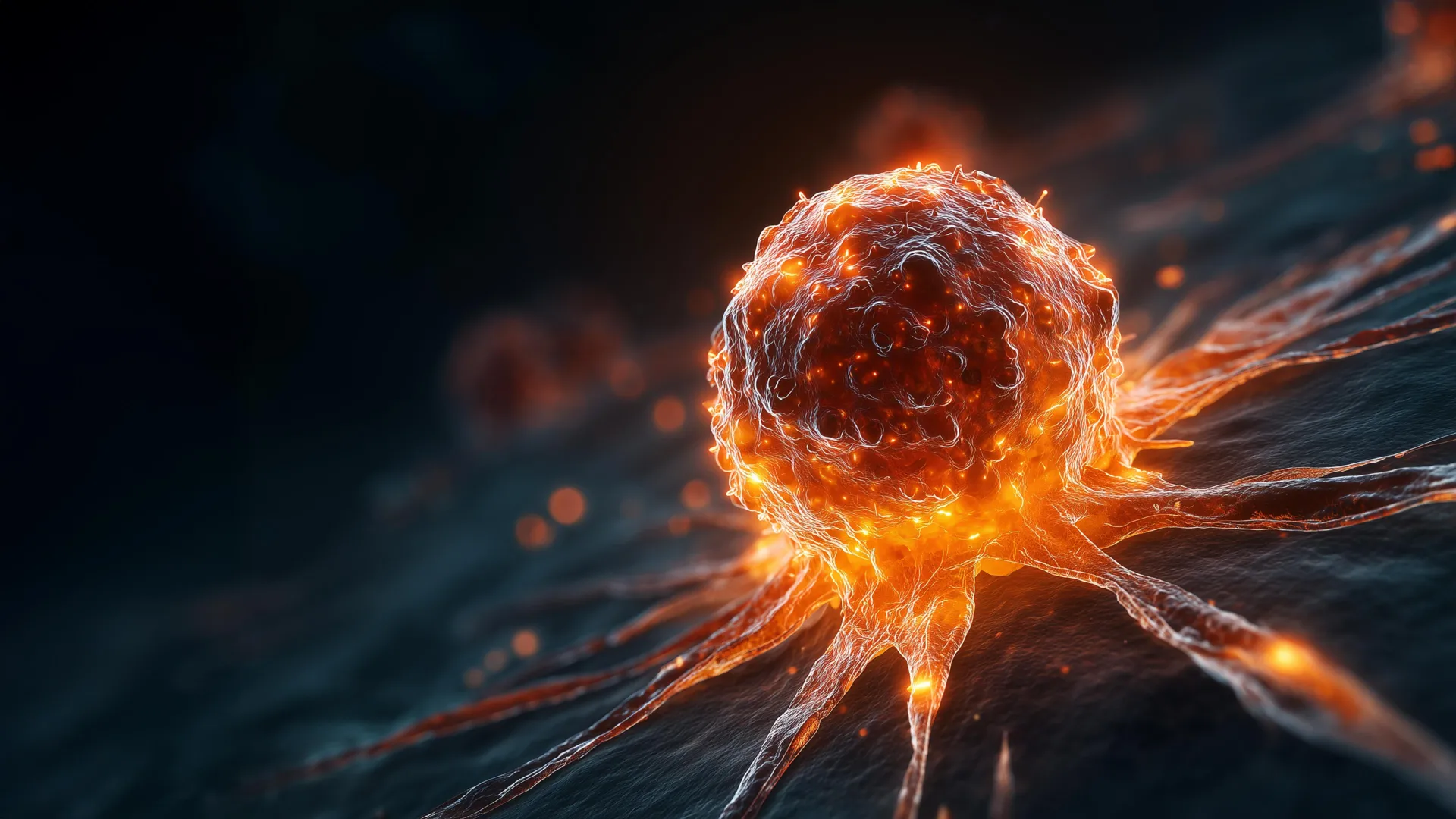
For decades, the field of oncology has grappled with a fundamental question: Why does melanoma, one of the most aggressive forms of skin cancer, possess an uncanny, almost supernatural ability to sustain itself and proliferate? While scientists have long understood that cancer cells must bypass the natural "death clock" of human cells to become malignant, the specific mechanisms governing melanoma have remained elusive.
Now, a breakthrough study from the University of Pittsburgh School of Medicine, published this week in the journal Science, has identified the missing genetic link that allows these tumors to achieve cellular immortality. By uncovering a synergistic relationship between two specific genetic mutations, researchers have not only solved a long-standing biological puzzle but have also illuminated a potential new "Achilles’ heel" that could lead to revolutionary cancer therapies.
The Biological Barrier: Why Cells Usually Die
To understand the gravity of this discovery, one must first look at the mechanics of the human cell. At the terminal ends of every chromosome are protective caps known as telomeres—often compared to the plastic aglets at the ends of shoelaces. These structures serve a vital purpose: they prevent DNA from fraying or fusing with other chromosomes, which would lead to catastrophic genetic instability.
Under normal circumstances, every time a cell divides, its telomeres shorten. This is a biological safeguard; once a telomere becomes critically short, the cell enters a state of senescence, where it can no longer divide, or it undergoes apoptosis (programmed cell death). This process is an essential barrier against the development of cancer.
However, for a melanocyte (a pigment-producing skin cell) to transform into a lethal tumor, it must overcome this barrier. It must "immortalize" itself. The key to this immortality is the enzyme telomerase, which rebuilds telomeres. While telomerase is largely inactive in healthy, mature cells, many cancers hijack the TERT gene to re-activate this enzyme, granting them the ability to divide indefinitely.
The Chronology of a Discovery
The path to this discovery was not linear; it was a process of refinement, persistence, and a healthy dose of scientific serendipity.
The TERT Limitation
For years, the scientific community focused on TERT mutations, which are present in approximately 75% of all melanoma cases. These mutations boost telomerase production, allowing cancer cells to maintain their telomeres. Yet, a glaring mystery remained: when researchers introduced these specific TERT mutations into laboratory-grown melanocytes, the cells did not mirror the exceptionally long telomeres seen in actual patient tumors.
The lab-grown cells were "immortal," yes, but they lacked the extreme telomere length characteristic of aggressive melanoma. This suggested that TERT was only half of the story.
The Persistence of Pattra Chun-on
The breakthrough began with the arrival of Pattra Chun-on, M.D., an internist and Ph.D. student in the lab of Jonathan Alder, Ph.D., an assistant professor in the Division of Pulmonary, Allergy and Critical Care Medicine at Pitt.
"The fun part of this story is when Pattra joined my lab," Alder recounted. "She contacted me and told me that she was interested in studying cancer. I told her that I study short telomeres and not long telomeres. This went on until I realized that Pattra would never take ‘no’ for an answer."
Chun-on’s persistence led her to investigate the "hidden" genomic landscape of melanoma. By analyzing cancer mutation databases, she and Alder’s team looked beyond the TERT gene. They began to scrutinize TPP1, a telomere-binding protein known in biochemical circles for its ability to increase telomerase activity—though its role in human clinical pathology had never been proven.
The "Aha!" Moment
Chun-on discovered that TPP1 frequently mutated in the promoter region of the gene—the same "control switch" area where TERT mutations occur. When the researchers introduced both the mutated TERT and the mutated TPP1 into cells simultaneously, the results were instantaneous and dramatic: the cells produced the exceptionally long, robust telomeres seen in aggressive clinical cases of melanoma. TPP1, they concluded, was the missing partner in the crime of cellular immortality.
Supporting Data: The Mechanics of Synergy
The study provides robust evidence that these two mutations act in concert to bypass the body’s natural defenses. While TERT provides the "raw materials" for telomere lengthening, TPP1 acts as a "recruitment factor" or an accelerator.
In the laboratory experiments, the team demonstrated that TPP1 mutations do not merely exist alongside TERT mutations; they enhance the recruitment of telomerase to the telomere. Essentially, the TERT mutation opens the door to immortality, and the TPP1 mutation holds it wide open, allowing the cancer cell to build telomeres to lengths far beyond what is necessary for basic survival.
This finding bridges a decade-old gap between pure biochemistry—where TPP1’s function was observed in test tubes—and clinical oncology. It is a rare instance of a "textbook" biochemical function being confirmed as a primary driver of human cancer evolution.
Official Responses and Expert Perspective
Jonathan Alder’s assessment of the work highlights the shift in perspective this discovery brings to the field. "We did something that was, in essence, obvious based on previous basic research and connected back to something that is happening in patients," Alder said. "For a melanocyte to transform into cancer, one of the biggest hurdles is to immortalize itself. Once it can do that, it’s well on its way to cancer."
The study, which included a diverse team of researchers from Pitt, UPMC, UC Santa Cruz, and Johns Hopkins, underscores the power of interdisciplinary collaboration. By combining expertise in environmental health, cancer biology, and biochemistry, the team was able to navigate complex genomic data that had previously been overlooked by other research groups.
The involvement of Carol W. Greider, Ph.D., a pioneer in telomere research and a Nobel laureate, further validates the significance of the findings. Her contribution highlights that this is not merely a localized finding regarding skin cancer, but a fundamental insight into how telomere maintenance systems can be subverted by human cells.
Implications: A New Horizon for Cancer Therapy
The identification of the TPP1 mutation as a partner to TERT carries profound implications for the future of melanoma treatment. Currently, many cancer therapies focus on systemic approaches that can be toxic to healthy cells. By identifying a highly specific, cancer-exclusive telomere maintenance system, the researchers have pointed toward a new, precision-medicine target.
Developing Selective Inhibitors
If scientists can develop drugs that specifically target the mutated TPP1 or the synergistic interaction between TERT and TPP1, they might be able to "shorten" the telomeres of melanoma cells specifically, forcing them back into senescence or triggering their death without harming surrounding healthy tissues.
A Template for Other Cancers
While this research focuses on melanoma, the methodology serves as a template for investigating other aggressive cancers that exhibit unusual telomere profiles. The researchers believe that similar "hidden" mutations in telomere-binding proteins may exist in other malignancies, potentially explaining why some tumors are more resistant to traditional chemotherapy than others.
The Path Forward
The road from a laboratory discovery to a clinical drug is long, requiring extensive pre-clinical testing and clinical trials. However, the Pitt team has successfully cleared the most difficult hurdle: the "why." By proving that melanoma’s resilience is not a random occurrence but a calculated genetic strategy involving two specific protein mutations, they have provided a roadmap for drug developers.
In the words of the research team, TPP1 was a factor "hidden in plain sight." As the medical community digests these findings, the hope is that this new understanding of the "immortal" code will eventually translate into better outcomes for patients, turning a once-uncontrollable malignancy into a manageable—or even curable—condition.