By [Your Name/Correspondent]
In a landmark ruling that has sent shockwaves through the UK’s legal and civil rights communities, the Court of Appeal on 15 June 2026 upheld the government’s proscription of the advocacy group Palestine Action. This judgment effectively reverses a High Court decision from February 2026, which had originally declared the ban unlawful. The ruling signals a significant shift in how British courts interpret the intersection of national security, property damage, and the fundamental right to protest.
The legal battle, spearheaded by claimant Ms. Ammori, has become a focal point for a broader national debate regarding the limits of executive power under the Terrorism Act 2000. As the case now looks toward a potential Supreme Court appeal, it raises profound questions about the threshold for "terrorism" in a democratic society and the potential for "mission creep" in counter-terrorism legislation.
Chronology of a Contentious Proscription
The conflict traces its origins to 30 June 2025, when the then-Home Secretary, Yvette Cooper, exercised her discretionary powers under Section 3(4) of the Terrorism Act 2000 to designate Palestine Action as a terrorist organization. The move was justified by the government on the grounds that the group’s activities, which frequently involved direct action against UK-based defense enterprises, constituted "serious property damage" as defined by Section 1(2)(b) of the Act.
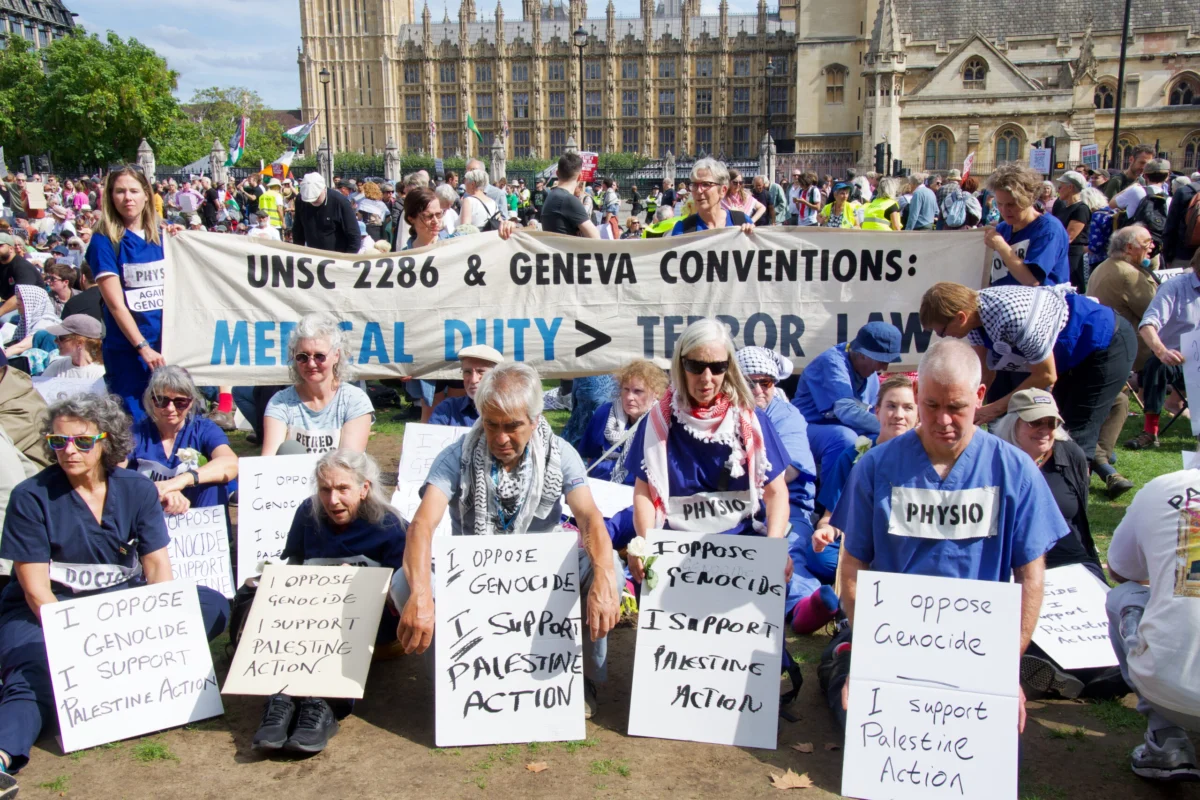
Following the proscription, the state initiated a rigorous crackdown on the group’s supporters. By the end of 2025, official government statistics indicated that over 1,600 individuals had been arrested in connection with the ban, many of whom were detained simply for holding placards or expressing solidarity with the victims of the conflict in West Asia.
In early 2026, the High Court sided with Ms. Ammori, ruling that the Home Secretary had failed to adhere to her own established policies regarding proscription and had disproportionately infringed upon rights protected under Articles 10 (Freedom of Expression) and 11 (Freedom of Assembly) of the European Convention on Human Rights (ECHR). However, this victory for civil libertarians was short-lived, as the Court of Appeal’s June 2026 ruling vacated the High Court’s decision, reinstating the ban with finality.
Judicial Reasoning: Balancing Security and Civil Liberties
The Court of Appeal’s decision rested on the deference typically afforded to the executive in matters of national security. The five-judge panel articulated that the Home Secretary, when exercising her powers under the Terrorism Act, is tasked with the unenviable duty of balancing competing interests.
"She has to balance, in the most difficult circumstances, the rights of some individuals to freedom of speech and assembly against the rights of other third parties and the national security of the United Kingdom," the judges noted in their open judgment.
Crucially, the Court drew a distinction between traditional civil disobedience and the tactics employed by Palestine Action. The judges explicitly stated that the group "is not an organisation engaged in activities falling within the well-established tradition of peaceful protest," citing specific operations against military infrastructure—such as the incident at the Brize Norton military base—as evidence of a threat to the nation’s defense apparatus. By classifying these acts as falling within the ambit of terrorism, the court has effectively lowered the bar for what constitutes a "sufficiently serious" threat to national security.
Supporting Data and the Impact on Civic Space
The practical consequences of the proscription have been profound. Since June 2025, police powers under the Terrorism Act 2000 have been applied with unprecedented frequency. According to Home Office data, 1,630 arrests have been linked to the enforcement of the ban. These arrests have often targeted protesters who claim their actions are purely symbolic or aimed at highlighting humanitarian crises.
Legal analysts point to the "chilling effect" created by this enforcement. When a group is labeled as a terrorist organization, the mere act of association or public support can trigger surveillance and criminal investigation. Critics argue that this creates an atmosphere of fear that stifles legitimate political discourse. The legal community is particularly concerned about the precedent this sets: by utilizing anti-terror laws to address property damage, the government may be bypassing the criminal justice system’s more nuanced, less draconian mechanisms for dealing with vandalism or public order offenses.
Official Responses and Human Rights Criticism
The judicial ruling has elicited sharp condemnation from international and domestic human rights watchdogs. Amnesty International issued a scathing response, labeling the judgment a "shameful chapter in our history."
"It is fundamentally disproportionate to treat direct action protest as terrorism," stated the director of Amnesty’s UK legal programme. The organization argues that the state is weaponizing security legislation to silence dissent, a move they claim erodes the foundational principles of a free society.
In response to the ruling, Ms. Ammori remained defiant, reaffirming her commitment to the legal struggle. "We will not stop fighting to overturn one of the most extreme attacks on free speech and the right to protest in modern British history," she said in a statement. Her legal team is currently exploring the possibility of an appeal to the Supreme Court, which would represent the final opportunity for a judicial reversal of the proscription.
Implications: The Broadening Scope of the Terrorism Act
The core of the legal controversy lies in the interpretation of Section 3 of the Terrorism Act 2000. Critics argue that the Act grants the Home Secretary "overly broad powers" that lack the necessary checks and balances to prevent abuse.
The "Sufficiently Serious" Threshold
Historically, terrorism legislation was intended to address acts of mass violence, bombings, and existential threats to the state. The inclusion of "serious property damage" as a justification for proscription is a relatively recent, and highly debated, expansion. Scholars of constitutional law have noted that by allowing the government to characterize non-violent (or exclusively property-focused) protest as terrorism, the state is fundamentally altering the legal understanding of the term.
The Erosion of the Rule of Law
The proscription has led to a wider concern within the legal community regarding the health of the UK’s rule of law. If the executive branch can designate political organizations as "terrorist" based on property damage without being effectively checked by the judiciary, then the threshold for political repression becomes dangerously low.
The current legal climate suggests a growing divide:
- The State Perspective: Maintaining national security requires the power to suppress groups that disrupt critical infrastructure, regardless of their political motivations.
- The Civil Liberties Perspective: The state is using the "terror" label as a blunt instrument to bypass standard criminal procedures, thereby intimidating activists and narrowing the scope of permitted political speech.
Future Prospects: The Supreme Court and Beyond
As the case of Ammori v. Secretary of State for the Home Department moves forward, the potential for a Supreme Court hearing is the primary focus of legal observers. A decision by the highest court in the land would likely clarify the boundaries of the Terrorism Act for decades to come.
Should the Supreme Court choose to hear the case, it will have to address the fundamental conflict between the state’s duty to protect infrastructure and the individual’s right to protest. If the current ruling stands, it will cement a precedent where the government has the near-absolute discretion to define the limits of permissible dissent under the guise of national security.
Ultimately, the proscription of Palestine Action serves as a litmus test for the UK’s commitment to civil liberties. As the legal battle continues, the echoes of this case will undoubtedly reverberate through the halls of Westminster and beyond, serving as a reminder that the definition of "terrorism" remains one of the most powerful—and contested—tools in the state’s arsenal.
Disclaimer: Opinions expressed in JURIST Dispatches are solely those of our correspondents in the field and do not necessarily reflect the views of JURIST’s editors, staff, donors, or the University of Pittsburgh.