By Tech Insights Editorial
June 28, 2026
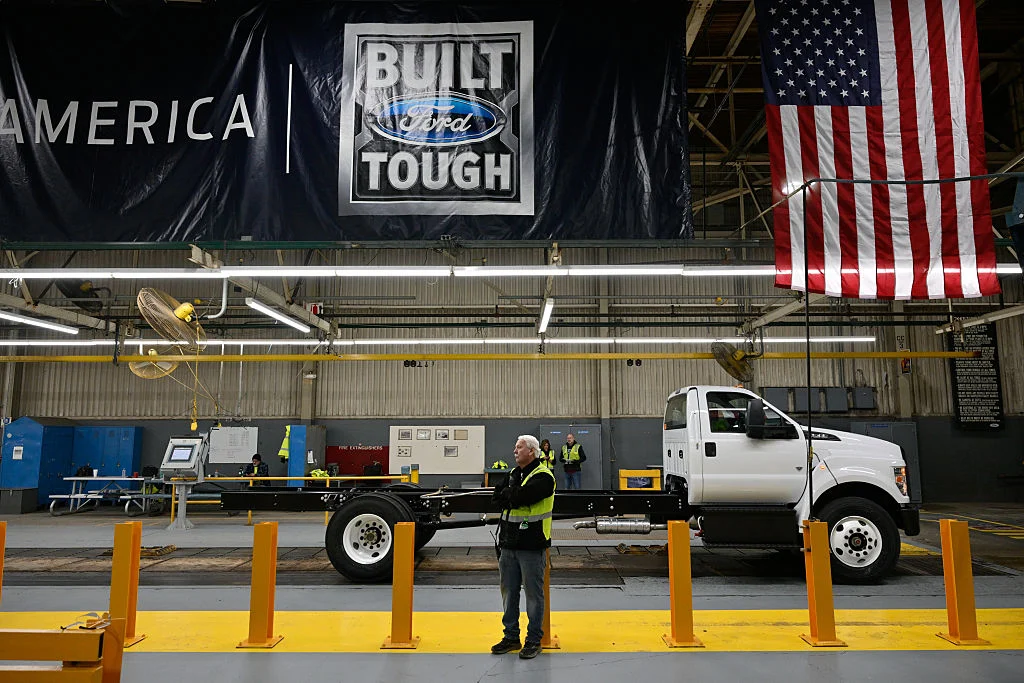
In an era where artificial intelligence has been touted as the panacea for manufacturing inefficiency and production bottlenecks, Ford Motor Company has delivered a sobering reality check. After an aggressive push to integrate automated quality control systems, the automotive giant has pivoted, opting to rehire 350 veteran engineers—affectionately dubbed "gray beards" by industry insiders—to reclaim the standard of excellence that defines their brand.
The move marks a significant moment in the ongoing debate over the limits of generative AI and machine learning in industrial applications. While AI tools showed promise in theory, their real-world application at Ford fell short of the stringent quality benchmarks the company requires, prompting a strategic retreat that highlights the enduring value of human intuition and deep-seated technical experience.
The Main Facts: A Strategic Pivot
The decision to bolster its engineering workforce comes after a period of soul-searching within Ford’s executive ranks. As reported by Bloomberg, the company’s Chief Operating Officer, Kumar Galhotra, admitted that the automaker had leaned too heavily on automated quality systems. The expectation was that AI could ingest vast design requirements and output high-quality, fault-free vehicle parts.
Instead, the reality proved more complex. Ford discovered that while AI was excellent at processing data, it struggled with the nuanced, predictive "gut feeling" that seasoned engineers possess—the ability to look at a design and foresee a failure point before a part even reaches the plant floor. To rectify this, Ford began an aggressive campaign to recruit veteran talent, including former employees and professionals plucked from the supplier ecosystem.
These 350 engineers are not just replacements; they are mentors. Their primary mandate is twofold: to act as human "filters" for quality assurance and to train a younger generation of engineers to effectively "reprogram" and supervise the AI tools that previously failed to meet expectations.
Chronology of a Shift
The trajectory leading to this decision was not overnight. Over the past several years, Ford, like many of its competitors, accelerated its digital transformation. The company invested heavily in AI-driven design suites and automated inspection sensors, aiming to reduce human error and speed up the production cycle.
- 2023–2024: Ford increases capital expenditure on AI and automated manufacturing workflows, anticipating significant cost reductions and improved precision.
- Early 2025: Internal audits begin to flag rising concerns regarding parts quality and assembly consistency. Despite the AI-led oversight, warranty claims and minor manufacturing defects persist, leading to frustration among quality control leads.
- Late 2025: The realization hits: the AI systems were optimizing for the wrong metrics or failing to account for physical variables that veterans intuitively understand. The executive team initiates a "human-in-the-loop" strategy.
- Q1–Q2 2026: The massive recruitment drive begins. Ford reaches out to retired engineers and experts in the supplier sector to rebuild its internal knowledge base.
- June 2026: Ford reports a surge in quality rankings, crediting the integration of these veteran engineers for the turnaround.
Supporting Data: The Cost of Automation vs. Wisdom
The financial implications of this pivot are already manifesting in Ford’s bottom line. CEO Jim Farley recently highlighted that the re-introduction of veteran oversight has acted as a financial "tailwind." By catching design flaws early—often at the digital prototype stage—Ford has significantly reduced the downstream costs associated with warranty repairs and large-scale vehicle recalls.
Farley noted that these savings amount to "hundreds and hundreds of millions of dollars." This is a stark contrast to the initial narrative that AI would save costs through pure automation. Instead, the cost savings are being driven by a hybrid model where human experience acts as the primary barrier against waste.
Furthermore, validation for this strategy arrived in the form of the latest J.D. Power Initial Quality Survey. Released this week, the survey ranks Ford at the top among mainstream brands. This performance metric serves as empirical evidence that the company’s decision to prioritize human expertise over fully automated decision-making has paid dividends in customer satisfaction and product reliability.

Official Responses: Lessons Learned
The candor from Ford’s leadership has been refreshing in an industry often prone to hiding behind corporate jargon. Charles Poon, Ford’s Vice President of Vehicle Hardware Engineering, provided a candid assessment of the error in judgment.
"Mistakenly we thought that by just introducing artificial intelligence and ingesting the design requirements that we had, that that would produce a high-quality product," Poon admitted. His statement captures a fundamental truth about industrial engineering: design requirements are merely a map, but the terrain of physical manufacturing is fraught with complexities that AI, in its current iteration, lacks the context to navigate.
Kumar Galhotra echoed this sentiment, emphasizing that the "gray beard" engineers are now tasked with "hunting for failure points" long before a component hits the assembly line. By empowering these veterans to lead the workflow, Ford is effectively shifting its AI strategy from "AI as the decision-maker" to "AI as a tool, directed by human experts."
Implications: The Future of AI in Manufacturing
The Ford case study serves as a bellwether for the manufacturing sector. As firms rush to adopt Large Language Models and predictive AI, they must grapple with the "Black Box" problem—the tendency of AI to reach conclusions that are technically logical but physically unfeasible or practically flawed.
1. The End of the "AI-Only" Myth
The primary implication is that AI is not a replacement for domain expertise, but rather an amplifier. Industries that deal with high-stakes physical hardware—automotive, aerospace, medical devices—must maintain a "human-in-the-loop" architecture. The nuance of a veteran engineer who has seen a specific weld fail over thirty years cannot be replicated by a training dataset.
2. The Resurgence of the "Gray Beard"
We are likely to see a shift in human resources strategy across the tech-heavy manufacturing sector. Rather than focusing solely on hiring young, AI-native talent, companies will likely place a premium on "legacy knowledge." The ability to bridge the gap between traditional engineering principles and modern computational tools will become the most valuable skill set in the market.
3. Redefining Productivity
Ford’s experience suggests that "productivity" in manufacturing should not be measured by how quickly a part is designed, but by how long that part lasts without needing a recall. By shifting the focus from speed-of-design to quality-of-outcome, Ford has redefined what "efficiency" looks like in the AI age.
4. A Template for Other Automakers
As Ford reaps the rewards of its course correction, other manufacturers—both in the US and abroad—will likely follow suit. Expect to see similar "rehiring" programs across the automotive belt as companies seek to insulate themselves from the hidden costs of over-automation.
Conclusion
Ford Motor Company’s decision to bring back its veteran workforce is not an indictment of AI, but rather a maturation of its application. The company has moved past the "hype cycle" and entered a phase of pragmatic implementation. By acknowledging the limitations of their digital systems and empowering the people who understand the iron, steel, and mechanics of their vehicles, Ford has managed to secure its position at the top of the quality charts.
As we look toward the future of technology in the workforce, the "Ford Pivot" serves as a crucial reminder: the most powerful tool in the factory is not the code, but the collective memory and intuition of the humans who built the industry from the ground up. In the race to automate, Ford remembered that while machines can build, humans ensure that what is built is worthy of the road.