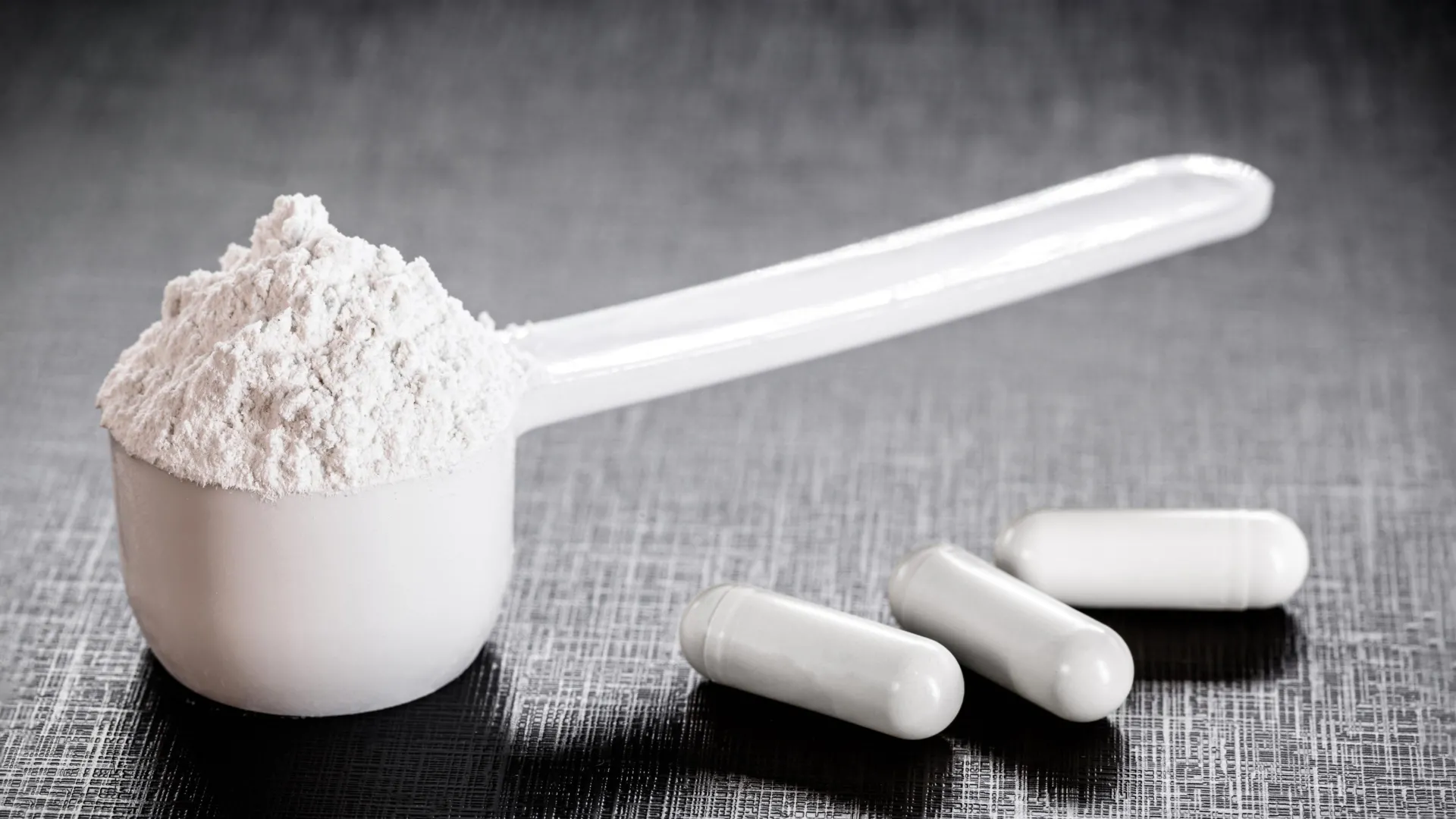
For decades, creatine has occupied a secure throne in the world of sports nutrition. Widely regarded as the gold standard for athletes looking to bolster explosive power, increase muscle mass, and accelerate recovery, this nitrogenous organic acid is a staple in gym bags globally. However, a frontier of modern psychiatry is now looking to pivot creatine from the weight room to the clinical office. Researchers are increasingly intrigued by a bold hypothesis: could the same fuel that powers a sprinter’s muscles be the key to recalibrating a depressed brain?
A new systematic review published in the journal Brain Medicine has brought this question to the forefront of scientific discourse. By synthesizing existing clinical trials, researchers are attempting to determine whether creatine, by supporting the brain’s massive energy requirements, might serve as a novel adjunct therapy for major depressive disorder (MDD) and other mood conditions.
The Energetic Brain: Why Creatine?
To understand why scientists are looking at a muscle supplement for mental health, one must first look at the biological demands of the human brain. While the brain accounts for roughly 2% of total body weight, it consumes approximately 20% of the body’s total energy. This energy is primarily stored and transported in the form of adenosine triphosphate (ATP).
In muscle tissue, creatine facilitates the rapid regeneration of ATP, allowing for sustained performance under high-intensity conditions. The brain, it turns out, is similarly energy-hungry. Emerging research suggests that the metabolic processes within the brain—particularly those involving ATP—may be compromised in individuals suffering from depression.
Furthermore, creatine is theorized to influence neurotransmitter systems, specifically dopamine and serotonin. These chemical messengers are the primary targets of conventional antidepressants like SSRIs. By modulating these systems or stabilizing the bioenergetic environment of neurons, creatine could theoretically provide a supportive, rather than primary, mechanism for mood regulation.
A Chronology of Investigation: From Trials to Review
The path to the current Brain Medicine review has been winding, marked by small-scale, disparate studies across the globe. Rather than conducting a new primary experiment, a research team led by Bassam Jeryous Fares of the University of Ottawa performed an exhaustive meta-analysis of existing literature.
The Landscape of the Data
The review identified six published reports covering five randomized controlled trials (RCTs). These studies were geographically diverse, conducted in South Korea, the United States, Brazil, Israel, and India. The collective participant pool was relatively modest, totaling 238 individuals. The demographic breakdown showed a significant skew toward women, with two of the five studies focusing exclusively on female participants. The average age across the cohort was 36.
The Methodological Divide
The trials were not uniform in their approach. Four trials concentrated on major depressive disorder, while one included participants with bipolar disorder currently experiencing a depressive episode. Because the methodologies, dosing regimens, and diagnostic criteria varied significantly, the research team opted against a pooled statistical analysis, instead favoring an individual evaluation of each study’s merits and outcomes.
Supporting Data: The Dichotomy of Results
The findings of the review present a "divided picture," one that avoids clear-cut conclusions and instead underscores the complexity of the human brain’s response to metabolic intervention.
When Success Occurred
Two of the five trials—both of which focused on women with MDD—demonstrated significant positive outcomes. In one instance, participants receiving five grams of creatine daily as an adjunct to the antidepressant escitalopram showed marked improvements compared to those taking the medication alone with a placebo. The results were statistically significant, boasting a Cohen’s d effect size of 1.13 on the Hamilton Depression Rating Scale—a metric suggesting a large, meaningful clinical impact.
In another successful trial, creatine was paired with cognitive behavioral therapy (CBT). Participants in the treatment group experienced a faster and more profound reduction in depressive symptoms than those in the placebo group. These specific successes provide the "signal" that researchers find so compelling.
The Absence of Benefit
Conversely, three of the five trials yielded null results. In one study involving treatment-resistant depression, neither five nor ten grams of creatine showed any efficacy. Another trial, focused on adolescent girls, found no advantage over placebo regardless of dosage. A third study involving bipolar disorder participants also failed to show improvement.
Perhaps most critically, the review highlighted a safety concern: two participants with bipolar disorder who were administered creatine experienced an onset of hypomania or mania. This finding acts as a cautionary tale, suggesting that the impact of creatine may be contingent upon the patient’s specific underlying psychiatric condition and neurobiology.
Official Responses and Scientific Caution
The primary authors of the review are adamant that the current data is insufficient to alter clinical practice. Their stance is one of tempered curiosity rather than advocacy.
"The signal is interesting, but it is not a verdict," said Bassam Jeryous Fares, the review’s first author. "Two trials pointed one way and three pointed another. That is not the kind of evidence on which you change clinical practice. It is the kind that tells you the question is worth further exploration."
Nicholas Fabiano, a psychiatry resident at the University of Ottawa and the study’s corresponding author, emphasized the safety profile while reiterating the need for further inquiry. "Creatine appears to be a safe intervention. The adverse events we found were limited to mild gastrointestinal discomfort. However, we cannot yet reliably say that creatine helps with depressive symptoms or if the findings are generalizable to everyone."
The authors point to several limitations that hinder the application of these findings to the general population:
- Small Sample Sizes: The total participant count is too small to draw definitive conclusions.
- Bias Risks: While two studies were deemed to have a low risk of bias, three others presented concerns regarding participant assignment and missing data.
- Gender Disparity: The heavy concentration of female participants makes it difficult to extrapolate how the intervention might function in men, particularly given that animal studies have already suggested sex-based differences in how the brain utilizes creatine.
Future Implications: Where Do We Go From Here?
The prospect of using a widely available, low-cost supplement to treat a condition as debilitating as depression is undoubtedly attractive. However, the path forward requires rigorous, standardized, and larger-scale clinical investigation.
Bridging the Gap
To move toward a definitive answer, the researchers recommend several key shifts in future study designs:
- Extended Durations: Many of the existing studies lasted only eight weeks. Longer-term trials are necessary to determine if benefits are sustained or if they dissipate over time.
- Dose-Response Relationships: Future research must clarify whether there is an "optimal" dose, or if higher doses lead to diminishing returns or increased side effects.
- Integrative Approaches: Examining creatine in combination with lifestyle interventions—specifically exercise—could prove synergistic, as exercise itself is known to influence both brain energy metabolism and mood.
- Biological Markers: Utilizing neuroimaging or blood tests to track changes in creatine metabolism could help researchers identify "responders" and "non-responders" before beginning treatment.
The Theoretical Horizon
The Brain Medicine review serves as a reminder that the biological underpinnings of depression are vast and likely involve multiple, interconnected pathways. While the "energy deficit" hypothesis of depression is gaining traction, it is likely only one piece of a much larger puzzle.
For now, creatine remains a supplement with a well-documented history in the weight room and an intriguing, yet unproven, future in the clinic. As researchers continue to untangle the relationship between metabolic health and mental health, the scientific community remains poised to see if this common supplement can indeed provide a new, safe, and effective tool for those struggling with the shadows of depression.
The peer-reviewed research article, "Creatine as a treatment for depression," was published in Brain Medicine and is available via Open Access. As the field matures, these initial findings will likely serve as the bedrock for more sophisticated, high-impact clinical trials that will ultimately determine if we have found a hidden mental health ally in a simple nutritional compound.