SPOILER ALERT: This article contains major plot revelations regarding Evil Dead: Burn, currently in theatrical release.
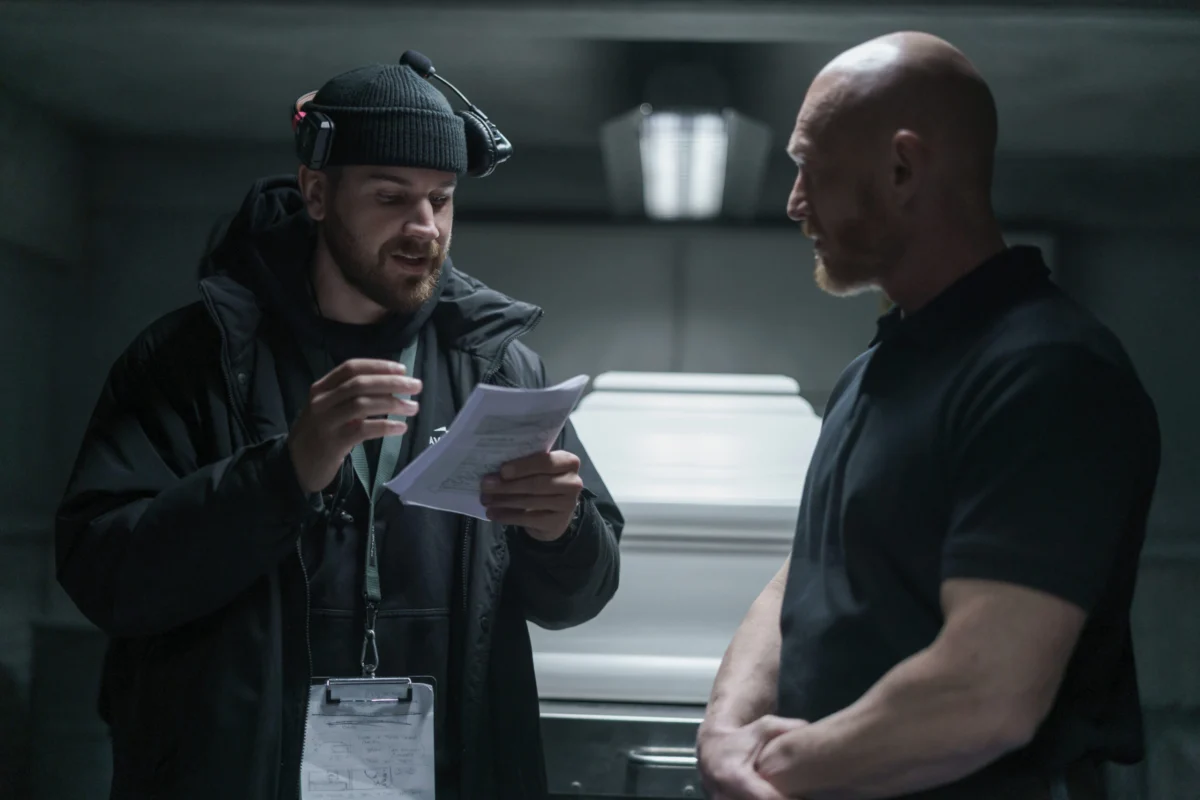
The Evil Dead franchise has long stood as the gold standard for visceral, unrelenting horror. Since Sam Raimi unleashed the original 1981 cult classic, the series has operated on a philosophy of "more is more"—more blood, more madness, and more creative ways to dismantle the human form. With the latest installment, Evil Dead: Burn, director Sébastien Vaniécek has taken the reins, delivering what many are calling the most brutal chapter in the franchise’s storied history.
The Breaking of Cinema’s Golden Rule
In the lexicon of screenwriting, "Don’t kill the dog" is a commandment etched in stone. It is a protective measure for audience empathy and a shorthand for "don’t be unnecessarily cruel." Vaniécek, however, entered the Evil Dead universe with a different mandate: to push the boundaries of what a modern horror audience can stomach.
"If you don’t do that in Evil Dead, in which movie do you do that?" Vaniécek asks in an exclusive interview with Variety. "These are the most insane, wild, and basically evil movies. There’s no limit; I can’t have limits!"
True to the franchise’s dark spirit, the canine’s demise is merely a catalyst. The dog returns, twisted into a "badass" new form, joining the ranks of the Deadites—the soulless, malevolent entities that have terrorized audiences for over four decades. It is a bold opening gambit, signaling to viewers that in the world of Burn, no one, and nothing, is safe.
A Chronicle of Carnage: From Grief to Gore
Evil Dead: Burn follows a family grappling with the sudden, tragic death of Will (George Pullar). His widow, Alice (Souheila Yacoub), who spent their marriage navigating the shadows of his abusive behavior, is left to pick up the pieces. The film serves as a psychological crucible, using the supernatural invasion of Deadites as a terrifying metaphor for the trauma Alice has endured.
The film serves as a loose successor to 2023’s Evil Dead Rise and the 2013 reboot. Filmed primarily in New Zealand, the production marks a major leap for Vaniécek, who rose to prominence following the success of his independent French feature Infested, a claustrophobic, high-tension film about a spider infestation in an apartment complex.
The Anatomy of Brutality: Practical Effects and Realism
Unlike many contemporary horror films that rely heavily on digital augmentation, Evil Dead: Burn is a love letter to the era of practical effects. Vaniécek insisted on physical, tactile horror, aiming to ground the film’s surreal violence in reality.
"Everything that could have been done practically was done practically," the director explains. "The only thing we couldn’t do were the holes in faces, which required some digital touch-ups. But even the final monster is a practical creation."
One of the film’s most challenging sequences involved fire. Rather than layering CGI flames over the scene in post-production, Vaniécek opted to use real fire on set. The result is a palpable sense of danger that translates to the screen, providing a visual texture that digital effects often struggle to replicate. "It was pretty long and intense," Vaniécek admits, "but in the end, the audience feels it when you do things for real."
Character-Driven Terror: The Dinner Table and the Car
While Evil Dead is synonymous with gore, Vaniécek’s approach is surprisingly anchored in character dynamics. The film’s centerpiece—a dinner scene following Will’s funeral—is a masterclass in tension. With no supernatural combat occurring, the scene relies entirely on sound design, meticulous editing, and the performances of the cast.
"We rehearsed a lot with the actors to be sure that they knew when to grab the glass, when to grab the corkscrew," Vaniécek notes. "That’s one of the scenes I’m most proud of."
This tension spills over into the film’s standout action sequence: a brutal fight within the confines of a car. When the character Tia (Luciane Buchana) is impaled by a car seat headrest, it isn’t just a shock tactic; it is the result of a creative thought experiment. "My co-writer, Florent Bernard, and I were looking at our cars and thinking, ‘What would we use if we were fighting tigers in our car?’" The result is one of the most jarring, inventive kills in the franchise’s history.
The Metaphor of the Monster
At its core, Evil Dead: Burn continues the franchise’s tradition of using horror to explore complex human emotions. The struggle of Joseph (Hunter Doohan) to confront his own father, who has been corrupted by the Deadites, serves as a central emotional anchor.
"The really cool thing with Evil Dead is that you can explore metaphors in a physical way," Vaniécek says. "If you are talking about an abusive husband, you will see that husband as a monster, and you will literally see a monster at some point. That’s the very cathartic thing about Evil Dead."
By grounding the supernatural elements in the realistic struggle of a grieving, fractured family, Vaniécek ensures the audience is not just watching the carnage—they are participating in the emotional stakes.
Looking Ahead: The Future of the Necronomicon
The film’s two post-credit scenes have sent fans into a frenzy, particularly the appearance of Ellie (Alyssa Sutherland), a character thought to have been definitively dealt with in Evil Dead Rise.
Vaniécek remains coy about the implications, noting that the inclusion of such moments was part of the deal with the studio. "They wanted to have that one scene," he says. "I don’t know what they will do in the future, I don’t know what’s in the other movie and if she’ll be here or not."
As for his own future with the franchise, Vaniécek is firm: "I don’t think I would write and direct another Evil Dead. It’s a franchise that needs a fresh vision and fresh directors all the time."
Implications for the Horror Genre
The success of Evil Dead: Burn signals a shift in the horror landscape. By granting a visionary director like Vaniécek "carte blanche" to execute his specific, brutal vision, Ghost House Pictures has managed to keep a decades-old franchise feeling dangerous and relevant.
The film demonstrates that audiences are not just hungry for "scares"—they are looking for filmmakers who are willing to break the rules, challenge their comfort zones, and treat horror as a legitimate medium for exploring the darkest corners of the human experience. Whether it is through the meticulous sound design of a dinner party or the terrifying practical reality of a fire-filled set, Evil Dead: Burn proves that the Necronomicon still has plenty of stories left to tell, provided the next director is brave enough to open the book.
For now, the franchise remains in a state of flux—a "loose trilogy" that connects disparate stories through a shared, chaotic history. As Vaniécek suggests, that mystery is part of the appeal. In a world where every franchise is meticulously mapped out, Evil Dead remains a wild, unpredictable outlier—and that is exactly why it continues to survive.