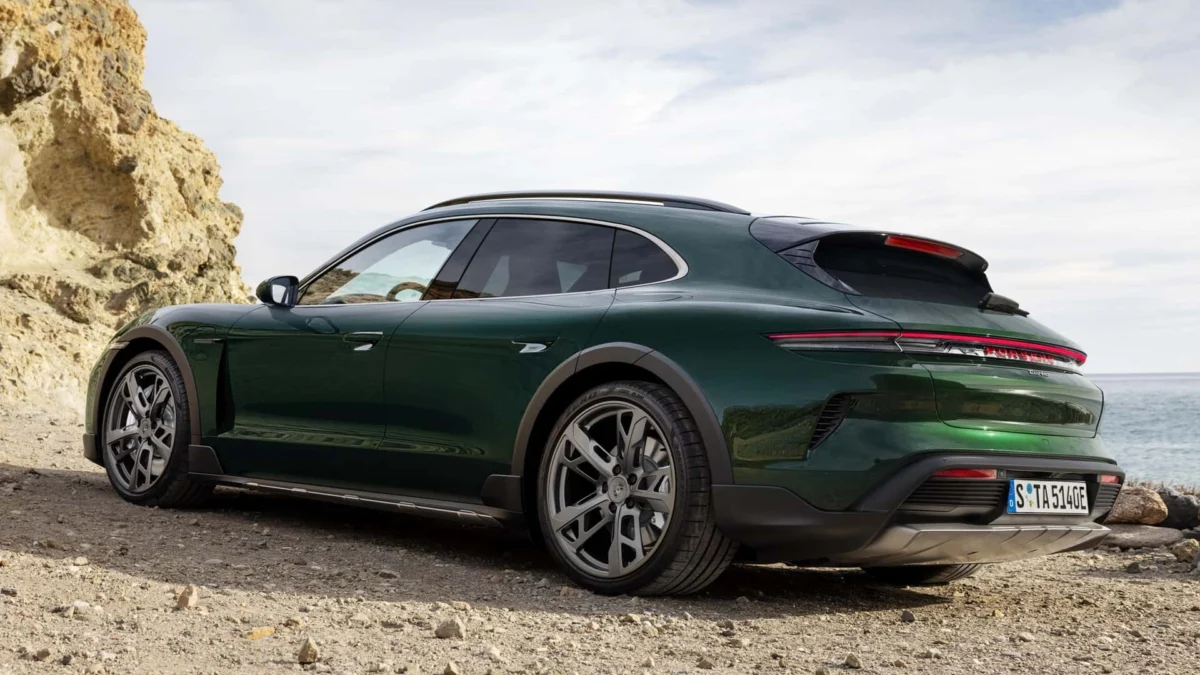
In a move that signals a significant shift in its electrification strategy, Porsche has officially confirmed the discontinuation of its last two remaining wagon body styles. As the Zuffenhausen-based manufacturer prepares for the rollout of the updated 2027 Taycan lineup, the Taycan Sport Turismo and the rugged Taycan Cross Turismo will be retired from the global stage. This decision marks the end of a brief, albeit stylish, experiment in the electric luxury market and leaves Porsche without a single wagon offering in its current portfolio.
The Main Facts: A Strategic Retreat
The announcement, which was confirmed by a Porsche spokesperson to industry outlets, comes as the automaker recalibrates its offerings to align with cooling market demand for premium electric vehicles (EVs). While the Taycan sedan will remain the cornerstone of Porsche’s electric sedan efforts, the "long-roof" variants—which combined the practicality of a hatchback with the blistering performance typical of the Porsche crest—have fallen victim to shifting consumer preferences.
For enthusiasts, this is a bittersweet development. The Sport Turismo and Cross Turismo were widely lauded by automotive journalists for their design integrity, offering a rare blend of utility and aesthetic grace that is increasingly hard to find in an era dominated by bulky SUVs. However, in the cold, hard world of automotive manufacturing, design excellence is often secondary to the bottom line.
A Chronology of the Taycan Wagon
The journey of the Taycan wagon was relatively short but impactful.
- 2021: Porsche introduced the Taycan Cross Turismo as the more adventurous, lifted iteration of the standard Taycan. Featuring all-wheel drive, increased ride height, and "Gravel Mode," it was marketed as a crossover-alternative for those who refused to buy a traditional SUV.
- 2022: Expanding the range, Porsche launched the Taycan Sport Turismo. This variant stripped away the plastic cladding and raised suspension of the Cross Turismo, presenting a sleeker, more "street-oriented" wagon profile that felt like a spiritual successor to the Panamera Sport Turismo.
- 2023: Sales momentum reached its peak in the United States, with 7,570 units sold across the Taycan range. This year represented the high-water mark for the model’s reception in North America.
- 2024–2025: A notable decline began to set in. Sales figures dropped to 4,747 units in 2024 and 4,142 in 2025.
- 2026 (Early): First-quarter sales data showed a significant contraction, with only 607 units delivered, compared to the 1,019 units sold during the same period in 2025.
- 2027: The official retirement of the body styles is slated to coincide with the introduction of the refreshed 2027 model year Taycan, which will focus exclusively on the traditional sedan architecture.
Supporting Data: The Case of Declining Interest
The numbers behind Porsche’s decision are stark. When a manufacturer like Porsche invests the significant R&D capital required to engineer and certify multiple body styles, it relies on a specific "take rate"—the percentage of buyers who opt for a specific configuration.
In the case of the Taycan, the sedan variant has consistently accounted for the lion’s share of sales. The wagon variants, while cherished by a vocal minority of enthusiasts, struggled to capture the broader market. When aggregate sales for the entire Taycan line began to soften—a trend observed across the wider EV sector as early adopters were satiated and mainstream buyers showed hesitation—Porsche was left with an inefficient production mix.
Maintaining specialized tooling, body panels, and unique suspension calibrations for low-volume variants becomes unsustainable when the base model itself faces a shrinking market. By streamlining the production line to focus solely on the sedan, Porsche is effectively reducing overhead and simplifying its logistics chain, allowing the company to focus its resources on high-margin, high-volume products.
Official Responses and Corporate Rationale
In a statement provided to Kelley Blue Book (KBB), a spokesperson for Porsche explicitly attributed the decision to low market demand. The automaker noted that while the wagons served a specific niche, the current market climate necessitated a more disciplined approach to its model lineup.
The rationale is clear: Porsche is not in the business of maintaining "niche" products for the sake of prestige if they do not contribute to the company’s fiscal health. This is not the first time the company has taken such a step. The Panamera Sport Turismo, which once served as the flagship for Porsche’s wagon design language, was also discontinued recently due to similarly lackluster sales. The pattern is clear: Porsche will build what the market buys, and currently, the market is turning its back on the wagon.
Implications: What This Means for the Future
The loss of the Taycan wagons has several profound implications for the automotive landscape.
1. The Death of the "Cool" Wagon
For decades, the "fast wagon" was the ultimate flex for automotive enthusiasts—a vehicle that signaled sophistication, practicality, and an appreciation for driving dynamics. With the Porsche wagons gone, the segment has shrunk to a handful of luxury offerings, primarily from Audi and Mercedes-Benz. As these legacy players also transition to electric platforms, the future of the luxury wagon looks increasingly grim.
2. The SUV Hegemony
Porsche’s decision underscores a broader, industry-wide trend: the complete dominance of the SUV and crossover. When even a brand with the heritage and engineering prowess of Porsche cannot convince customers to choose a sleek, low-slung wagon over an SUV, it is a testament to the fact that high-riding vehicles have won the war for consumer attention. The utility of an SUV is perceived as superior by the average buyer, and the perceived "prestige" of a taller vehicle is currently outperforming the traditional station wagon.
3. Efficiency in the EV Era
The transition to electric vehicles requires manufacturers to be more disciplined than ever. Developing an EV is significantly more expensive than developing a traditional internal combustion engine vehicle. Consequently, brands are moving toward "platform simplification." By offering fewer body styles, companies like Porsche can optimize their software development, battery integration, and manufacturing speed.
4. What Lies Ahead for Porsche?
While the Taycan wagon is dead, the spirit of the brand remains focused on performance. Recent reports suggest Porsche is experimenting with ways to make the driving experience more engaging in the EV era, such as the introduction of simulated gear shifts and enhanced sound profiles to appease purists. However, these are internal adjustments. Externally, the company is doubling down on its SUV lineup—specifically the Macan EV and the upcoming larger electric SUVs—which represent the path of least resistance for profitability.
Conclusion: A Final Farewell
The discontinuation of the Taycan Sport Turismo and Cross Turismo is a sobering reminder that the automotive market is a ruthless mirror of consumer behavior. We, as consumers, often lament the loss of unique, enthusiast-focused vehicles, yet our buying habits—shifting toward SUVs and away from wagons—dictate the reality of the showroom floor.
Porsche’s decision is the correct one from a business perspective. By cutting the cord on its slow-selling wagons, the company ensures that its primary electric efforts remain profitable and sustainable. Yet, for those of us who believe that a low-slung, cargo-capable, all-electric Porsche was one of the most innovative and beautiful cars on the road, the departure of the Taycan wagons feels like the end of a very special, albeit fleeting, chapter in automotive history.
As we look toward 2027 and beyond, we can only hope that as the EV market matures and settles, there may eventually be room again for the return of the wagon. But for now, the long-roof Porsche is a relic of the past, leaving us with only the memories of what was arguably the best-looking electric vehicle of its generation.