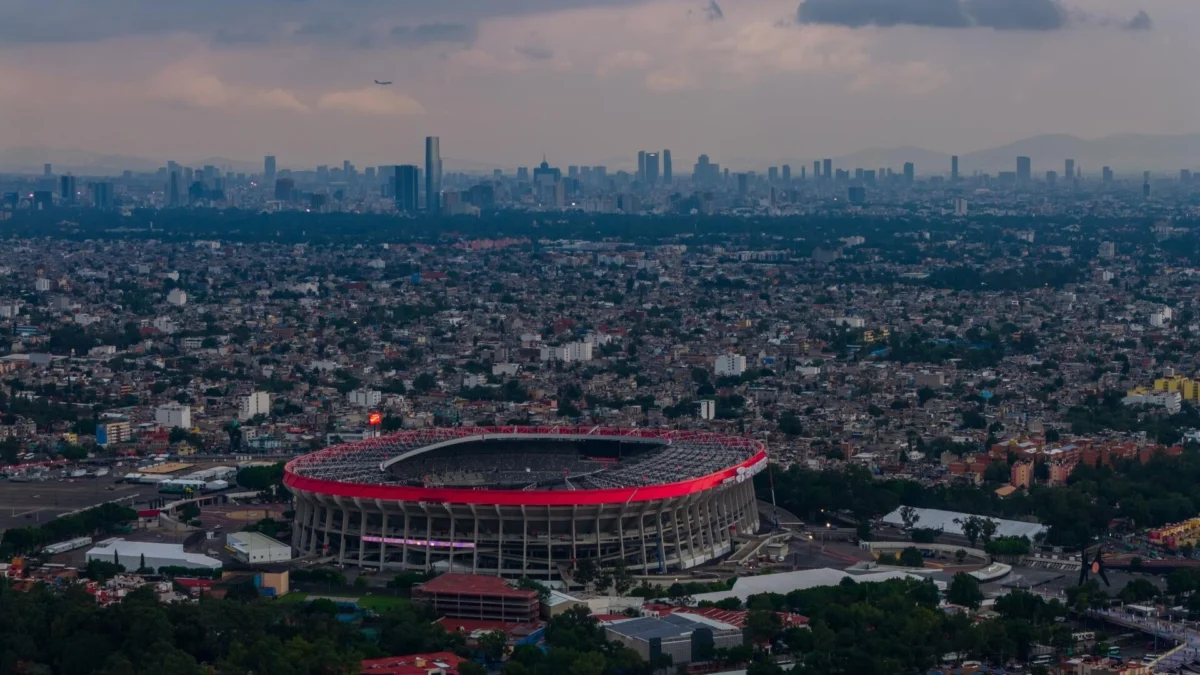
The 2026 FIFA World Cup has been a tournament of seismic shifts, tactical masterclasses, and the emergence of new narratives. Yet, as the competition narrows to the Round of 16, all eyes are gravitating toward a single coordinate in Mexico City: the Estadio Azteca. Sixty years after it first opened its gates, the "Colossus of Santa Úrsula" is once again asserting itself not merely as a venue, but as an active participant in the sport’s most storied rivalries.
As Mexico prepares to host England in a high-stakes Round of 16 clash, the narrative is framed by more than just the quality of the squads. It is a collision between English ambition—seeking to reclaim the glory of 1966—and the suffocating, atmospheric, and spiritual weight of the Azteca. In this World Cup, the stadium has proven itself to be an unconquerable fortress, a place where history is written in sweat, thin air, and the roar of nearly 90,000 fanatics.
A Chronology of Legends: The Ghosts of the Azteca
To understand the magnitude of Sunday’s fixture, one must look at the ghosts that haunt the pitch. The Azteca is a living monument to footballing immortality.
In 1970, it served as the stage for Pelé’s coronation, as the Brazilian maestro secured his third World Cup title, cementing his status as the game’s greatest icon before a global audience. Sixteen years later, the stadium bore witness to the duality of Diego Maradona. It was here that he performed the "Hand of God"—a moment of pure, unabashed controversy—followed minutes later by the "Goal of the Century," a run that redefined individual brilliance. When Maradona hoisted the trophy in 1986, he didn’t just win a tournament; he baptized the Azteca as his spiritual home.
Now, in 2026, the stadium has made history yet again, becoming the first facility to host a World Cup opening match for a third time. The upcoming match against England adds a new layer to this legacy. It is a marquee pairing: Mexico, the tournament’s defensive wall, against an England side desperate to break a 60-year trophy drought.
The Science of Suffering: Altitude as a Tactical Weapon
The primary antagonist for any team visiting the Azteca is not just the 11 players in green, but the geography itself. Situated at 7,220 feet (2,240 meters) above sea level, the stadium creates an environmental handicap that is almost impossible to replicate in training.
At this altitude, the air is significantly thinner, leading to a reduction in oxygen intake that forces even the world’s elite athletes to their physiological limits. Furthermore, the ball behaves differently. It travels faster and maintains a trajectory that defies the muscle memory of players accustomed to sea-level conditions.
"It is one of the most beautiful fixtures, but there will be a lot of obstacles," said England head coach Thomas Tuchel. "The altitude will be a big disadvantage, because we cannot physically adapt to it in four days. It’s just impossible."
Tuchel’s frustration is grounded in cold, hard biology. While his team benefited from extensive heat and humidity training in Florida—preparing them for the summer temperatures of North America—altitude is an entirely different beast. It demands a level of cardiovascular endurance that, when paired with the high-intensity pressing typical of a Mexico home side, can cause visiting teams to crumble by the 70th minute.
Supporting Data: The "12th Man" and the Seismic Reality
The Azteca’s intimidation factor is not purely psychological; it is measurable. When the Mexican national team finds the back of the net, the resulting eruption of 87,000 fans is so powerful that it has been registered by professional-grade seismographs.
During Mexico’s knockout-round victory against Ecuador, the SASSLA (Mexico’s Digital Platform and Comprehensive Risk Management) system detected an "artificial seismic signal." The crowd’s euphoria was so intense that it generated vibrations in the surrounding earth. This is the "12th man" in its most literal sense.
For the visiting England squad, the challenge is an echo-chamber environment where communication becomes nearly impossible. Coaches cannot "prepare" for the noise; they can only hope their players possess the mental fortitude to remain focused when the stadium feels like it is physically shaking beneath them.
A Record of Invincibility
Mexico’s record at the Azteca in World Cup play is perhaps the most daunting statistic in international football. In ten World Cup fixtures held at the venue, El Tri has remained undefeated, boasting seven wins and three draws. Most impressively, they have kept eight clean sheets, highlighting a defensive solidity that has carried them through this 2026 tournament.
In the current 2026 campaign, Mexico has not conceded a single goal through their first four matches. While they have shown they can win away from home—securing victories in Monterrey and Guadalajara—the return to Mexico City feels like a homecoming for a team that has historically struggled to progress deep into tournaments when playing on foreign soil.
Historically, when Mexico has ventured away from the Azteca in knockout stages, disaster has often followed—such as the 4-1 thrashing by Italy in 1970 in Toluca or the agonizing penalty shootout loss to West Germany in 1986. The Azteca is the only place where the weight of national expectation seems to act as a propellant rather than an anchor.
Implications: The Quest to Break the Curse
Despite the formidable fortress and the home-field advantage, Mexico enters the match as an underdog according to betting markets. This reality underscores the magnitude of the task at hand. Mexico has not reached a World Cup quarterfinal in nearly 40 years, and for a nation that has spent decades yearning for a "fifth game" or better, the pressure is immense.
For England, the implications are equally profound. The "Three Lions" are chasing their own demons, looking to end a six-decade wait for a major global trophy. They enter the Azteca knowing that they are not just playing against a talented Mexican side, but against the weight of history and the physics of the Mexico City plateau.
As the match approaches, the narrative remains fluid. Tuchel has acknowledged the disadvantage, focusing on his team’s "attitude" as their primary weapon to counter the environmental obstacles. Meanwhile, Javier Aguirre, the Mexican manager, has leaned into the home-field aura, encouraging the fans to maintain the intensity that has made the Azteca a graveyard for visiting ambitions.
Conclusion: The Altar of Football
Whether Mexico finally shatters its four-decade curse or England manages to conquer the high-altitude fortress, one thing is certain: the Estadio Azteca will remain the centerpiece of the 2026 FIFA World Cup. It is a venue that demands respect, not only for the legendary moments it has hosted in the past but for the way it continues to shape the future of the game.
When the whistle blows at 8 p.m. ET on Sunday, the thin air, the seismic crowd, and the pressure of a nation will collide. The Azteca will stand as it always has—an altar for the victors and a place of reflection for those who fall. In the end, the history of the 2026 World Cup will not just be defined by who wins, but by how they handled the overwhelming, unforgiving reality of the Cathedral of Chaos.