Drones have fundamentally altered the landscape of travel photography and videography. Once the exclusive domain of professional film crews with heavy equipment and massive budgets, high-quality aerial footage is now accessible to the average traveler. However, the experience has long been hampered by a rigid trade-off: the need for complex, fragile gimbals and the high-stress requirement of manual pilot framing.
The release of the Antigravity A1 in late 2025 signaled a potential end to this era. By abandoning the traditional mechanical gimbal in favor of a dual-lens, 360-degree capture system, Antigravity has effectively turned the drone from a flight instrument into a flying camera platform. For travelers, this means the end of the “missed shot” and the beginning of a “fly now, frame later” paradigm that is rapidly redefining the travel content industry.
Main Facts: The Tech Behind the 360-Degree Vision
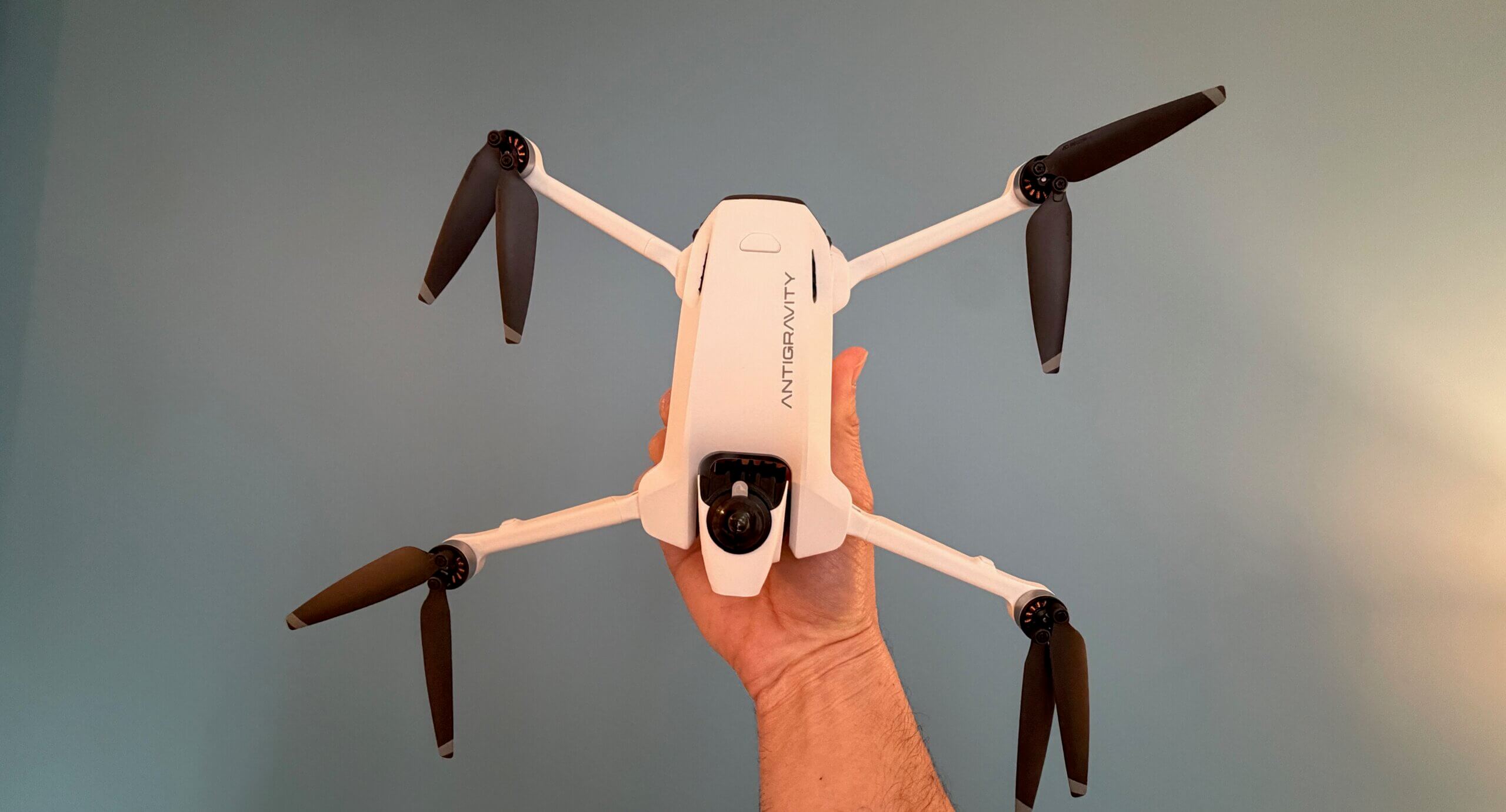
At the core of the Antigravity A1’s appeal is its unique dual-lens configuration. Unlike standard drones that rely on a single, forward-facing camera mounted on a motorized gimbal, the A1 utilizes two ultra-wide-angle lenses. Positioned at the top and bottom of the central fuselage, each lens captures a 200-degree field of view. When these two images are stitched together by the onboard processor, they create a seamless, 360-degree sphere of data.
This design choice has two immediate, industry-shifting implications. First, it eliminates the "blind spot" inherent in traditional drone photography. Second, it allows for the digital removal of the drone’s own body from the final export, creating an "invisible drone" effect that makes the camera appear to be floating unsupported in mid-air.
The sensors utilized are 1/1.28-inch CMOS units. While purists might point to the 1-inch sensors found in top-tier "Pro" photography drones, the A1’s sensors are significantly larger than those found in standard 360-degree action cameras. This results in superior low-light performance and a higher dynamic range—a critical factor for travelers shooting in the high-contrast conditions of midday desert sun or the subtle shadows of a deep forest.
Chronology: From Concept to Consumer Reality
The development of the A1 was marked by a shift in focus from flight performance to creative workflow.
- Q1 2025: Initial prototypes were tested with traditional gimbal stabilization, but internal data showed a high failure rate in flight due to the weight of the motors.
- Q3 2025: The engineering team pivoted to the current dual-lens, software-stabilized "FlowState" architecture. This was the turning point that allowed the weight to be kept under the critical 250-gram regulatory threshold.
- Late 2025 (The Launch): The A1 officially hit the market. It was immediately lauded for its "cinewhoop" flight dynamics—a style that prioritizes stability and smoothness over the raw, aggressive speed of FPV racing drones.
- 2026: Widespread adoption among travel influencers and adventure filmmakers began to normalize the use of 360-degree drones as a primary, rather than secondary, camera.
Supporting Data and Performance Metrics
The drone’s design is a triumph of regulatory navigation. In most international jurisdictions, drones weighing 250 grams or more are subject to rigorous registration and flight path restrictions. Antigravity engineered the A1 to weigh exactly 249 grams with its standard battery, allowing pilots to bypass much of the "red tape" that usually accompanies commercial-grade aerial photography.
Flight Dynamics and Handling
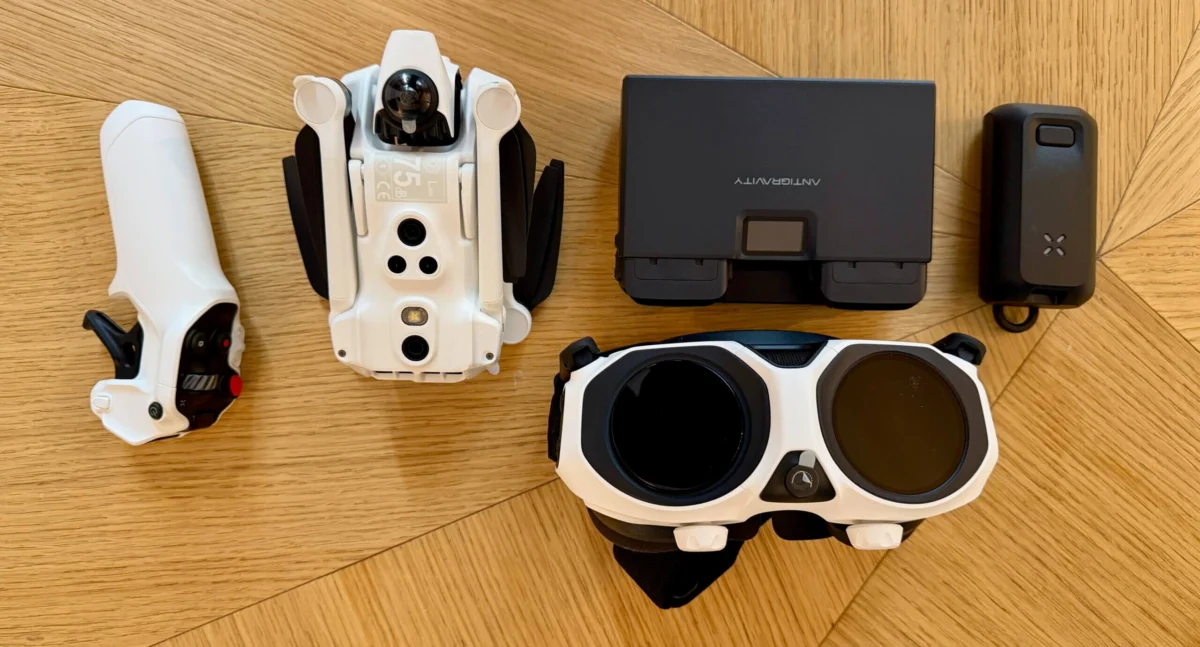
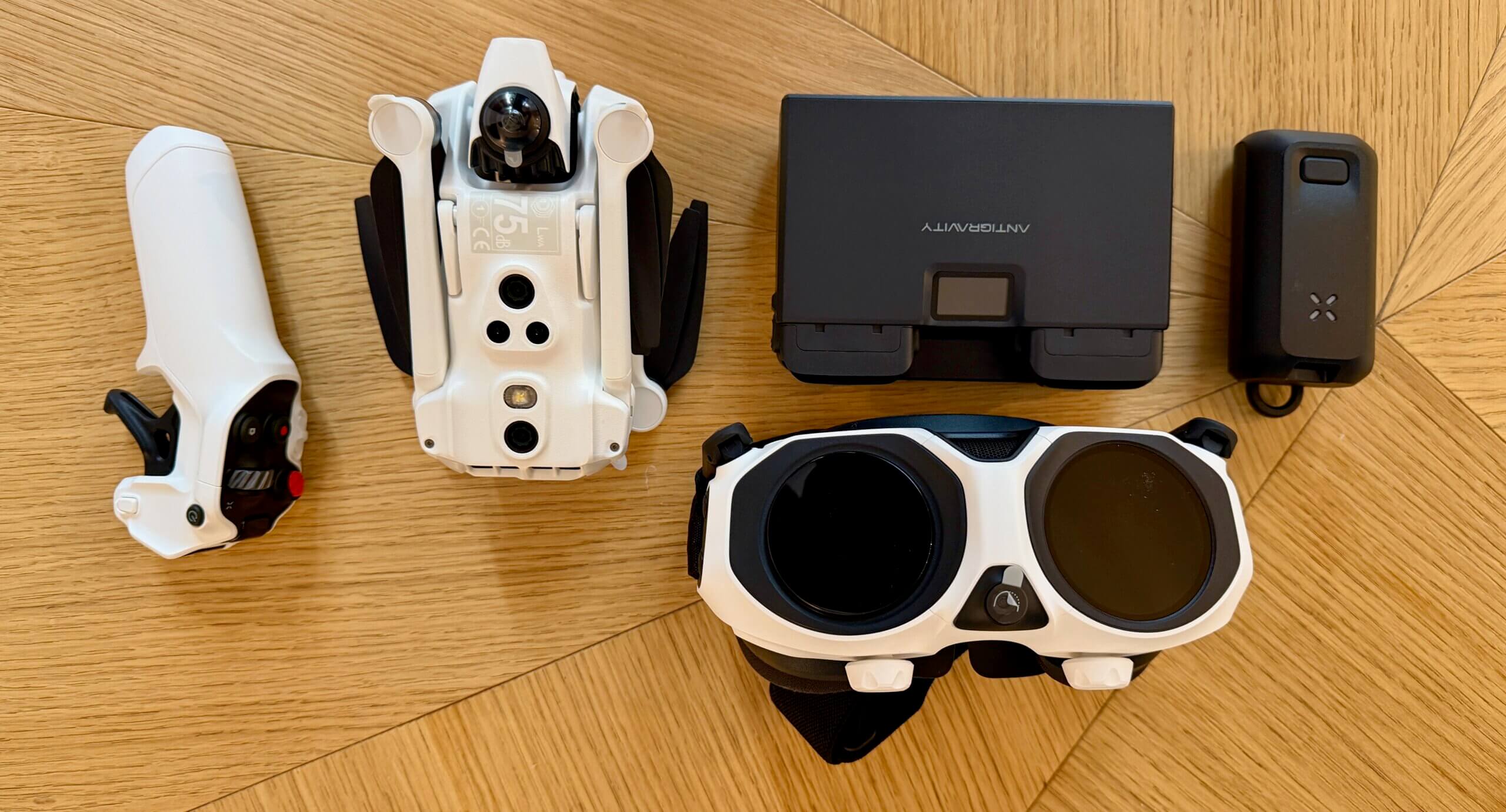
The A1 is built from high-grade carbon-fiber-reinforced polymer, providing a superior strength-to-weight ratio compared to the ABS plastic common in budget drones. When folded, the unit is roughly the size of a large smartphone, making it an ideal companion for minimalist travelers.
- Top Speed: 36 mph (consistent for tracking vehicles or cyclists).
- Flight Time: 24 minutes (theoretical); 19–20 minutes (real-world).
- "Turtle Mode": An integrated feature that allows the drone to flip itself over using its propellers should it land upside down, saving the pilot from having to retrieve the craft manually.
The Vision Goggles Experience
The optional Vision Goggles represent the most significant leap in user experience. Featuring dual 4K micro-OLED displays with a 120Hz refresh rate, the goggles utilize integrated head tracking. Because the drone is capturing in 360 degrees, the user’s movement dictates the view. If the pilot turns their head to the left, the feed pans left, providing an immersive, spatial awareness that is impossible to replicate with a traditional fixed-camera interface.
Official Perspectives: The "FlowState" Philosophy
Antigravity’s marketing team emphasizes that the A1 is not meant to replace cinema-grade cameras, but rather to liberate the pilot from the stress of technical operation. "By removing the need for a gimbal and the stress of manual framing," the company stated in their launch press release, "the pilot can focus on the one thing that truly matters: the story they are trying to tell."
The "FlowState" algorithms are the backbone of this philosophy. By processing the motion of the drone in real-time, the software cancels out wind gusts of up to 20 mph, ensuring that the footage remains as steady as if it were mounted on a professional-grade tripod. This software-first approach to stabilization is what allows for the compact, lightweight form factor.
Implications for the Future of Travel Media
The implications of the Antigravity A1 for the travel industry are profound.
1. The Death of the "Re-take"
Traditionally, if a drone pilot missed a shot—perhaps they didn’t pan correctly or the object drifted out of frame—they had to land, reset, and fly the entire path again. With 360-degree capture, the entire environment is recorded. In post-production, the creator can reframe the shot from any angle. A single flight now yields the equivalent footage of three or four flights with a standard drone.
2. The Rise of the AI-Assisted Creator
The accompanying "Antigravity Studio" app is perhaps as important as the drone itself. It features "Auto-Frame," an AI tool that identifies subjects and automatically generates a cut that keeps them in focus. For the solo traveler, this is equivalent to having a virtual camera crew that never misses a beat.
3. A New Genre of Content
We are entering an era of "immersive cinematography." The ability to transition from a wide-angle bird’s-eye view to a close-up tracking shot in the same clip—without having to physically re-pilot the drone—allows for a narrative fluidity that was previously impossible.
Conclusion: Is the A1 Right for You?
The Antigravity A1 is not for the pilot who needs to capture high-speed FPV racing footage, nor is it for the professional cinematographer who requires a 1-inch sensor for large-format commercial printing. However, for the vast majority of creators, travelers, and storytellers, it is a game-changer.
By prioritizing creative liberation over technical rigidity, Antigravity has effectively bridged the gap between traditional cinematography and the immersive, interactive world of VR. It represents the first time that the equipment is finally taking a backseat to the imagination of the person behind the controls. Whether you are documenting a solo trek through the Andes or filming a bustling market in Tokyo, the A1 ensures that you are capturing the moment as it happens, rather than worrying about the angle at which it is being recorded. It is, quite simply, an essential addition to the modern traveler’s toolkit.