Two hundred and fifty years after the ink dried on the Declaration of Independence, the American experiment is being reimagined—not through the lens of parchment and quill, but through the seamless interface of the cloud. In a provocative new commercial that has ignited a firestorm of online discourse, Google posits a whimsical, high-tech alternative history: What if the Founding Fathers had access to Google Workspace?
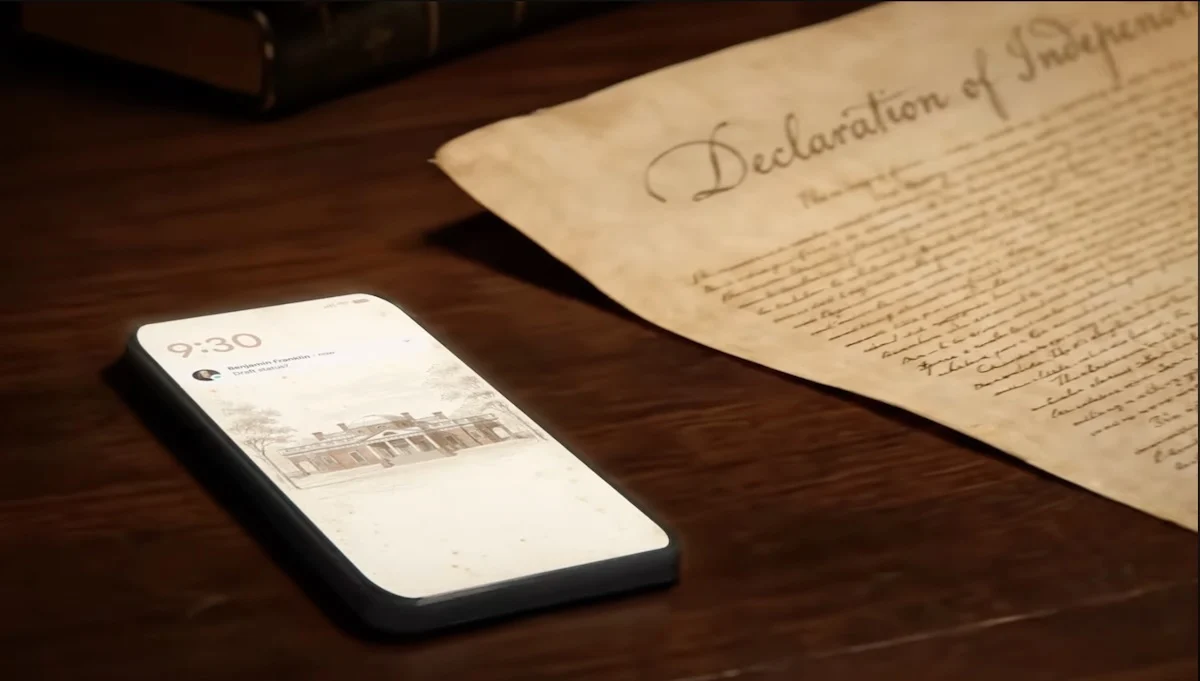
Titled “Group project, but make it 1776,” the advertisement seeks to bridge the gap between historical gravitas and modern corporate utility. Yet, by superimposing contemporary AI-driven productivity tools onto one of the most solemn moments in American history, Google has inadvertently touched a nerve, prompting a broader conversation about the role of generative AI in our professional lives and the sanctity of historical narratives.
The Anatomy of a Modern Myth: A Chronology of the Campaign
The advertisement opens with a stylistic nod to the colonial era, quickly transitioning into the frantic, hyper-connected rhythm of a modern startup. Thomas Jefferson is depicted mid-draft, grappling with the weight of revolution, when he is interrupted by a series of notifications. Ben Franklin, ever the tinkerer, pings him with a barrage of texts, signaling the beginning of a collaborative sprint.
The narrative arc follows the standard “Google Workspace” workflow:
- Drafting: Jefferson uses Google Docs to iterate on the text, with suggested edits appearing in the margins.
- Scheduling: A virtual meeting is organized via Google Calendar, bringing together the geographically dispersed delegates.
- Virtual Presence: The delegates convene on Google Meet, though in a humorous nod to the "camera-off" culture of remote work, the screen is filled with black squares, a subtle joke about the ubiquitous nature of modern video conferencing fatigue.
- The AI Integration: As the project progresses, the founders utilize Google’s “help me visualize” tool to brainstorm the national seal—cycling through various animal motifs. Gemini, Google’s AI assistant, provides note-taking services during their strategy session.
- The Climax: The founders consult Gemini for advice on how to handle King George III’s request for document access, ultimately opting to revoke his permissions, metaphorically "ghosting" the British Crown.
- Finalization: The Declaration is digitally signed, followed by a celebratory digital fireworks display.
Behind the Screen: The Technology of the Ad
The advertisement stands out from the recent wave of Super Bowl-era tech commercials. Unlike previous campaigns that leaned heavily into the "AI-as-creator" trope, this spot positions AI as a secondary assistant rather than a primary author. It avoids the pitfalls of its predecessor—the infamous "Dear Google" spot, which showed a father using AI to write a sentimental letter for his daughter—by keeping the actual content of the Declaration firmly in the hands of the human founders.
However, the production of the ad itself has become a point of contention. The visual style possesses that distinct, smooth, and slightly ethereal "uncanny valley" glow that has become the hallmark of AI-generated video. While Google has not fully disclosed the extent of generative AI usage in the rendering of the commercial, the aesthetic suggests that the company is leaning into the very tools it is promoting.
Official Responses and Public Reception
The public response to the campaign has been deeply polarized, illustrating the widening divide between mainstream marketing consumption and the more critical, tech-savvy pockets of the internet.
On platforms like YouTube and Instagram, the comments are largely benign, with many users appreciating the "tongue-in-cheek" humor of Sam Adams suggesting they settle the revolution "over a beer." The marketing objective—to humanize the founders while highlighting the utility of Workspace—appears to have landed with the intended demographic.
Conversely, the reaction on Bluesky has been starkly different. Critics have labeled the campaign "cringey" and "stunningly tone-deaf," arguing that gamifying the birth of a nation is an affront to the historical struggle it represents. Historians have been among the loudest detractors. Angus Johnston, a prominent historian and observer of digital culture, offered a scathing critique of the premise: "Even in a corny fantasy joke, it’s impossible to make the case that AI is a useful tool for political organizing, writing, or human collaboration."
Johnston also highlighted a fascinating irony: despite the heavy marketing push, the advertisement reveals how little of the "real" work of revolution can actually be outsourced to an algorithm. The tools shown are productivity enhancers, not political strategists, a distinction that seems lost in the high-gloss production.
The Implications: AI, History, and the Future of Work
The "1776" campaign is more than just a commercial; it is a manifestation of Google’s ongoing struggle to define the value proposition of AI in a world that is increasingly skeptical of its creative output. By rooting its product in historical reality, Google is attempting to ground its futuristic AI tools in the bedrock of traditional American values.
The Erosion of Historical Gravity
Critics argue that by framing the Declaration of Independence as a "group project," Google is participating in a wider trend of trivializing historical events to make them palatable for the digital age. When the founding of a nation is treated with the same levity as a corporate marketing deck, it risks eroding the public’s understanding of the actual stakes involved in such a transition.
The Productivity Paradox
The ad raises an important question regarding the limits of AI in creative and high-stakes environments. If AI can help with drafting, scheduling, and brainstorming, where is the line? By deliberately avoiding the suggestion that Gemini wrote the Declaration, Google is attempting to protect itself from the "AI-writer" backlash that haunted its previous campaigns. However, by showcasing AI as an essential participant in the meeting, they are simultaneously suggesting that no high-level decision should be made without the input of a chatbot.
The "Cringe" Factor in Tech Marketing
The negative reception on platforms like Bluesky suggests a fatigue with "AI evangelism." As companies continue to push the narrative that AI will revolutionize every aspect of our lives, the public—particularly those who spend their lives in digital spaces—is becoming increasingly resistant to corporate attempts to manufacture "relatability" through artificial intelligence.
Conclusion: The Verdict of History
Google’s “Group project, but make it 1776” is a masterclass in modern corporate messaging—it is polished, humorous, and technically impressive. Yet, it also serves as a cautionary tale about the intersection of technology and culture. As we approach the 250th anniversary of the United States, the desire to connect the past with the present is understandable. However, when that connection is made through the lens of productivity software and AI assistants, the result is a friction between the weight of history and the lightness of a corporate pitch.
Ultimately, the campaign succeeds as an advertisement for Google Workspace, proving that the tools are robust and versatile. But as a cultural artifact, it remains a controversial attempt to merge the digital present with the revolutionary past. Whether or not it will be remembered as a clever piece of marketing or a "tone-deaf" stumble remains to be seen. What is clear, however, is that as AI continues to permeate our lives, the debate over how we use it to remember, rewrite, or reimagine our history is only just beginning.
Disclaimer: This article contains affiliate links. When you purchase through links in our articles, we may earn a small commission. This does not affect our editorial independence or the integrity of our reporting.