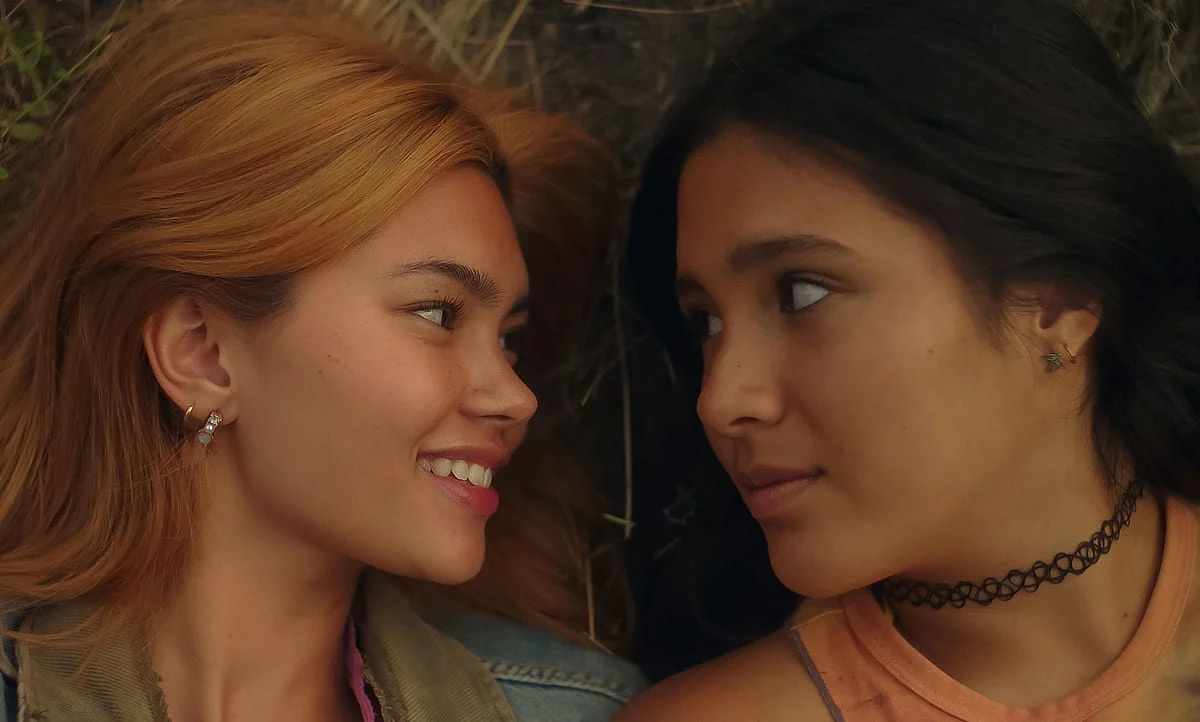
In the landscape of modern pop culture, the journey of "Girls Like Girls" is nothing short of a miracle. What began as a three-minute, 50-second music video in 2015 has blossomed into a multi-generational touchstone. Hayley Kiyoko, the pop polymath often affectionately dubbed "Lesbian Jesus" by her devoted fanbase, has successfully completed the rare transition from viral singer-songwriter to feature-length filmmaker. Her directorial debut, the feature film adaptation of Girls Like Girls, arrives a decade after the original song’s debut, proving that while pop culture cycles move at lightning speed, the fundamental human experience of queer self-discovery remains timeless.
The Chronology of a Cultural Phenomenon
To understand the weight of the new film, one must trace the timeline of its origins. In 2015, the music industry was in a different place regarding queer representation. When Kiyoko released the track "Girls Like Girls," she wasn’t just dropping a hit; she was creating a manifesto. The song’s central hook—"Girls like girls like boys do"—was a simple, plainly worded statement that cut through the noise of the mainstream, normalizing lesbian desire with a nonchalance that felt revolutionary at the time.
The accompanying music video, co-directed by Kiyoko, functioned as a condensed short film. It told the story of two suburban teenagers realizing that their friendship had morphed into something deeper. The visual narrative resonated so intensely that fans clamored for more, leading to a young adult (YA) novel that expanded the backstories of the characters, Coley and Sonya. Now, ten years later, the film adaptation serves as the final, fully realized iteration of this creative arc. It is a testament to the longevity of the story that, despite the decade-long gap, the film feels neither dated nor derivative; rather, it arrives as a polished, mature meditation on the very feelings that first launched the song into the cultural zeitgeist.
A Cinematic Debut Defined by Sensitivity
The most striking aspect of the feature film is that it requires no prior knowledge of the song, the novel, or even Kiyoko’s musical career to be enjoyed. It stands as a standalone piece of summer-soaked cinema. The story follows 17-year-old Coley, played with profound depth and nuance by Maya da Costa, as she navigates a lonely transition to a new town following the death of her mother. Her father, portrayed by Zach Braff, remains a distant, somewhat enigmatic figure, leaving Coley to find her own way in a world that feels both vast and claustrophobic.
Kiyoko’s directorial eye is defined by a sense of "emotional purity." The film captures the specific, heightened intensity of first love—the kind of love that feels as though it is occurring on a grand, world-ending scale, even if the stakes are contained within the borders of a quiet suburb. The collaboration between Kiyoko, cinematographer Sonja Tsypin, and screenwriters Chloe Okuno and Stefanie Scott—the latter of whom starred in the original 2015 music video—results in a visual and narrative language that is both intimate and expansive.
The Strategic Use of Nostalgia
The creative team made the deliberate decision to set the film in the early 2000s. This choice serves a dual purpose. On one hand, it taps into a rich vein of millennial nostalgia—the era of desktop instant messaging and a pre-smartphone adolescence where communication was deliberate and often agonizingly slow. However, the setting also serves a more pointed sociological purpose: it highlights the staggering shift in queer visibility over the last twenty years.
For younger audiences who cannot conceive of a life without the constant, digital connectivity of the modern age, the film offers a window into a more isolated, quiet form of queer longing. For older LGBTQ+ viewers, the film acts as a cathartic mirror. It reflects a time when queer identity was often navigated in silence, without the benefit of the normalizing cultural touchstones—like Heartstopper or the widespread social media discourse—that exist today. By placing the story in the early aughts, Kiyoko successfully juxtaposes the internal chaos of adolescence against the external landscape of an era that was significantly less attuned to the nuances of queer identity.
Character Dynamics and the "Will-They-Won’t-They" Tension
At the heart of the film is the budding relationship between the shy, observant Coley and the outwardly charismatic, yet internally volatile, Sonya, played by Myra Molloy. The film’s greatest strength lies in its refusal to treat Coley’s sexuality as a point of insecurity. Unlike many traditional "coming-out" narratives, Coley is already comfortable with who she is; she is simply waiting for the right person to see her.
The tension builds through the small, seismic shifts in their interactions. Kiyoko excels at capturing the "bodily itch" of nascent desire: the borrowed jacket, the hesitant touch of knees in the back of a car, and the subtextual decoding of digital messages. These moments are rendered with a delicate touch, avoiding the tropes of teen melodrama in favor of a more grounded, visceral experience.
The secondary characters, including the boorish and territorial Trenton (Levon Hawke), serve to highlight the contrast between the girls’ authentic connection and the performative nature of the world around them. While Sonya struggles more with the weight of social expectations, her performance is balanced by a compelling, "hot-and-cold" volatility. The chemistry between da Costa and Molloy is the engine of the film, transforming what could have been a standard coming-of-age story into a raw, honest look at the complexity of intimacy.
The Implications of a Pop-Culture Legacy
As a filmmaker, Hayley Kiyoko has proven that her vision extends far beyond her own songbook. The success of this film has significant implications for her career, establishing her as a director of considerable skill and sensitivity. She demonstrates an ability to translate the "dizzy, obsessive ecstasy" of pop music into the visual medium without losing the core humanity of the characters.
The film’s conclusion is particularly resonant. As the credits roll, a new, slowed-down, blissed-out version of the original "Girls Like Girls" plays, signaling a full-circle moment for the creator. The lyric "We will be everything that we’d ever need" is delivered with a sense of perspective that only comes with time. For a thirtysomething artist looking back at her own teenage ideals, the song now carries the weight of hard-won wisdom.
Conclusion: A Lasting Impact
Girls Like Girls is a rare example of a cross-media project that succeeds on its own merits. It is an uncommonly lovely teen movie that captures the "woozy, sunburnt" feeling of a June afternoon, perched precariously between possibility and heartbreak. By focusing on the "soul connection" rather than the struggle for validation, Kiyoko has created a film that is both a tribute to the past and a gift to the present.
The legacy of the project—spanning a decade, a song, a book, and now a film—suggests that the narrative of Coley and Sonya will continue to find new audiences. It serves as a reminder that the stories of young, queer women are not just niche interests; they are essential, universal, and deeply deserving of the cinematic treatment they have received here. Whether one is a long-time fan of Kiyoko or a newcomer to her work, the film stands as a vibrant, necessary addition to the canon of contemporary queer cinema, capturing the profound, dizzying ecstasy of first love with a clarity that feels as fresh as it does inevitable.