By International Desk, July 3, 2026
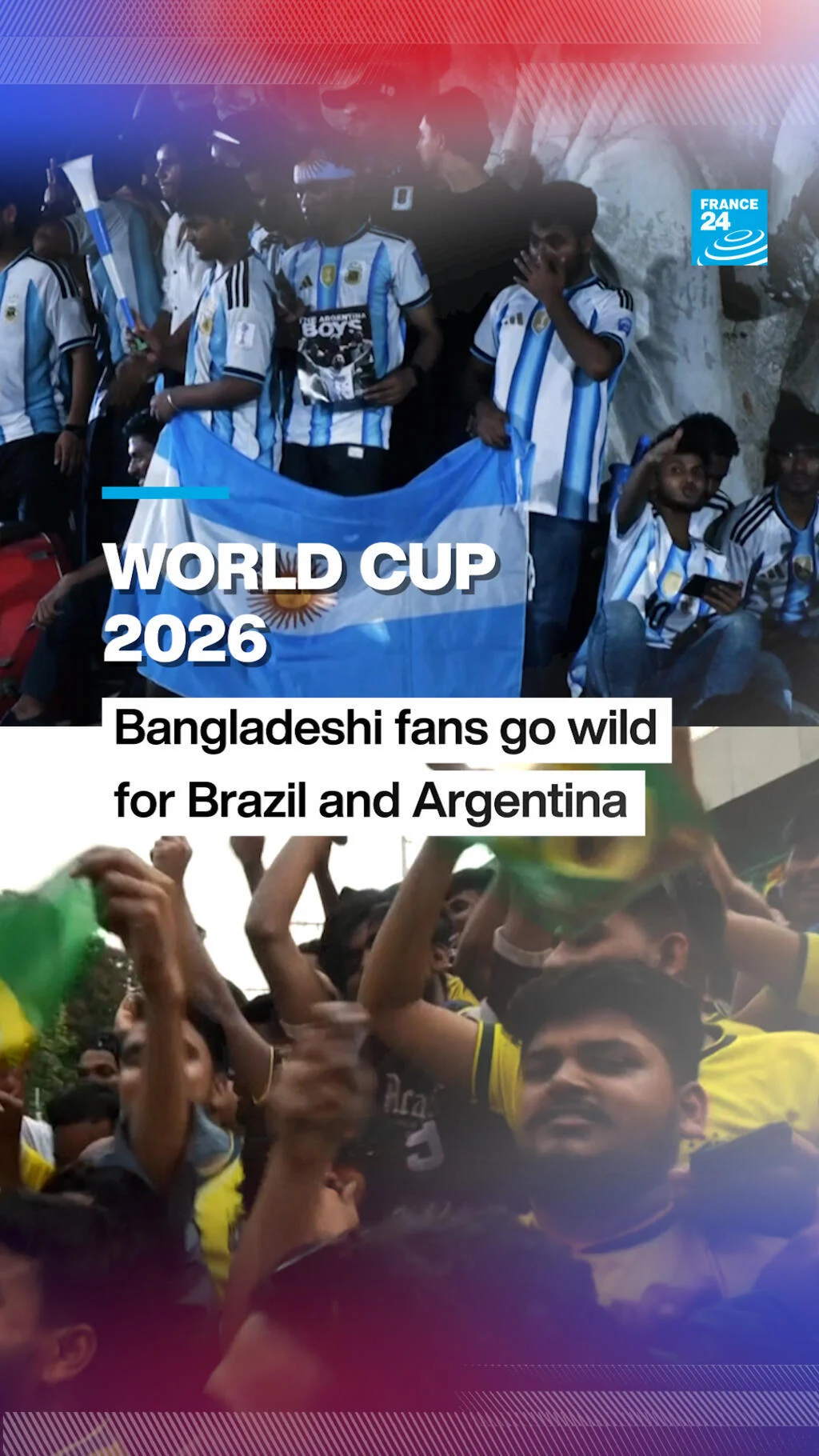
As the 2026 FIFA World Cup reaches its fever pitch, the epicenter of football fervor has once again shifted away from the host stadiums in North America to the vibrant, monsoon-drenched streets of Dhaka and beyond. In Bangladesh, a nation of over 170 million people, the tournament has transcended the role of a mere sporting event, evolving into a cultural phenomenon that pits neighbor against neighbor in a colorful, decade-long rivalry between supporters of Brazil and Argentina.
While the national team of Bangladesh has never qualified for a World Cup, the country’s passion for the "Beautiful Game" is arguably unparalleled globally. This year, the intensity of the support has reached unprecedented levels, with the entire nation effectively partitioned into two camps: the Seleção (Brazil) and La Albiceleste (Argentina).
Main Facts: A Nation Divided by Colors, United by Passion
The phenomenon of Bangladeshi support for Latin American football giants is not a new development, but in 2026, it has reached a state of heightened visibility. Across the country, from the bustling urban sprawl of Dhaka to the remote rural villages of the Chittagong Hill Tracts, the landscape is a patchwork of yellow-green and sky-blue-white.
The Geography of Fandom
The rivalry is rarely geographic; rather, it is familial, ideological, and deeply social. It is common to find households where a husband supports Argentina while his wife cheers for Brazil, leading to good-natured banter and, occasionally, heated domestic debates. In neighborhood "fan zones," massive projectors are set up to broadcast matches, and the atmosphere mimics the intensity of a stadium in Rio de Janeiro or Buenos Aires.
The Economic Impact
The World Cup has triggered a local economic surge. Textile markets in Dhaka have seen a record-breaking demand for team jerseys. While many are official merchandise, the local cottage industry has flourished by producing millions of flags, scarves, and team-colored kits. Retailers report that during match days, local businesses often adjust their operating hours to accommodate the viewing schedules, with productivity dips being treated as a collective, silent agreement among the workforce.
Chronology: The Evolution of a Unique Fandom
To understand why a South Asian nation is so deeply invested in teams from across the Atlantic, one must look at the history of broadcast technology and cultural osmosis.
1980s–1990s: The Genesis of the Cult
The roots of this obsession lie in the late 1980s. With the advent of color television, the 1986 World Cup in Mexico became a transformative moment for Bangladeshi youth. The emergence of Diego Maradona as a global icon captivated a generation that was looking for a sporting identity during a time of political transition. Simultaneously, the magical, fluid football of the Brazilian team in the 1990s—led by Romário and later Ronaldo—secured a stronghold on the hearts of those who preferred flair and attacking prowess.
2010–2022: The Digital Acceleration
The rise of social media and high-speed internet in the 2010s accelerated the tribalism of these fandoms. Fans began to engage directly with international media, joining global forums and translating the passion of the streets into digital activism. By the 2022 World Cup, the viral videos of thousands of Bangladeshis celebrating Argentina’s win in the streets of Dhaka gained international attention, even prompting official acknowledgments from the Argentine government.
2026: The Peak
Entering the 2026 tournament, the fandom has moved beyond simple viewing. It is now deeply integrated into the national identity. This year, the government and local municipal bodies have had to manage traffic flow and security in areas where thousands congregate to watch games, treating the World Cup as a major national festival comparable to Eid or Pohela Boishakh.

Supporting Data: By the Numbers
The scale of this fandom is supported by staggering metrics:
- Flag Production: Local textile mills reported an increase of 400% in fabric production dedicated solely to the blue, white, green, and yellow colors in the three months leading up to the tournament.
- Social Media Engagement: During the opening week of the 2026 World Cup, hashtags related to Brazil and Argentina in Bangladesh trended higher than local political or social hashtags, accounting for over 65% of the country’s total Twitter/X activity.
- Viewership: Estimates from local cable providers suggest that viewership for major Argentina or Brazil matches exceeds 120 million people, a figure that includes both home viewers and large-scale public screenings.
- Economic Contribution: The informal economy generated by the "World Cup fever"—including snacks, fan merchandise, and event hosting—is estimated to have contributed nearly 0.5% to the national GDP during the tournament window.
Official Responses: Diplomacy Through Sport
The fervor of the Bangladeshi public has not gone unnoticed by the nations they support.
The View from Buenos Aires and Brasilia
The Argentine government, in particular, has leaned into this relationship. Following the 2022 World Cup, Argentina reopened its embassy in Dhaka, a move largely attributed to the immense goodwill generated by the Bangladeshi fans. In 2026, diplomatic representatives from both Brazil and Argentina have participated in local cultural exchanges, acknowledging the "second home" status their teams hold in South Asia.
The Bangladeshi Government’s Stance
For the Bangladeshi government, the World Cup provides a unique soft-power opportunity. Officials have noted that the passion for the tournament fosters a sense of national unity and provides a healthy outlet for youth energy. "We see this as a celebration of global connectivity," a Ministry of Information spokesperson stated. "Even though our team isn’t on the pitch, our hearts are, and that connects us to the rest of the world."
Implications: A Mirror to Modern Globalism
The phenomenon of Bangladeshi support for the World Cup raises profound questions about how globalization alters the concept of "home team" and national identity.
Identity Beyond Borders
Sociologists argue that for many in developing nations, the World Cup offers an escape into a meritocratic world. In the game of football, the playing field is leveled; the talent of a player from a favela in Brazil or a village in Argentina can be appreciated by a student in Dhaka. It is a form of cultural escapism that allows individuals to align themselves with greatness, regardless of their own geographical constraints.
The Challenge of Infrastructure
While the passion is heartwarming, it also highlights the lack of investment in local sports. Critics argue that the energy spent on foreign teams should be channeled into developing Bangladesh’s domestic football league. The contrast between the millions spent on foreign jerseys and the struggling local clubs is a point of contention among sports analysts.
Long-term Diplomatic Dividends
The long-term implication of this fandom is the strengthening of ties between the Global South. By forging deep cultural bonds with Latin American nations, Bangladesh is diversifying its diplomatic reach, moving beyond traditional trade partners to build emotional and cultural bridges with South America.
Conclusion
As the 2026 World Cup progresses, the streets of Dhaka will continue to pulse with the rhythm of distant continents. Whether the final trophy lands in the hands of Brazil or Argentina, for the people of Bangladesh, the victory has already been won. They have successfully participated in the global dialogue, transforming themselves from passive spectators into the world’s most devoted, albeit distant, stakeholders in the game of football. The flags will eventually come down, but the sense of belonging to a global community remains, proving that in the modern era, the most powerful borders are not those on a map, but those we choose to cross through the shared language of sport.