Washington D.C. – In a significant bipartisan stride towards establishing a robust federal framework for artificial intelligence, the House Science, Space and Technology Committee on Thursday advanced a slate of AI-focused and data center bills. The legislative package, which includes measures to codify a critical federal office dedicated to AI standards and innovation, alongside initiatives to democratize AI research access, underscores Congress’s growing urgency to shape the future of this transformative technology.
The committee’s actions signal a clear intent to move beyond theoretical discussions and establish concrete institutional pillars for U.S. leadership in AI. While largely unified in their vision, lawmakers engaged in spirited debates, particularly concerning the appropriate funding levels for these nascent but vital federal programs.
Codifying the Center for AI Security and Innovation (CAISI)
At the heart of Thursday’s legislative progress was a bill aimed at formally enshrining the Center on AI Standards and Innovation within the Commerce Department’s National Institute of Standards and Technology (NIST) into law. Previously known as the AI Safety Institute under the Biden administration, the center is poised for a name change to the "Center for AI Security and Innovation" (CAISI), a subtle yet significant shift reflecting a broadened mandate. The committee’s unanimous vote in favor of this bill highlights widespread agreement on the necessity of a dedicated entity focused on AI governance.
From Institute to Statutory Mandate: The Evolving Role of CAISI
The evolution from an administratively established institute to a statutorily mandated center underscores the perceived permanence and importance of its mission. NIST, renowned for its role in developing standards across various technological domains, is seen as the natural home for such an entity. CAISI’s core functions are expected to revolve around developing and promoting technical standards, benchmarks, and guidelines for AI, with a particular emphasis on security, trustworthiness, and risk mitigation.
In an era where AI models are rapidly advancing in complexity and capability, ensuring their safety, security, and ethical deployment has become a paramount concern for policymakers, industry leaders, and the public alike. Codifying CAISI would provide it with the stability and authority necessary to tackle these intricate challenges, fostering innovation while simultaneously mitigating potential societal harms. The inclusion of "Security" in its new name further emphasizes the growing recognition of AI’s dual-use potential and the imperative to address cybersecurity vulnerabilities inherent in AI systems, as well as the risks posed by malicious actors.
The Crucial Funding Debate: Investing in America’s AI Future
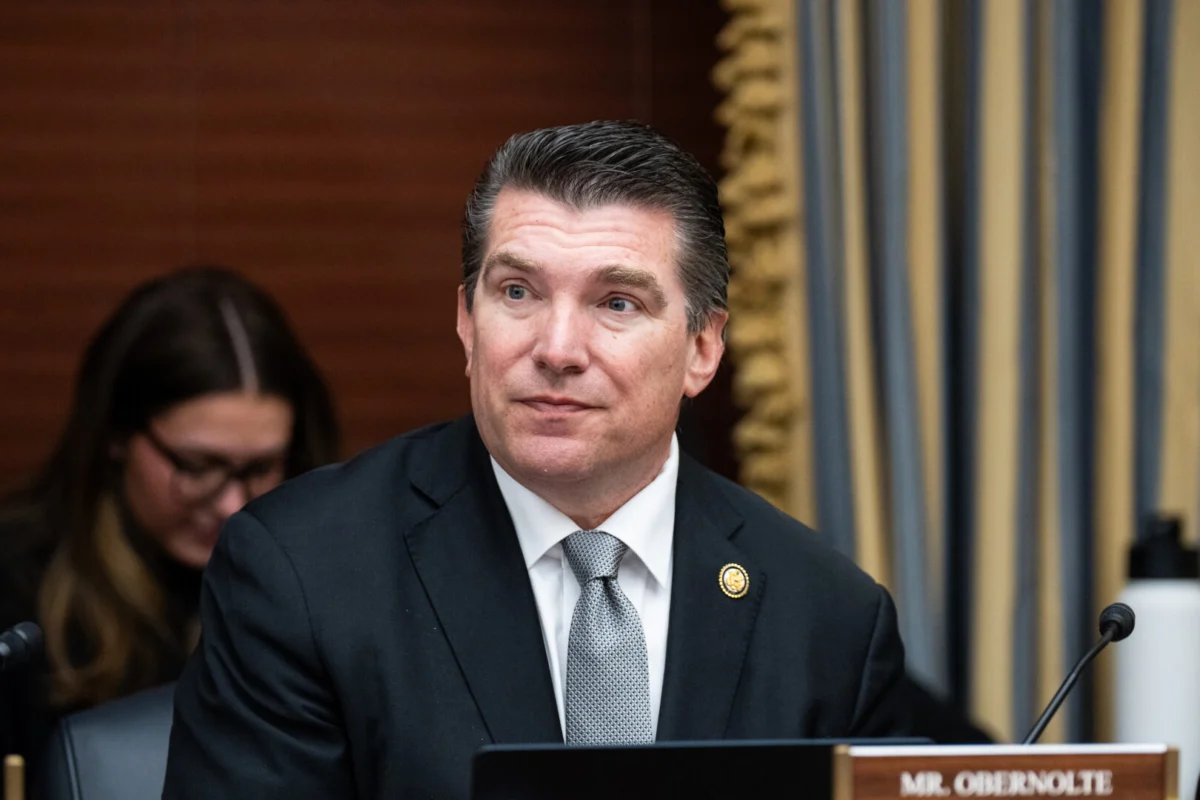
While the committee found consensus on the existence of CAISI, the question of its financial sustenance sparked a lively debate. The bipartisan-backed bill, championed by Rep. Jay Obernolte (R-Calif.), initially proposed authorizing $20 million per year for the center for fiscal years 2027 through 2032. However, this figure was quickly deemed insufficient by several lawmakers, including Committee Chairman Brian Babin (R-Texas) and Rep. Obernolte himself.
In his opening remarks, Chairman Babin acknowledged the funding shortfall, stating his support for increasing the authorized level. "We should, however, ensure that we authorize CAISI in a manner that does not undermine future progress on the bill," Babin cautioned, committing to work with sponsors to "get that number right going forward." This statement reflects a delicate balance between securing adequate resources and ensuring the bill’s smooth passage through the legislative process.
Rep. Obernolte, recognizing the gravity of CAISI’s responsibilities, went further, offering an amendment to dramatically increase the authorization level to $100 million per year. He argued that the center’s extensive mandate – which includes developing standards, conducting evaluations, and fostering international collaboration on AI safety and security – would be impossible to fulfill with the lower funding. "Unfortunately, I acknowledge that it is not possible right now to know exactly how much money is required to allow CAISI to do its job," Obernolte conceded, ultimately withdrawing his amendment. He expressed optimism that a clearer picture of funding needs would emerge as the bill progresses towards potential floor action. For context, Congress appropriated up to $10 million for the center for fiscal year 2026, highlighting the significant jump Obernolte sought.
The debate over funding levels is not merely about numbers; it reflects a broader national discussion about the strategic importance of investing in foundational AI infrastructure. Adequate funding is crucial for attracting top talent, acquiring necessary computing resources, and establishing robust testing and evaluation capabilities essential for CAISI to effectively fulfill its mission. The challenge lies in accurately projecting the resources needed for an rapidly evolving field, while also navigating the realities of congressional budget allocations.
Staffing for Expertise: The "Critical Technical Experts" Conundrum
Beyond financial resources, the ability to attract and retain highly skilled personnel is critical for an organization like CAISI. Rep. Obernolte also offered, and subsequently withdrew, an amendment to remove a cap on the number of "critical technical experts" the center could hire. This points to another significant challenge: the competitive landscape for AI talent. The private sector often offers highly lucrative compensation packages that government agencies struggle to match. Ensuring CAISI can recruit and retain the best minds in AI security and innovation will be vital for its success. Obernolte acknowledged that the appropriate number of experts was not yet clear, echoing his sentiment on funding, and opted to revisit the issue at a later stage.
Establishing the National AI Research Resource (NAIRR)
In a parallel and equally vital move, the committee voted unanimously, 29-0, to advance a bill that would formally establish the National AI Research Resource (NAIRR) in statute. The NAIRR, which was initially launched as a pilot program in 2024, aims to address a critical bottleneck in AI development: access to high-performance computing resources, extensive datasets, and advanced tools.
Democratizing AI Research Access: Leveling the Playing Field
Rep. Obernolte, the bill’s sponsor, passionately described the NAIRR as a "shared national research infrastructure to provide AI researchers and students with access to the complex resources, data and toolsets that they need to develop safe and trustworthy AI." His remarks underscored a fundamental concern within the AI community: the increasing concentration of advanced AI research capabilities within a few large technology companies due to the prohibitive cost and scale of resources required to train cutting-edge AI models.
"The concern is that as those resources continue to increase, advanced AI research might only be done behind closed doors by large companies that have access to those resources," Obernolte warned. He emphasized the importance of fostering a diverse and decentralized AI research ecosystem. "We believe it’s very important that advanced AI research continues to also be done in settings like academia in schools across the country as it is right now."
The NAIRR is designed to counteract this trend by providing academic institutions, small businesses, and independent researchers with access to the computational power, curated datasets, and software tools necessary to conduct groundbreaking AI research. This initiative is crucial for democratizing AI innovation, fostering a broader pool of talent, and ensuring that the benefits and responsibilities of AI development are shared across a wider spectrum of society, rather than being confined to a select few corporate giants. By empowering a diverse array of researchers, NAIRR aims to accelerate discovery, promote ethical AI development, and maintain America’s competitive edge in the global AI race.
Broader Legislative Landscape for AI: A Comprehensive Approach
Thursday’s committee actions are part of a broader, concerted effort in Congress to develop a comprehensive national AI strategy. Rep. Obernolte is not only spearheading these individual bills but is also collaborating with Rep. Lori Trahan (D-Mass.) on a bipartisan draft AI framework. This ambitious framework seeks to combine the codification of CAISI and NAIRR with other crucial provisions, including the preemption of many state AI laws, measures for frontier model safety, and mechanisms for monitoring the workforce impacts of AI.
Beyond Individual Bills: Crafting a Holistic Framework
The inclusion of preemption for state AI laws in the broader framework highlights a significant challenge facing the rapidly evolving AI landscape: the potential for a patchwork of conflicting state-level regulations that could stifle innovation and create compliance nightmares for businesses. A federal preemption strategy aims to establish a more unified and coherent regulatory environment, providing clarity and predictability for developers and deployers of AI.
Furthermore, the focus on "frontier model safety" underscores the growing concerns surrounding the most advanced and potentially powerful AI systems. These models, often developed by a handful of leading AI labs, possess capabilities that could have profound societal impacts, both positive and negative. The framework’s intent to monitor workforce impacts acknowledges the disruptive potential of AI on employment and aims to proactively address challenges such as job displacement and the need for retraining initiatives.
This holistic approach, moving beyond siloed legislative efforts, signifies a maturing understanding within Congress of AI’s pervasive nature and the need for integrated policy solutions. It recognizes that AI is not merely a technological issue but one with profound economic, social, and ethical dimensions that require coordinated legislative responses.
Data Centers and Environmental Impact: A Point of Contention
While AI bills garnered significant attention, the committee also advanced measures related to data centers, the physical infrastructure underpinning the digital economy and increasingly, AI computations. Most of these bills were approved on unanimous votes, reflecting broad consensus.
However, a bill directing NIST to improve how data center energy and water use are measured led to a minor "dust-up," revealing underlying tensions regarding environmental accountability. Rep. Daniel Webster (R-Fla.) notably opposed this bill, though without public comment during the markup.
Measuring Energy and Water Use: Community Impacts at Stake
Rep. Luz Rivas (D-Calif.) voiced her intention to offer an amendment that would have "allow[ed] NIST to better understand the impacts that data centers’ energy and water use are having on surrounding communities and their resource demands." This proposed amendment aimed to introduce a more granular and community-focused lens to the environmental assessment of data centers, which are known for their substantial energy consumption and, in many cases, significant water usage for cooling.
Rivas, however, withdrew her amendment, alleging that "the majority threatened to pull the bill if I even offered this amendment." She indicated uncertainty as to whether the decision originated from staff or from Chairman Babin himself. This incident highlights the political sensitivities surrounding the environmental footprint of digital infrastructure, particularly as the demand for AI processing power drives an unprecedented expansion of data centers.
Chairman Babin responded to Rivas’s claim by stating that he encourages "robust debate" but cautioned that "it should never be assumed that by offering an amendment this idea will automatically be considered or adopted." While avoiding a direct confirmation or denial of the threat, his remarks underscored the procedural realities of committee markups, where strategic decisions are often made to ensure bills advance. The controversy, however, underscores a growing public and legislative interest in ensuring that the rapid growth of AI and digital infrastructure does not come at an undue environmental or community cost.
Unanimous Support and Minor Dissent
The overall spirit of Thursday’s markup was one of bipartisan collaboration, with the vast majority of bills passing on unanimous votes. Beyond Rep. Webster’s dissent on the data center bill, Rep. Mike Kennedy (R-Utah) also registered an opposing vote against a bill to direct the National Science Foundation (NSF) to support programs for K-12 AI literacy. Like Webster, Kennedy did not comment on his vote during the markup. These isolated instances of dissent, without accompanying public statements, suggest that while broad consensus exists on the necessity of federal action on AI, nuanced policy disagreements persist. The overwhelming bipartisan support for the core AI infrastructure bills, however, remains the dominant narrative.
The Path Forward: Challenges and Opportunities
The advancement of these bills out of the House Science, Space and Technology Committee marks a crucial step in the legislative journey for federal AI policy. The next stage typically involves consideration by the full House of Representatives, where further debates, potential amendments (especially regarding funding for CAISI), and votes will take place. Should they pass the House, these bills would then move to the Senate for its consideration, where they would need to navigate another complex legislative process, potentially undergoing further modifications.
Next Steps for AI Legislation
The legislative efforts in the House are also occurring concurrently with significant AI policy discussions in the Senate, including the "AI Insights Forums" led by Senate Majority Leader Chuck Schumer. These bipartisan, bicameral discussions aim to develop a comprehensive legislative roadmap for AI, encompassing issues from innovation and workforce to safety and national security. The successful passage of bills like those establishing CAISI and NAIRR would provide tangible building blocks for a broader federal AI strategy, demonstrating legislative capacity to address the technology’s challenges and opportunities.
The challenges ahead are substantial. Securing adequate, sustained funding for initiatives like CAISI and NAIRR will require ongoing political will and a clear articulation of their return on investment. Attracting and retaining top-tier talent in government roles for AI will remain a perennial hurdle. Furthermore, balancing the imperative for rapid innovation with robust safety guardrails and ethical considerations will be an ongoing tightrope walk for policymakers. The global race for AI leadership, with nations like China making aggressive investments, adds another layer of urgency to these domestic legislative efforts.
Conclusion: A Foundation for America’s AI Future
Thursday’s actions by the House Science, Space and Technology Committee represent more than just the passage of a few bills; they symbolize a foundational commitment by the U.S. Congress to proactively shape the artificial intelligence revolution. By moving to codify critical federal institutions like the Center for AI Security and Innovation and the National AI Research Resource, lawmakers are laying the groundwork for a future where American innovation in AI is not only accelerated but also guided by principles of safety, security, and equitable access.
While debates over funding and specific policy nuances will undoubtedly continue, the strong bipartisan consensus demonstrated in the committee signals a shared understanding of AI’s transformative power and the national imperative to foster its responsible development. These legislative steps are vital in ensuring that the United States remains at the forefront of AI innovation, harnessing its potential for economic growth and societal benefit, while simultaneously mitigating its risks for the decades to come. The journey is long, but the initial path has been cleared with purpose and foresight.