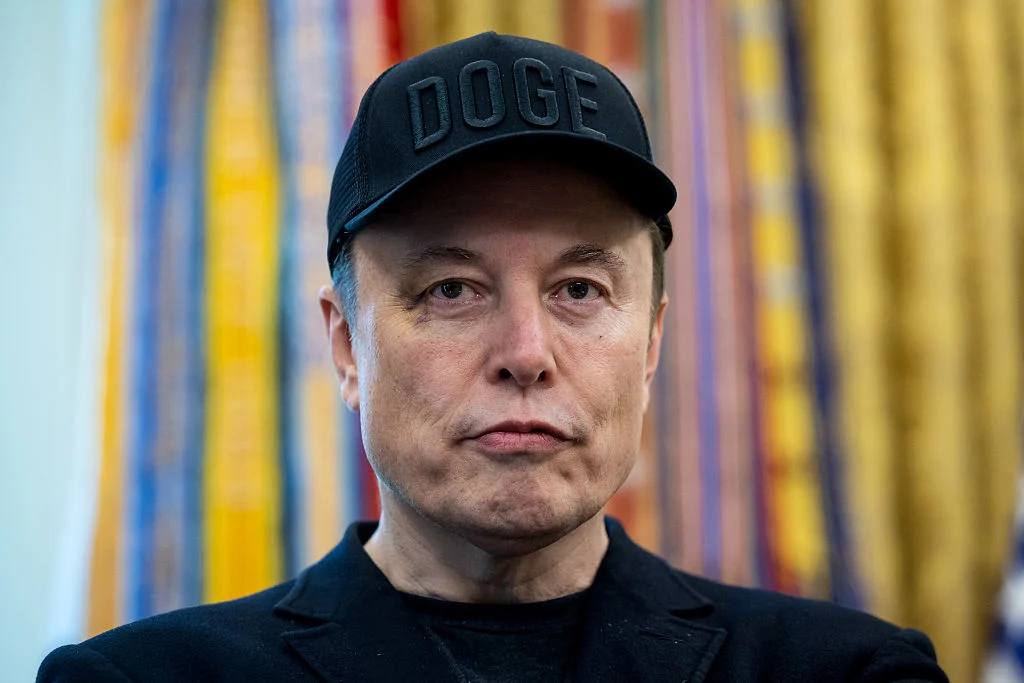
In a striking convergence of tech, politics, and media, the upcoming documentary Musk—an exhaustive, four-hour examination of the world’s richest man, Elon Musk—has found itself at the center of a volatile digital censorship controversy. As the film prepares for its October 9 U.S. theatrical release, its distributor, Bleecker Street, has encountered a wall of resistance from major social media platforms that initially refused to carry paid advertisements for the documentary trailer.
The incident has ignited a fierce debate regarding the boundaries of "political advertising" in the age of algorithmic gatekeeping. While one platform has already pivoted following public pressure, the broader industry’s handling of the documentary highlights a growing anxiety among media conglomerates and tech giants when it comes to navigating the influence of Elon Musk.
A Chronology of the Ad Rejection
The trouble began late last week when reports surfaced that the advertising arms of TikTok, Meta, YouTube, and X (formerly Twitter) had all rejected paid promotional campaigns for the Musk trailer. For a film of this stature, which premiered to critical acclaim at the Venice International Film Festival, such a coordinated block is highly unusual.
The Initial Block
According to initial reporting by The Hollywood Reporter, the major social platforms classified the film’s promotional material as "political content." This classification triggered automated, restrictive policies that effectively silenced the documentary’s marketing efforts across the most influential digital landscapes. For Bleecker Street, this presented a significant hurdle; a film of this nature relies heavily on social media targeting to reach its intended audience in the weeks leading up to its theatrical debut.
The Meta Reversal
The landscape shifted slightly on Saturday. Following inquiries from TechCrunch, Meta—the parent company of Facebook and Instagram—conceded that the rejection was the result of an error. A spokesperson for the company confirmed that the ads are currently being restored, though they stopped short of explaining exactly how such a widespread "error" occurred across their automated review systems.
The Silence of the Others
While Meta has corrected its course, the status of the campaign on YouTube, TikTok, and X remains significantly more precarious. As of this writing, X’s refusal is widely viewed as the most predictable, given that the platform is owned by the subject of the documentary himself. Musk has made no secret of his disdain for the project, taking to his platform to post that "Dogshit is worth more respect than Gibney," a clear signal that the film will receive no quarter on his home turf.
The "Political Content" Defense: A Pretext for Censorship?
The core of the dispute lies in the platforms’ reliance on "political content" filters. Both TikTok and Meta (in the European Union) maintain strict, and often opaque, policies regarding political advertising.
TikTok, for instance, has long maintained a total ban on political ads, arguing that they do not fit the nature of their user experience. Meta has similarly moved to restrict such content to prevent interference in democratic processes. However, the application of these rules to Musk—a documentary produced by an independent distributor—raises fundamental questions about the definition of "political."
Critics argue that by labeling a biographical documentary as political, these platforms are overstepping their mandate. If a critical look at a public figure’s life, business dealings, and political alliances can be categorized as a "political ad," then virtually any documentary, investigative journalism piece, or social commentary could be suppressed by an algorithm at the behest of the powerful.
Analyzing the Subject: Who is Alex Gibney?
To understand the weight of this documentary, one must look at the pedigree of its director. Alex Gibney is a titan of the non-fiction genre, known for his relentless pursuit of the truth behind complex, often powerful, subjects. His filmography includes:
- Going Clear: A scathing and meticulous takedown of the Church of Scientology.
- The Inventor: An exploration of the rise and fall of Elizabeth Holmes and Theranos.
- Steve Jobs: The Man in the Machine: A polarizing but deeply detailed look at the life and legacy of the Apple co-founder.
Gibney’s style is rarely celebratory; he is an investigative journalist who uses film as his medium. Musk is cut from the same cloth. According to early reviews, the film is a sprawling, four-hour odyssey that examines the intersection of Musk’s aerospace, automotive, and social media empires with his increasingly visible political leanings.
Bilge Ebiri, writing for Vulture, noted that the film is not merely a biography but a "terrifying" look at the future of modern business and political power. The documentary features candid interviews with those within Musk’s orbit, including his ex-wife, Justine Musk, and Ashley St. Clair. The inclusion of St. Clair—a former right-wing influencer who has since distanced herself from the billionaire, referring to him as "a nuke"—suggests that the film does not shy away from the volatility of Musk’s personal and professional life.
The Universal Pictures Dilemma
The struggle for ad space is not the only obstacle the film has faced. Before the advertising block, Musk faced rumors of internal instability at Universal Pictures, its intended international distributor. Reports suggested that the studio was wavering on its commitment to distribute the film globally, ostensibly out of fear of retaliation from the incoming or current political administration.
This fear reflects a broader trend in Hollywood: the "Musk Effect." As Musk’s political profile has grown, particularly his alliance with President Donald Trump, major studios and media conglomerates have become increasingly cautious about projects that could antagonize him. While Universal has since stated that it intends to move forward with the release, the uncertainty surrounding the distribution strategy speaks to the immense chilling effect that the world’s richest individual now exerts over the entertainment industry.
Implications for Digital Media and Free Speech
The current standoff between Bleecker Street and the tech giants serves as a case study for the fragility of digital speech. When advertising platforms function as the primary gatekeepers of public discourse, their "internal policies" become de facto laws.
The Algorithmic Arbitrary
The fact that Meta admitted to an "error" suggests that these decisions are often made by automated systems with little human oversight. When an algorithm is tasked with filtering "political content," it lacks the nuance to distinguish between a campaign advertisement for a candidate and a critical documentary about a public figure. This lack of nuance leads to censorship by default.
The Power of Platform Ownership
The situation on X remains the most concerning for proponents of a free and open internet. When a platform owner can personally direct the suppression of content that criticizes them, the platform ceases to be a "digital town square" and becomes an extension of the owner’s ego and interests. The rejection of the Musk trailer is not merely a policy enforcement; it is a manifestation of the platform owner’s unchecked power to dictate what his users see.
Conclusion: A Test Case for Transparency
As the October 9 release date approaches, the question remains: will YouTube and TikTok follow Meta’s lead, or will they continue to classify a high-profile documentary as prohibited political content?
The outcome of this situation will have long-term implications for how documentaries and investigative journalism are marketed in the digital age. If these platforms succeed in blocking the film’s advertisements, it sets a dangerous precedent where controversial figures can effectively bury critical discourse through the strategic use of platform-wide "political" bans.
Bleecker Street’s appeal to these platforms is a vital step in challenging this gatekeeping. However, the industry requires a broader, more transparent conversation about what constitutes political speech. Without clear, consistent, and accountable guidelines, the platforms remain vulnerable to accusations of censorship—and the public remains deprived of the opportunity to decide for themselves whether or not to engage with content that challenges the status quo.
For now, the trailer for Musk remains a focal point in a much larger struggle for the soul of the digital public square. Whether it reaches its audience through social media or through the sheer force of its critical acclaim, the film has already achieved one thing: it has exposed the raw nerves of the tech and media industries, proving that the most powerful person in the world is perhaps the most sensitive to being filmed.