In the storied career of Steven Spielberg, the director has consistently pushed the boundaries of what is possible in practical action filmmaking. From the rolling boulders of Raiders of the Lost Ark to the harrowing beach landing in Saving Private Ryan, Spielberg’s signature has always been an obsession with tactile, physical danger. His latest sci-fi thriller, Disclosure Day, continues this tradition, presenting a high-octane chase sequence that has already become the talk of Hollywood.
The film, which stars Emily Blunt and Josh O’Connor, follows a desperate race against the clock as two protagonists attempt to expose a decades-old government cover-up regarding extraterrestrial technology. As the film hits theaters, the production team has begun to pull back the curtain on the grueling, physics-defying work required to capture the film’s climactic train sequence.
The Narrative Foundation: A World Under Surveillance
Disclosure Day is set against the backdrop of the Wardex Corporation, a clandestine entity that has allegedly been manipulating global events since the 1940s. The film posits a chilling reality: the world’s technological advancements are not purely human, but rather the result of reverse-engineered alien artifacts.
The narrative centers on two disparate individuals drawn together by forces they barely understand: Daniel Kellner (Josh O’Connor), a cynical cybersecurity expert, and Margaret Fairchild (Emily Blunt), a local television meteorologist whose life is upended by the sudden discovery of her own latent empathic abilities.
As the duo uncovers the truth, they become the primary targets of Wardex security chief Casper Boyd, portrayed with icy precision by Henry Lloyd-Hughes. The conflict is not merely one of physical prowess; it is a battle of perception. Because Margaret’s empathy allows her to influence those around her, Boyd realizes that a direct confrontation is a death sentence. Instead, he opts for a brutal, long-range campaign of attrition, forcing the couple into a high-speed automotive chase that culminates in a desperate bid for survival aboard a moving freight train.
A Chronology of the Production
The filming of the train sequence was not a simple matter of green screens and digital wizardry. According to production logs from the set, the sequence—which lasts roughly four minutes on screen—required six weeks of intensive pre-production planning and three weeks of principal photography.
- Week 1 (Pre-production): Stunt coordinators and Spielberg mapped out the kinetic trajectory of the vehicles and the train. Using scale models, they calculated the exact speed required to create the illusion of a narrow escape without endangering the actors.
- Week 2 (Rigging): The production team retrofitted a vintage freight train with custom-built mounting points. This allowed for camera arrays to be positioned at angles that captured the sheer velocity of the scene while maintaining the safety of the performers.
- Weeks 3–5 (Principal Photography): The actual filming took place on a remote stretch of track in the Pacific Northwest. The process was defined by a repetitive, painstaking cycle of resetting cars, coordinating stunt drivers, and refining the "jump" moment for Blunt and O’Connor.
- Week 6 (Refinement): Post-production teams integrated the practical plates with subtle digital enhancements, focusing on the environmental textures—debris, steam, and light—that Spielberg insists are necessary to ground the audience in the reality of the scene.
The Physics of Fear: Blunt and O’Connor’s Physicality
For actors Emily Blunt and Josh O’Connor, the sequence was a baptism by fire. While modern action films often rely on "fix-it-in-post" strategies, Spielberg demanded that the core movements be authentic.
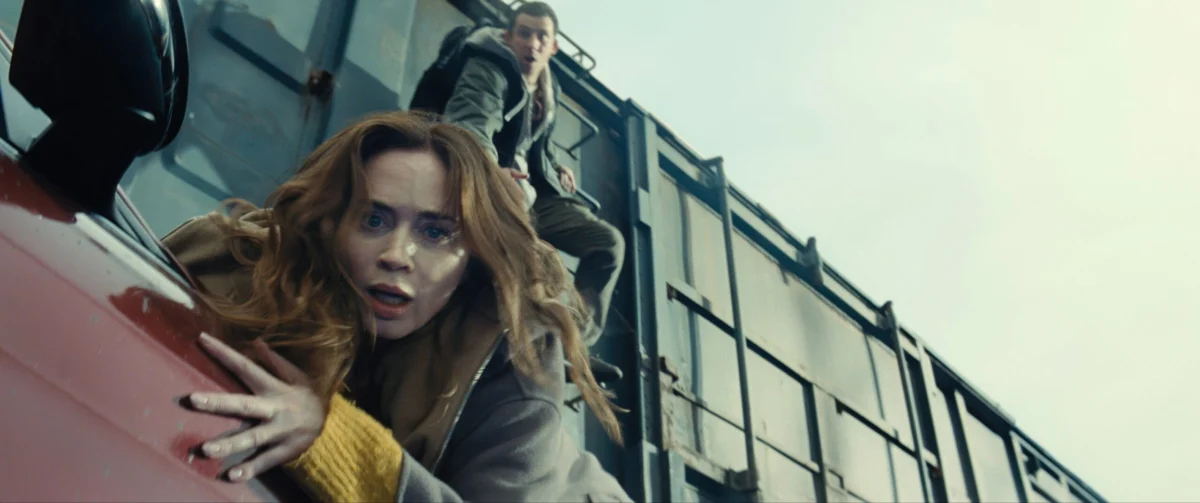
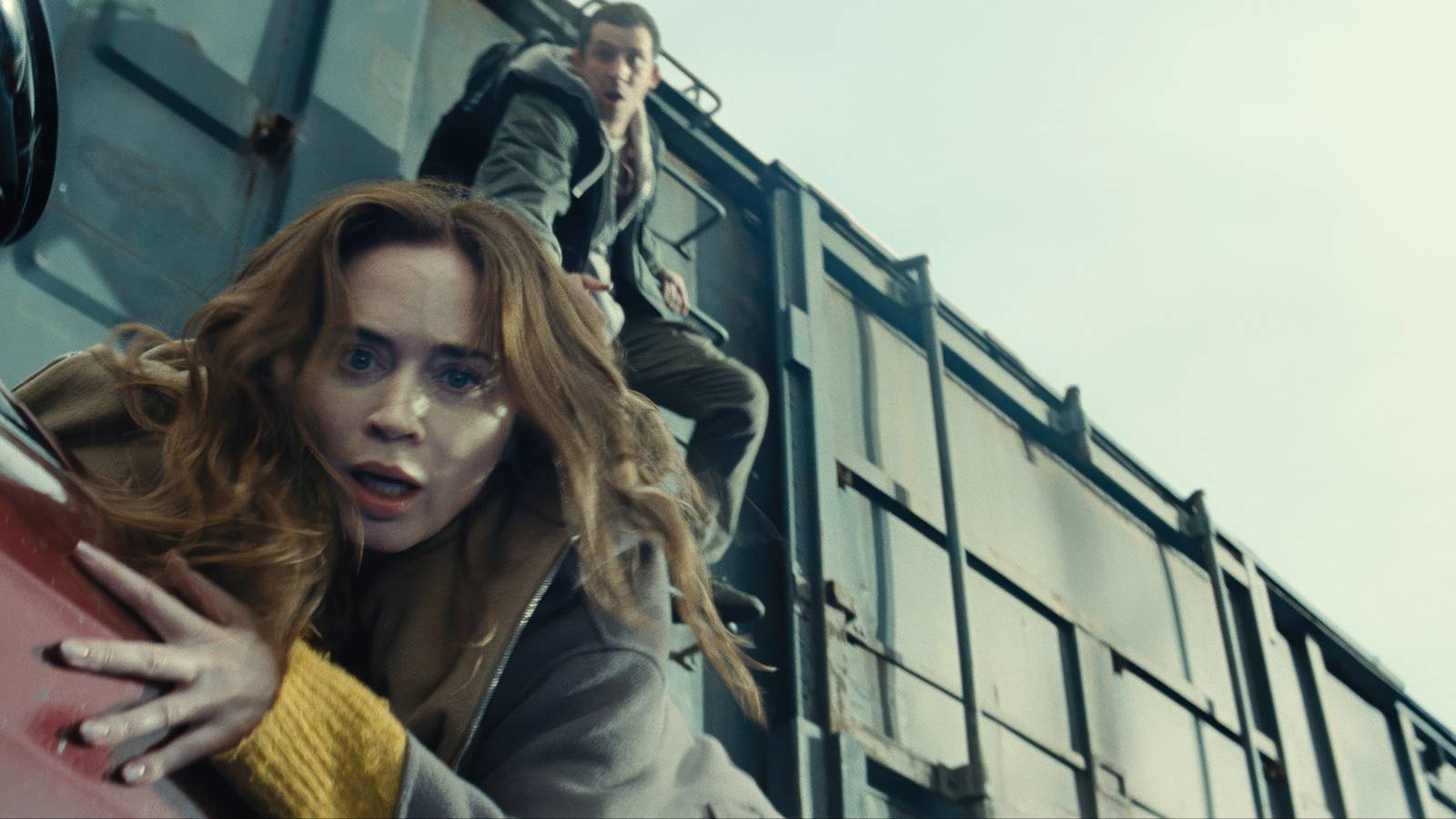
"That was really challenging because it’s about timing," Emily Blunt shared in a recent interview. "We did have a wire on us, but it’s how to do the jump and the catch so it literally looks like we’re hanging on by a thread rather than supported with the harness. It’s about physics and science. A few times Josh missed me and I clattered against the side of the train."
The "clattering" Blunt refers to was not a choreographed movement, but a result of the unpredictable nature of working with moving heavy machinery. The train, despite being slowed for safety, generated significant wind resistance and vibrations that made the simple act of jumping from a car platform to a train ladder an exercise in extreme coordination.
Josh O’Connor, known primarily for his dramatic roles, found the physicality of the sequence to be a revelation. "You can’t fake the exhaustion," O’Connor noted. "When Steven yells ‘cut,’ you aren’t just tired from the acting—you’re physically spent from hanging off a moving object. It forces you to inhabit the terror of the character in a way that’s impossible to replicate in a studio."
Supporting Data: The Mechanics of Spielbergian Action
To understand why this sequence feels different from the standard fare of modern blockbusters, one must look at the technical specifications of the shoot. Spielberg utilized a combination of legacy and contemporary technology:
- Camera Arrays: The team utilized 70mm film cameras for the wide shots, providing the crisp, expansive aesthetic that has defined the director’s work for decades.
- Practical Stunts: 85% of the interaction between the car and the train was captured in-camera. The "rear-ending" sequence used remote-controlled vehicles to ensure the impact trajectory was consistent without putting the actors in the direct path of the collision.
- Velocity Metrics: The train was clocked at a constant 22 miles per hour. This speed was chosen specifically to create the "blur" effect at the edges of the frame, enhancing the sensation of danger without making the actors’ movements look unnatural or floaty.
- Environmental Lighting: Spielberg opted for "golden hour" lighting to emphasize the isolation of the characters. By shooting during the transition from sunset to dusk, the team was able to utilize natural shadows to hide the safety harnesses, minimizing the need for digital paint-overs.
Official Responses and Creative Vision
Steven Spielberg’s commitment to this level of detail stems from a belief that audiences possess an "instinctual eye" for the fake. "If the audience doesn’t feel the heat, the wind, and the weight of the steel, they won’t feel the stakes," Spielberg remarked during a recent press junket.

The studio, Universal, has reportedly praised the efficiency of the shoot, despite the high cost of maintaining a train on location for three weeks. "It’s an investment in quality," a representative from the studio stated. "In an era where audiences are increasingly skeptical of CGI, the visceral response we’ve seen in early screenings proves that Spielberg’s approach remains the gold standard."
Implications for the Industry
The success of Disclosure Day—and specifically the buzz surrounding its practical stunts—may signal a shift in how Hollywood approaches high-stakes action. With the rising costs and diminishing returns of heavy-CGI spectacles, filmmakers are increasingly looking to the "Spielberg model": utilizing digital effects to augment, rather than replace, physical performance.
Furthermore, the film’s exploration of the "Disclosure" phenomenon—a topic that has gained significant mainstream traction in the last decade—positions the film as a cultural touchstone. By grounding a grand, cosmic mystery in the gritty, tangible reality of a train chase, Spielberg has managed to make the abstract fear of the unknown feel personal and immediate.
As Disclosure Day continues its theatrical run, it serves as a reminder of why the cinematic experience remains unique. The sight of Emily Blunt and Josh O’Connor, bruised and breathless, clinging to a ladder in the fading light, is more than just a plot point—it is a testament to the enduring power of physical cinema. In a world of infinite digital possibilities, Spielberg reminds us that sometimes, the most effective way to reach the stars is to keep your feet firmly planted on the ground—even when that ground is moving at twenty-two miles per hour.