In a scathing report released this week, Amnesty International has formally accused Meta Platforms Inc. of failing to adequately enforce its own content moderation policies against anti-LGBTI hate speech on Facebook in Hungary. The human rights organization asserts that the tech giant prioritized algorithmic engagement over the safety of marginalized communities, effectively allowing a hostile online environment to thrive in a country where political rhetoric against the LGBTI population has reached a fever pitch.
The report highlights a systemic breakdown in Meta’s responsibility to protect its users, arguing that the company’s inability to curb hate speech has exacerbated the isolation and psychological distress of Hungarian LGBTI individuals. As Facebook remains the primary gateway to social, professional, and civic life for over half of Hungary’s population, the platform’s failure to act is being viewed by activists as a profound violation of fundamental human rights.
The Chronology of Neglect: A Two-Year Investigation
Amnesty International’s findings are based on a rigorous analysis of content moderation patterns identified between January 2023 and December 2024. During this period, the organization—in collaboration with the Hungarian advocacy group Háttér Society—documented a persistent failure by Meta to remove content that violated the platform’s community standards.
2023–2024: The Documentation Period
Throughout this 24-month window, researchers cataloged numerous instances where reported hate speech was either ignored or dismissed by Meta’s automated and human moderation teams. The content included:
- Direct Calls for Violence: Explicit threats of physical harm directed at LGBTI individuals.
- Dehumanizing Rhetoric: Language comparing LGBTI people to societal "threats" or diseases.
- Harmful Narratives: Sustained campaigns portraying the LGBTI community as a danger to children, public morality, and the fundamental social order of Hungary.
Legislative Backdrop
The crisis on the platform does not exist in a vacuum. It follows a decade of repressive legislative shifts in Hungary, most notably the 2021 law that effectively conflates LGBTI expression with pedophilia. Following the passage of this law, the political climate became increasingly volatile, providing fertile ground for the hate speech that Amnesty now claims Meta failed to regulate.
The Human Cost: Self-Censorship and Social Withdrawal
The impact of Meta’s inaction has been profound. Because Facebook is the "digital town square" of Hungary, many LGBTI users feel they cannot afford to leave the platform despite the daily barrage of hostility.
Daniela Schnidrig, interim policy and advocacy adviser at Amnesty International’s Big Tech Accountability Team, noted that the risks to this demographic were not only predictable but extensively documented. "Meta contributed to adverse human rights impacts experienced by LGBTI people in Hungary through its policy decisions, and failed to take adequate steps to prevent the resulting harm," Schnidrig stated.
For many users, the choice has been binary: remain on the platform and face constant harassment, or withdraw entirely and lose access to vital community connections and professional networks. This forced silence constitutes a significant blow to freedom of expression. Eszter Mihály, LGBTI rights officer at Amnesty International Hungary, emphasized that the hostile environment created by the Orbán government was compounded by Meta’s apathy. "Members of the community faced severe smear campaigns and repressive laws… they could not express themselves freely on Meta platforms, which largely added to their despair," she said.
Regulatory Implications: The Digital Services Act (DSA)
The accusations leveled by Amnesty International gain significant weight in the context of the European Union’s Digital Services Act (DSA). As a "very large online platform," Meta is legally obligated under EU law to identify and mitigate systemic risks to fundamental rights, including the right to non-discrimination and freedom of expression.
Analyzing Systemic Risk
Under the DSA, Meta is required to conduct robust risk assessments. Amnesty International argues that Meta failed to properly analyze the risks that changes to its global content policies posed to the specific socio-political context of Hungary. By treating the Hungarian market through a one-size-fits-all policy lens, the company allegedly ignored the unique, hostile environment faced by local users.
The European Commission has recently shown an increased appetite for enforcing the DSA. With the recent findings against other tech giants regarding the protection of minors, Meta now faces a precarious regulatory landscape. If found to be in violation of the DSA’s risk-mitigation requirements, the company could face fines amounting to a significant percentage of its global annual turnover.
Political Context and the Rule of Law
The controversy arrives at a time of heightened friction between the Hungarian government and European institutions. The Orbán administration has consistently defended its anti-LGBTI legislation as a matter of "child protection." However, this narrative has been rejected by the Court of Justice of the European Union (CJEU).
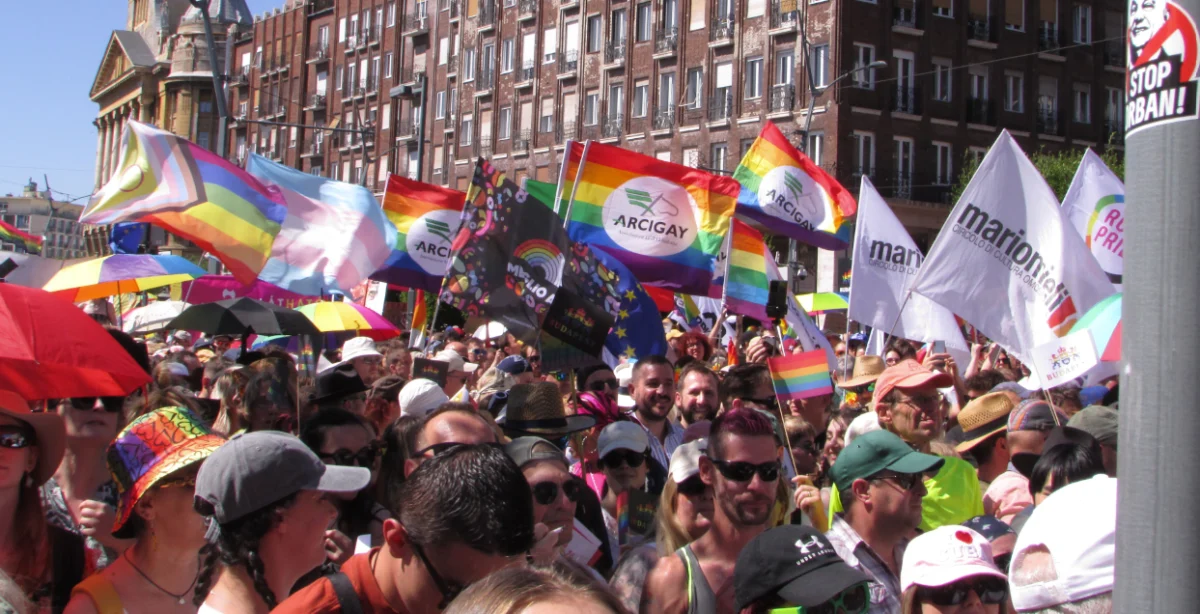
In April 2026, the CJEU ruled that Hungary’s 2021 anti-LGBTI law violated EU rules on non-discrimination and human dignity. Despite this, the domestic environment remains fraught. Recent events, such as the triple police ban on peaceful Pride assemblies, underscore the state-sanctioned nature of the discrimination. While organizers initially challenged these bans and won in lower courts, the Supreme Court eventually upheld the restrictions, signaling a deepening entrenchment of anti-LGBTI policy within the judiciary.
Meta’s Stance and the Call for Accountability
Meta has long maintained that it employs a combination of AI-driven tools and human moderators to enforce its community standards. However, critics argue that these systems are structurally incapable of understanding the nuances of local languages and political contexts in Eastern Europe.
The Failure of Algorithmic Moderation
The primary criticism directed at Meta is that its prioritization of "engagement"—the metric that drives advertising revenue—inherently favors controversial and high-arousal content. Hate speech, which often generates intense reactions, is frequently boosted by algorithms rather than suppressed. When reports are filed, the reliance on automated systems often fails to account for the specific dog-whistles and coded language used in Hungarian anti-LGBTI discourse.
Demands from Human Rights Groups
Amnesty International and the Háttér Society have issued a series of demands for Meta, including:
- Independent Audit: A full, transparent audit of the company’s content moderation operations in Hungary.
- Context-Specific Training: Better training for human moderators regarding the specific political and social threats facing the Hungarian LGBTI community.
- Algorithmic Transparency: A review of how content recommendations may be amplifying harmful narratives in the region.
- Remediation: Direct engagement with local civil society to establish a faster, more responsive reporting mechanism for human rights organizations.
Conclusion: A Turning Point for Big Tech
The situation in Hungary serves as a microcosm for a broader global debate: to what extent are tech giants responsible for the sociopolitical health of the nations in which they operate? As the line between private platform moderation and public safety continues to blur, the actions—or inactions—of companies like Meta carry profound consequences for democracy.
Meta now stands at a crossroads. While the company has previously leaned on the defense of "neutrality," the legal realities of the European Union’s Digital Services Act mean that neutrality is no longer a viable legal strategy. If the allegations brought by Amnesty International are substantiated by the European Commission, it could set a landmark precedent, forcing tech giants to move beyond performative policy-making and toward active, meaningful protection of their most vulnerable users.
For the LGBTI community in Hungary, the wait for such protection has already been too long. The question remains whether Meta will choose to reform its internal processes to meet its legal and moral obligations, or whether it will continue to facilitate the erosion of human rights in exchange for the continued dominance of its platform. As the European regulatory body watches, the world is waiting for an answer.