For decades, the “leaky bucket” of higher education has been a persistent challenge: students often provide subtle, scattered signals of academic distress long before they decide to drop out or stop attending classes. These warning signs—a missed assignment, a decline in library usage, or a lapse in financial aid paperwork—are frequently siloed across disparate campus systems. For college staff, these silos create a “blind spot” that makes it nearly impossible to intervene before a student reaches a crisis point.
Now, Austin Community College (ACC) is embarking on a transformative journey to dissolve those barriers. By launching its ambitious "Digital Twin Initiative," the institution is betting that artificial intelligence can synthesize fragmented data into a cohesive, actionable narrative, effectively shifting the paradigm of student support from reactive firefighting to proactive engagement.
The Core Objective: A Holistic View of the Student Journey
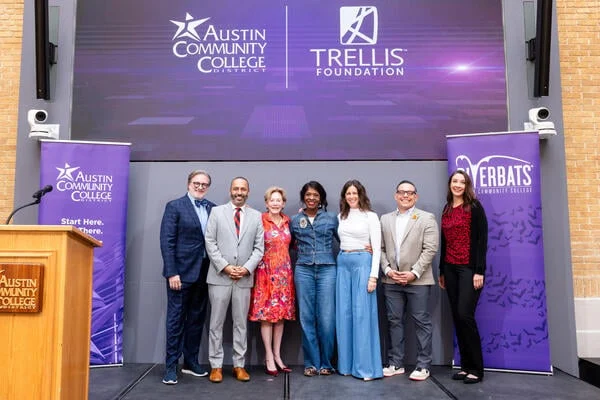
The Digital Twin Initiative, bolstered by an $875,000 grant from the Texas-based Trellis Foundation, represents a fundamental reimagining of how community colleges interact with their student bodies. At its heart, the project aims to integrate information from various institutional silos—including academic records, financial aid portals, student engagement metrics, and basic-needs resource tracking—to create a "digital twin" or a comprehensive, real-time snapshot of a student’s experience.
This fall, ACC is rolling out the platform to approximately 46,000 active credit students. The goal is to move beyond the traditional, manual "early alert" systems that have become standard in higher education but often lack the speed necessary to save a student on the brink of departure.
Chronology of a Digital Transformation
The development of the Digital Twin Initiative follows a strategic roadmap designed to ensure institutional buy-in and technological reliability.
- Conceptualization and Partnership: Following the identification of systemic inefficiencies in student outreach, ACC leadership partnered with the Trellis Foundation to secure the necessary funding and research support to explore AI integration.
- System Integration (2025–2026): Throughout the last year, technical teams worked to consolidate data streams that were previously locked in separate software environments.
- Initial Rollout (Fall 2026): The first phase of the platform is currently live, serving the broad population of credit students to test the efficacy of data aggregation and identify initial performance benchmarks.
- Spring 2027 Expansion: The college plans to introduce advanced features to the platform, including more sophisticated predictive analytics and automated resource-matching capabilities.
- Long-term Integration: As the platform matures, ACC intends to weave it into the fabric of daily operations, ensuring that advisers and faculty are equipped with the insights needed to reach out to students before a problem becomes insurmountable.
Supporting Data: The Capacity Crisis
The impetus for this technological shift is rooted in a sobering reality: student support needs are currently outpacing the human capacity of colleges nationwide. A recent survey from EAB, which polled 459 student success leaders at both two- and four-year institutions, highlights the tension between institutional bandwidth and student demand.
According to the data, while 75% of leaders view technology as a vital tool for alleviating capacity constraints, there is a clear consensus that technology should augment—not replace—human connection. The survey revealed:
- 59% of leaders believe AI should handle routine, repetitive administrative interactions, while human staff should remain the primary interface for complex guidance.
- 16% of leaders argue that staff interaction should remain the default for nearly all student-facing scenarios.
- Only 6% of leaders believe AI is suitable for handling the majority of interactions, leaving humans to manage only the most extreme cases.
These figures illustrate a balanced industry outlook: AI is viewed as a force multiplier for stretched staff, not a substitute for the mentorship that defines the college experience.
Official Responses: The Human-AI Hybrid Model
Russell Lowery-Hart, chancellor of Austin Community College, has been a vocal proponent of this initiative, framing it as a necessary evolution of the administrative process. He notes that the current bureaucratic model is inherently flawed because it relies on the student to be their own case manager.
“The grade goes in, the student gets notified, and the student then immediately has options to schedule tutoring,” Lowery-Hart explained, describing the desired workflow. “It could be right then and there with an online tutor or a tutoring center that’s closest to them, providing the options of time and availability. That’s what we’re trying to build. Early alerts are a great step, but AI gives us an opportunity to remove a lot of the clunky bureaucracy that makes interventions too late for a lot of our students.”
Aaron Henry, chief of staff at ACC and the overseer of the Digital Twin implementation, emphasizes that the goal is to optimize the limited time advisers have. With caseloads often ranging from 500 to 600 students per adviser, meaningful, personalized outreach is mathematically difficult.
“There are many more students than we have advisers,” Henry noted. “The Digital Twin Initiative is an opportunity for our advisers to be more connected to the students who need them the most. By providing a centralized dashboard that captures the ‘whole’ student, advisers can move away from chasing data and move toward providing actual, proactive support.”
Implications: Privacy, Ethics, and the Future of Work
The implementation of such a comprehensive data-tracking system naturally invites scrutiny regarding surveillance and privacy. In an era where institutional data is highly sensitive, ACC is taking rigorous steps to maintain trust and compliance.
Protecting Student Privacy
The college has pledged that it will retain full ownership of the data used by the platform. Henry emphasized that the system is built with strict adherence to the Family Educational Rights and Privacy Act (FERPA) and is designed to ensure that mental health and counseling data remain protected under the appropriate privacy frameworks. Furthermore, the initiative is being reviewed by the Texas Risk and Authorization Management Program (TX-RAMP) to ensure that the cybersecurity infrastructure meets state-mandated governance standards.
The Broader Economic Mission
The Digital Twin project is only one pillar of ACC’s broader "AI-ready" strategy. The institution recognizes that to remain a community leader, it must prepare its workforce for an economy that is increasingly reliant on automation. To that end, ACC is building an AI-focused workforce pathway, including an electrician certification program specifically tailored to support the physical infrastructure required by the digital age—such as data centers and AI server farms popping up across Central Texas.
By helping small businesses adopt AI and preparing students for the "digital-first" workforce, ACC is positioning itself as a hub for regional economic resilience.
Conclusion: Redefining the Relationship
The ultimate test for Austin Community College’s Digital Twin Initiative will be whether it succeeds in its primary goal: fostering deeper human connections. As Chancellor Lowery-Hart aptly summarized, "Nothing is going to replace a direct conversation with a student."
The shift, however, is monumental. By automating the identification of barriers, ACC is removing the "friction" that causes students to drift away. Instead of waiting for a student to hit a wall, the institution is using data to build a bridge before the wall is ever reached. As this experiment continues to unfold, it will likely serve as a blueprint for colleges across the nation looking to leverage technology to ensure that no student’s potential is lost to administrative silence.