As the autumn season descends upon Central Texas, the Travis County housing market finds itself at a significant crossroads. While the broader U.S. real estate landscape continues to grapple with a fragile, albeit slightly inflationary, equilibrium, Travis County is experiencing a distinct and deeper correction. Characterized by rising inventory, softening prices, and an increasingly empowered buyer pool, the region’s market trajectory offers a stark contrast to national trends.
For residents and prospective investors, understanding the mechanics of this shift is essential. With the median sale price dropping for the fourth consecutive month and properties lingering on the market longer than they have in years, the “pandemic-era” heat has largely dissipated, replaced by a cooling trend that favors those with the patience to negotiate.
Main Facts: A Market in Transition
The August snapshot for Travis County presents a definitive picture of a cooling market. The median sale price now sits at $497,336, reflecting a 5.3% year-over-year decline. This downturn is not merely a statistical blip; it represents a fundamental recalibration following the explosive growth witnessed between 2020 and 2022.
Key metrics highlight the current imbalance:
- Inventory Depth: There are currently 9,284 active listings, with months of supply climbing to 6.5—firmly positioning the area as a “buyer’s market.”
- Time on Market: Homes are taking an average of 72 days to sell, 10 days longer than they did at this time last year.
- Negotiation Power: Over 50% of closed sales involved a price reduction, and the average home is closing at approximately 97.1% of its original list price.
- Contrasting National Trends: While the U.S. median home price rose by 2.2% to $398,596, Travis County’s 5.3% decline underscores a local market that is recalibrating faster and more aggressively than the national average.
Chronology: From Pandemic Peak to Present Reality
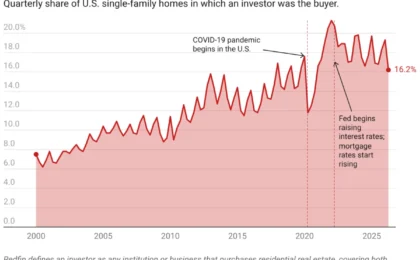
The current state of the Travis County market is best understood through the lens of the last four years. During the height of the pandemic, the region became a national epicenter for migration-fueled demand. Prices skyrocketed as remote workers and investors flocked to Austin and its surrounding suburbs, driving the median price to near-historic highs.
However, as mortgage rates climbed and the broader economy faced the cooling effects of inflation and AI-driven volatility, the urgency that defined 2021 and 2022 evaporated. By the spring of 2026, the market began to show early signs of fatigue.
The summer months (June–August) solidified this transition. The influx of new listings—up nearly 10% to 1,677 in recent counts—has consistently outpaced the rate of absorption. As of late summer, the “urgency premium” that buyers were once willing to pay has vanished. Sellers who entered the market expecting 2022-level bidding wars have been met with a reality check, often resulting in the high frequency of price cuts that characterize today’s data.
Supporting Data: The Tiered Market Divide
A deep dive into the price tiers reveals that the correction is not affecting all property owners equally. According to Redfin’s analysis of the May–July 2026 rolling three-month period, there is a clear stratification in the market.
The Luxury Resilience
Interestingly, the luxury segment (top 5% of the market, with a median price of $1.8M) has bucked the downward trend. Prices in this tier rose by 4.7% year-over-year. These well-capitalized buyers are often less sensitive to interest rate fluctuations and have remained active, with sold volume in this segment increasing by 13.4%.
The Starter-Home Struggle
At the opposite end of the spectrum, the bottom 5% of the market saw prices plummet by 5.4%. The starter-home segment ($314,651 median) saw a massive 21.8% increase in volume, signaling that while bargain hunters are eager to enter the market, they are doing so with extreme price sensitivity. The non-luxury tier, which captures the bulk of the workforce, saw a 1.6% price decline, reflecting the broader economic pressure on middle-income buyers.
Geographic Variations
The city-by-city breakdown further illustrates the uneven nature of this cooling:
- Austin: Holds a median price of $549,636 with a 1% decline.
- Lago Vista: Facing a more dramatic 12.5% price correction, with a supply level reaching 7.1 months.
- Steiner Ranch: An outlier, maintaining a 4.4% price increase, proving that specific high-demand enclaves continue to perform well despite the broader regional softening.
Official Perspectives: Expert Insight
Chen Zhao, Redfin’s head of economics research, points to a complex interplay of macroeconomic forces. “The U.S. housing market faced some hurdles in August,” Zhao noted. “Inflation and an AI-fueled economy kept mortgage rates high, which weighed heavily on homebuyers, sellers, and investors.”
According to Zhao, the market had shown signs of recovery earlier in the year as affordability improved, but that momentum has been checked by persistent economic uncertainty. “For buyers who need to buy, now is a great time because there’s less competition and a bit more inventory. For sellers, pricing competitively is no longer optional—it is the key to attracting any serious attention.”
The data suggests that the market is currently in a "wait-and-see" phase. Buyers are holding out for better terms, and sellers are finally beginning to accept that the era of aggressive, over-list pricing has reached its conclusion.
Implications: Navigating the New Normal
For those currently navigating the Travis County real estate ecosystem, the strategy for success has shifted from speed to precision.
Advice for Buyers
The data suggests that the power balance has decisively shifted. If you are a buyer, you have the luxury of time. The average of 72 days on market means you should prioritize:
- Due Diligence: With less competition, there is no need to waive inspections. Ensure the property condition is sound.
- Negotiation: Given that over 50% of homes undergo price reductions, do not be afraid to offer below the asking price, especially in the starter and non-luxury tiers.
- Financial Planning: Leverage the current inventory to find homes that have been on the market for 60+ days, as these sellers are often the most motivated to provide concessions or lower their prices.
Advice for Sellers
For sellers, the "market reality" is the most important factor. Pricing based on 2022 comps is a recipe for a listing to languish.
- Price Aggressively: The most successful sellers are those who price their homes slightly below current market comps to create urgency.
- Incentivize: With 6.5 months of supply, you are competing with many other homes. Consider offering rate buydowns or covering closing costs to make your listing more attractive to cost-conscious buyers.
- Enhance Appeal: Because buyers are being selective, the condition of the home matters more than ever. Focus on high-impact, low-cost improvements that make the property stand out.
Conclusion: The Road Ahead
The Travis County housing market is currently undergoing a painful but necessary correction. By moving away from the unsustainable price growth of the pandemic years, the region is working toward a more stable equilibrium. While the 6.5 months of inventory and the prevalence of price cuts may be daunting to some, they represent a return to a more standard market dynamic where buyers can negotiate and sellers must be disciplined.
As we move into the final quarter of 2026, the data indicates that while the market remains soft, it is not stagnant. The high volume of sales in the starter and high-tier segments shows that demand persists, provided the pricing reflects the current economic environment. For those willing to adapt to these new conditions, opportunities remain plentiful in the heart of Texas.