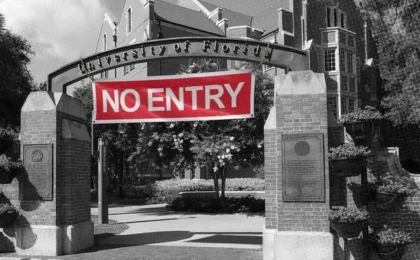
Across the globe, the relationship between autocrats and the academy has never been one of indifference. It is a relationship defined by a predatory tension—a recognition by those who wield absolute power that the university is not merely a center for technical training, but a primary engine of cultural production and ideological dissent. As history has repeatedly demonstrated, when a regime seeks to consolidate control, the "coup d’université" is rarely far behind.
In the summer of 2026, Hungary reached a critical juncture, attempting to dismantle over a decade of democratic backsliding orchestrated by former Prime Minister Viktor Orbán. Orbán’s tenure serves as a modern blueprint for the authoritarian takeover of higher education: a strategic, systematic erosion of academic autonomy, enforced through censorship, the closure of politically inconvenient departments, and the weaponization of fiscal policy against dissenting institutions.
While Western policymakers often view higher education through the narrow lens of Return on Investment (ROI)—measuring success by post-graduation salary data—authoritarian regimes view universities through the lens of cultural hegemony. To an autocrat, the economic levers are simply tools; the goal is the capture of the "cultural mission." As Jason Stanley, a preeminent expert on authoritarianism and fascism, has observed, universities are inherently havens for "critique and dissent." For those who wish to maintain power without challenge, the university is not an asset to be optimized, but a threat to be neutralized.
A Chronology of Institutional Subjugation
The phenomenon of state control over academia is not a localized Hungarian tragedy; it is a recurring global motif. The collection Universities Under Dictatorship (Penn State University Press) catalogs a chillingly consistent methodology employed by regimes from 20th-century Germany and Spain to contemporary Russia and Poland.
The Toolkit of Suppression
Historically, the playbook for seizing the academy follows a predictable, escalating pattern:
- Ideological Alignment: Research agendas and curricula are forcibly realigned to mirror the state’s preferred ideology.
- The Purge: The systematic expulsion of faculty, staff, and students who represent intellectual or political opposition.
- Governance Capture: The replacement of independent university leadership with "puppet" administrators who owe their positions to the state, effectively killing institutional autonomy.
- Isolationism: Restricting access to international scholarship and partnerships to ensure that the university remains a closed, state-managed echo chamber.
During the 20th century, this model was devastatingly effective in Latin America, where attacks on universities were inextricably linked to the collapse of democratic governance. Analysts studying this period have identified a "unifying theme": universities were almost universally the first institutions targeted for takeover. By imposing political loyalty tests and conducting wholesale dismissals of researchers, these regimes successfully hollowed out the humanities and social sciences—the very disciplines that foster the critical thinking necessary to dismantle autocracy.
The Domestic Front: Whistleblowers and Federal Overreach
The echoes of these historical patterns are now resonating within the United States. Recent revelations regarding the Department of Justice’s (DOJ) handling of Title VI investigations at elite institutions—including Harvard, Columbia, and Brown—suggest that the U.S. is not immune to the pressures of politicized oversight.
In August 2026, former DOJ attorneys stepped forward as whistleblowers, alleging that these investigations were characterized by "extraordinary procedural irregularities" and "predetermined outcomes." According to these accounts, the investigations were not driven by genuine legal concerns regarding antisemitism, but by a desire to satisfy the political agenda of a task force intent on forcing institutional compliance.
The Economics of Coercion
The allegations paint a stark picture of how federal power is leveraged to bypass traditional legal standards. Despite a lack of evidence of Title VI violations at Brown University, career attorneys were reportedly pressured to keep the case open. Simultaneously, the federal government suspended millions of dollars in research grants—a tactic confirming the chilling sentiment expressed by officials: "The goal is compliance, but pulling money is the tool."
The settlement negotiations with Harvard further illuminate the government’s true objectives. Whistleblowers testified that the proposed terms extended far beyond legal remedies, demanding the installation of government-friendly provosts to oversee curricula, the termination of Diversity, Equity, and Inclusion (DEI) programs, and the placement of university endowments into trusts that the government could theoretically seize. These demands confirm that the federal government’s focus was never the mitigation of discrimination; it was the assertion of control over the university’s internal structure and intellectual output.
Supporting Data: When Compliance Becomes Complicity
The danger of this trajectory lies in the "mouse and the cookie" principle. When institutions concede to initial government demands—fearing the loss of funding or the spectacle of a public inquiry—they inadvertently provide the blueprint for further, more intrusive concessions.
The speed at which some university systems have capitulated to recent federal mandates suggests a failure of governance. By acting without consulting faculty senates, student bodies, or independent boards, these institutions have signaled that they are vulnerable to political intimidation.
The Erosion of Academic Freedom
The impact of this compliance is quantifiable in the erosion of institutional independence. When a university agrees to let an external body dictate which programs are funded, which faculty are retained, and which ideologies are permitted in the classroom, it ceases to be a site of knowledge and becomes an extension of the state apparatus.
The suppression of academic freedom is rarely an overnight event. It is a slow, methodical process of self-censorship. When faculty realize that their research into power structures—particularly in the humanities—makes them a target for federal investigation or budget cuts, the scope of inquiry narrows. The "chilling effect" is not just a legal term; it is a measurable decline in the quality and breadth of intellectual discourse.
Official Responses and the "Call to Action"
The Department of Education’s recent "Call to Action" to university presidents and governing boards is often framed as an innocuous request for institutional self-reflection. However, in the current climate, such calls cannot be stripped of their context.
Critics argue that the same government that has utilized threats, blackmail, and predetermined investigations to force universities into submission cannot, in good faith, act as a partner in "improving" those same institutions. When the state asks for collaboration, it is often a precursor to demanding further alignment.
University leadership across the country now faces a defining choice: stand by the core mission of the university—the pursuit of truth, independent of political pressure—or accept the role of a state-managed provider of compliant education.
Implications for the Future of Democracy
The global history of the "coup d’université" teaches us that once an authoritarian regime succeeds in capturing the university, the restoration of academic freedom is a generational project. As we have seen in Hungary, the damage done to institutional integrity, faculty morale, and the public’s trust in higher education takes years, if not decades, to reverse.
The implications for the U.S. are profound. Higher education has long been a pillar of American democracy, acting as a training ground for critical thinkers and a hub for scientific advancement. If these institutions are successfully transformed into tools of partisan compliance, the loss will not just be felt in the classroom; it will be felt in the very fabric of our civic life.
A Final Warning
The lesson from history is clear: authoritarianism does not require a total takeover of every aspect of society to succeed. It only requires the takeover of the institutions that have the power to question it. If we allow the foundations of higher education to be hollowed out by political blackmail, we are not just losing a few research grants or a few academic departments—we are losing the ability to imagine a future that is not dictated by those in power.
The time for institutional courage is now. Complacency is not a strategy; it is a surrender. As we look toward the future of the American academy, we must remember that the price of the "cookie"—the immediate relief from political pressure—is the loss of the "milk"—the freedom and autonomy that make a university worth having.
Dominique J. Baker is an associate professor of education and public policy at the University of Delaware. Her work focuses on the intersection of higher education policy, equity, and the role of the academy in democratic society.