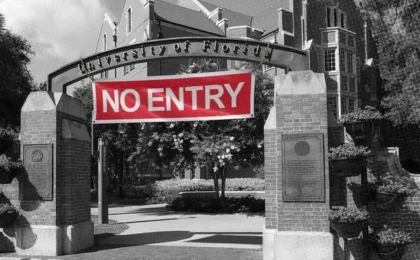
In a move that marks a significant escalation in the ongoing federal campaign to reshape the American educational landscape, the U.S. Treasury Department issued new regulatory guidelines on Thursday that threaten the tax-exempt status of private secondary and higher education institutions. This directive, which represents the most aggressive intervention into private education policy by the Trump administration to date, empowers the Internal Revenue Service (IRS) to revoke the tax-exempt privileges of any school that provides “targeted support” to Black or other minority students.
For institutions that previously believed their autonomy—derived from a lack of reliance on federal funding—offered a shield against the administration’s culture war, this development serves as a stark warning. The rules, set to take effect next June, potentially impact as many as 18,000 schools, forcing them to choose between their commitment to diversity initiatives and their financial viability as nonprofit entities.
A Chronology of Escalation: From Admissions to Financial Autonomy
The administration’s latest policy shift is the culmination of a multi-year, multi-pronged effort to dismantle institutional support for diversity, equity, and inclusion (DEI).
The trajectory began in earnest three years ago when the Supreme Court struck down traditional affirmative action in college admissions. While the Court’s ruling in that landmark case imposed significant restrictions, it did not mandate total race-blindness. Chief Justice John Roberts, in his majority opinion, explicitly acknowledged that the pursuit of a diverse student body remained a "commendable goal" and left room for universities to consider an applicant’s personal narrative regarding how race had shaped their life experiences.
However, the administration’s interpretation has consistently outpaced the judiciary’s stance. Less than two years after that ruling, the Department of Education issued guidance demanding that schools purge race-based decision-making from all facets of campus life, including hiring, financial aid, scholarship distribution, campus housing, student discipline, and even graduation ceremonies.
In April 2025, the pressure intensified when President Trump specifically singled out Harvard University, threatening to strip it of its tax-exempt status by declaring it should be "taxed as a political entity." The President’s rhetoric—asserting that "tax-exempt status is totally contingent on acting in the public interest"—has now been codified into the new Treasury Department rule, effectively weaponizing the IRS to enforce a specific ideological vision of American education.
The Legal Landscape: Testing the Limits of Tax Exemption
The administration’s assertion that it can strip schools of their tax-exempt status on the basis of “public interest” faces significant legal hurdles. The foundational precedent for such action is the 1983 Supreme Court case Bob Jones University v. United States.
In that instance, the Court upheld the revocation of tax-exempt status for a private institution that enforced a ban on interracial dating. The Court ruled that such status could only be revoked when an institution’s activities are “contrary to a fundamental public policy.” Crucially, the Court determined that racial discrimination in education is inherently contrary to that public policy and thus incompatible with the “charitable” concept of a tax-exempt entity.
Legal scholars, including Philip Hackney and Brian Mittendorf, have highlighted that Bob Jones remains an outlier. The current law does not permit the IRS to revoke tax-exempt status "on a whim." The process is intentionally arduous, beginning with a formal IRS audit to determine if a nonprofit’s operations serve a "substantial nonexempt purpose." This process is designed to take years, providing institutions with extensive opportunities for appeal and judicial review.
Despite these procedural safeguards, the Treasury’s new rule creates an environment of intense regulatory surveillance. By demanding granular data on admissions, student achievement, and graduation rates—a move currently stalled by a separate court injunction—the administration is laying the groundwork for a systematic effort to penalize institutions that do not align with their restrictive view of meritocracy.
Supporting Data and the "Pipeline" Problem
The impact of this policy is expected to be felt most acutely at the intersection of private secondary education and elite higher education. By targeting private secondary schools, the administration is effectively attempting to choke off the "pipeline" of students of color who are mentored, supported, and prepared for the rigors of competitive universities.
If private secondary institutions are forced to eliminate targeted scholarship programs or academic support networks to protect their tax status, the demographic composition of incoming college classes will inevitably shift. This, experts argue, will accelerate a decline in diversity that is already underway.
The economic implications for these schools are existential. Loss of tax-exempt status is a dual-threat:
- Direct Taxation: The institution becomes liable for federal income taxes on its operating budget.
- Donor Attrition: The school loses the ability to offer tax-deductible status to its donors, effectively drying up the philanthropic "lifeblood" that sustains many private educational institutions.
Official Responses and the Ideological Divide
The administration frames these actions as a corrective measure to ensure equality. However, critics, including educators and legal experts, argue that the administration is conflating "equality" with "sameness."
The perspective of the administration, as reflected in the Chief Justice’s earlier rhetoric regarding the 14th Amendment, is that the law must be "universal in its application," ignoring all differences of race, color, or nationality. Conversely, the educational community broadly supports the concept of equity—the recognition that individuals have different circumstances and require tailored resources to achieve equal outcomes.
Academic leaders argue that this is not merely a policy dispute over tax codes, but a fundamental disagreement over the mission of education. As noted in resources from George Washington University’s Online Public Health, the pursuit of equity is essential to the function of a democratic society. By attempting to force institutions to abandon programs designed to support disadvantaged students, the administration is effectively pressuring them to retreat from the work of building a more equitable world.
Implications for the Future of American Higher Education
The ramifications of the Treasury’s new rule extend far beyond the balance sheets of elite universities. If private institutions are forced to dismantle their diversity initiatives, the broader cultural impact on the next generation of American leaders could be profound.
1. Increased Administrative Burden
Even if the IRS fails to win widespread revocations, the threat of an audit will force institutions to divert significant financial and human resources toward compliance and legal defense. Schools that are already operating on thin margins may be forced to cut academic programs or student services simply to fund the legal oversight required to navigate the new regulatory environment.
2. The Politicization of Nonpartisan Agencies
The use of the IRS to execute a "culture war crusade" represents a concerning departure from the historical role of nonpartisan federal agencies. If the tax code becomes a tool for ideological enforcement, it risks undermining public trust in the impartiality of government institutions.
3. A "Whitened" Higher Education Landscape
The most immediate and concerning outcome is the potential for a significant reduction in the diversity of the American student population. If private secondary schools—which often act as feeders for elite universities—are discouraged from identifying and supporting talented students of color, the pipeline to higher education will be fundamentally altered. This could lead to a less representative and less competitive workforce, ultimately undermining the long-term national interest.
Conclusion: Beyond the Money
While the financial threat posed by the Treasury’s new guidelines is substantial, the underlying objective is ideological. The administration is signaling that its goal is to reshape the "public interest" to exclude the proactive support of minority students.
As the legal challenges mount and the June deadline approaches, the nation’s private schools and universities find themselves at a crossroads. They are being asked to choose between the path of least resistance—compliance with a rigid, narrow definition of equal protection—and the pursuit of an equitable education system that recognizes the complexities of the American experience. The outcome of this struggle will likely define the character of American higher education for decades to come.
Austin Sarat is the William Nelson Cromwell Professor of Jurisprudence and Political Science at Amherst College.