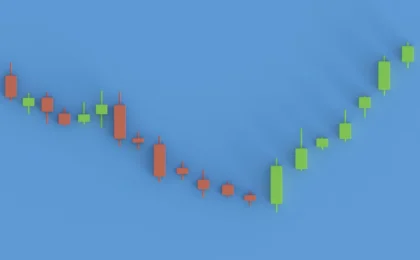
For decades, the standard playbook for long-term investing has remained largely consistent: save aggressively, maximize your contributions, and stay the course through market cycles. This "growth-at-all-costs" mentality serves investors well during their 30s and 40s. However, as the horizon of your working life narrows, this strategy becomes increasingly dangerous.
The five-year period immediately preceding retirement is arguably the most critical phase of your financial life. During this "home stretch," the margin for error shrinks significantly. While most investors focus on the total balance of their 401(k) or IRA, they often overlook the mathematical reality of how their portfolio will perform when the paycheck stops. Transitioning from an accumulation mindset to a preservation and distribution mindset requires a fundamental shift in strategy—one that prioritizes stability over volatility.
The Mirage of Constant Growth
A prevalent, yet hazardous, assumption among pre-retirees is the belief that robust market returns will persist indefinitely. It is not uncommon to encounter financial plans that project 15% to 20% annual returns as a baseline. On a spreadsheet, such growth makes retirement appear easily attainable, even with modest savings.
However, the markets do not operate in a linear fashion. They are defined by cycles, corrections, and periods of extended stagnation. Relying on historical averages is a dangerous game when you are within striking distance of your retirement date. The real risk is not merely that returns fall short of your projections; it is that they fall short at the wrong time.
Understanding Sequence of Returns Risk
The most potent threat to a retirement plan is known as "sequence of returns risk." In the accumulation phase, a 30% market downturn is merely an opportunity to buy assets at a discount. In the distribution phase, however, that same downturn can be catastrophic.
Consider the compounding effect of a market correction occurring just as you begin to withdraw funds. If your portfolio drops 30% and you are simultaneously withdrawing 4% to 5% of your original balance for living expenses, your effective loss is significantly compounded. You are not just losing 30% of your capital; you are depleting the very assets that are meant to generate future growth.
Once you take that withdrawal from a depleted base, the portfolio is mathematically crippled. It must achieve a much higher rate of return in subsequent years simply to return to its original value, let alone grow. Many retirees find that their portfolios never fully recover from such a "one-two punch" early in their retirement years.
Lessons from Historical Volatility
The dot-com bubble of the early 2000s and the 2008 global financial crisis provided painful, real-world lessons for those nearing retirement. During these periods, investors who believed they were diversified found that their portfolios were highly correlated. When panic gripped the markets, assets that were historically uncorrelated—such as international stocks, domestic equities, and certain real estate funds—began to move in lockstep, all trending downward simultaneously.
This revealed a critical truth: true diversification is not merely about owning a large variety of funds; it is about understanding how those assets behave under extreme market stress. If your portfolio is heavily concentrated in equities, you are exposed to systemic market risk, regardless of how many different ticker symbols you own.
The Strategic Shift: Asset Allocation for Protection
As you approach the five-year mark, your asset allocation strategy must pivot. The goal is no longer to chase the highest possible return; it is to manage the risk of a permanent capital impairment.
This does not imply that you should liquidate your stocks and move entirely into cash. Instead, it suggests a more intentional approach to asset management. Every dollar in your portfolio should be assigned a specific purpose:
- Growth Assets: Intended for long-term appreciation to combat inflation.
- Income Assets: Designed to generate reliable cash flow regardless of market conditions.
- Protection Assets: Earmarked for immediate liquidity, ensuring you never have to sell growth assets during a market downturn.
By segmenting your portfolio, you create a buffer. If the market experiences a sharp correction, you can rely on your income and protection assets to cover your expenses, allowing your growth assets the necessary time to recover.
Flipping the Script: Stability First
A robust retirement plan often requires flipping the traditional planning process. Instead of starting with your total savings and attempting to calculate a safe withdrawal rate, start with your fixed income needs.
Determine your "must-have" expenses—housing, healthcare, food, and utilities. Then, identify guaranteed income sources such as Social Security, pension payments, or rental income. If there is a gap between your guaranteed income and your essential expenses, this is where you must build a "floor."
For many, this gap is bridged through annuities or fixed-income ladders that provide guaranteed lifetime income. While these instruments have historically been viewed with skepticism due to fees or complexity, they can provide a vital foundation of predictability. By covering your basic costs with guaranteed income, you gain the psychological freedom to manage the rest of your portfolio with a long-term, growth-oriented perspective, knowing that a market downturn will not threaten your ability to pay for essentials.
The Psychological Transition
Perhaps the most underestimated challenge of the five-year pre-retirement window is the psychological shift. You have spent 30 or 40 years defined by the act of accumulation. Your identity as an investor has been linked to the growth of your account balances.
Retiring necessitates a complete reversal of this behavior. You are now in the business of selling—systematically liquidating the assets you worked so hard to build. This transition is emotionally charged. Many retirees struggle with the "mechanics of withdrawal," finding it difficult to watch their account balances trend downward as they draw down their savings.
A structured income strategy simplifies this process. By moving toward a "paycheck" model—where distributions are automated and predictable—you remove the constant, stressful decision-making process of choosing which assets to sell in a volatile environment.
The Bottom Line: Protecting the Golden Years
The margin for error in the five years before retirement is razor-thin. A strong, bull-market environment can often mask significant flaws in a retirement plan, but a single, ill-timed market cycle can expose those flaws with devastating consequences.
Success in retirement is not measured by the peak value of your portfolio. It is measured by the portfolio’s ability to provide a consistent standard of living until the end of your life.
If you are currently in your 50s, this is the time to audit your plan. Evaluate your asset correlation, stress-test your income needs, and ensure that your portfolio is built for the marathon of retirement, not just the sprint of accumulation. It is never too late to make adjustments. Engaging with a qualified, fiduciary financial advisor can provide the objective perspective necessary to ensure that your portfolio will withstand whatever the market delivers in the decades to come.
Remember: you only get one chance to transition into retirement successfully. The steps you take today will determine the quality of the life you live tomorrow.
Disclaimer: This article is intended for educational purposes only and does not constitute personalized financial advice. The views expressed herein are those of the contributing author and should not be interpreted as official endorsements. Investors are encouraged to consult with a qualified financial advisor and review their specific investment records through official channels like the SEC or FINRA.