Executive Summary: A Fragile Lifeline in a Devastated Landscape
The United Nations announced on Thursday that humanitarian agencies, including the World Food Programme (WFP), successfully reached over 600,000 individuals across the Gaza Strip with essential life-saving supplies this month. While this represents a significant logistical achievement in a high-risk environment, international aid organizations remain deeply concerned. Despite these efforts, a profound hunger crisis continues to grip the territory, with reports indicating that the vast majority of households are struggling to secure basic sustenance.
The crisis is exacerbated by the near-total destruction of civilian infrastructure, severe cash shortages, and hyper-inflated food prices. As the conflict enters its third year, the population of Gaza faces a precarious existence, caught between the persistent threat of airstrikes and the daily struggle to survive starvation.
Chronology of the Crisis: From October 2023 to the Present
The current humanitarian catastrophe is not an isolated event but the culmination of a protracted period of intense conflict. To understand the gravity of the situation, one must look at the timeline of the collapse of Gaza’s food security systems.
October 2023: The Onset of Escalation
The conflict that erupted in October 2023 served as the catalyst for the current food security collapse. Prior to this period, Gaza already faced significant economic challenges due to years of blockade and limited movement. The escalation of fighting led to an immediate closure of supply chains, the halting of commercial imports, and the mass displacement of families from their homes and farms.
2024–2025: Systemic Collapse
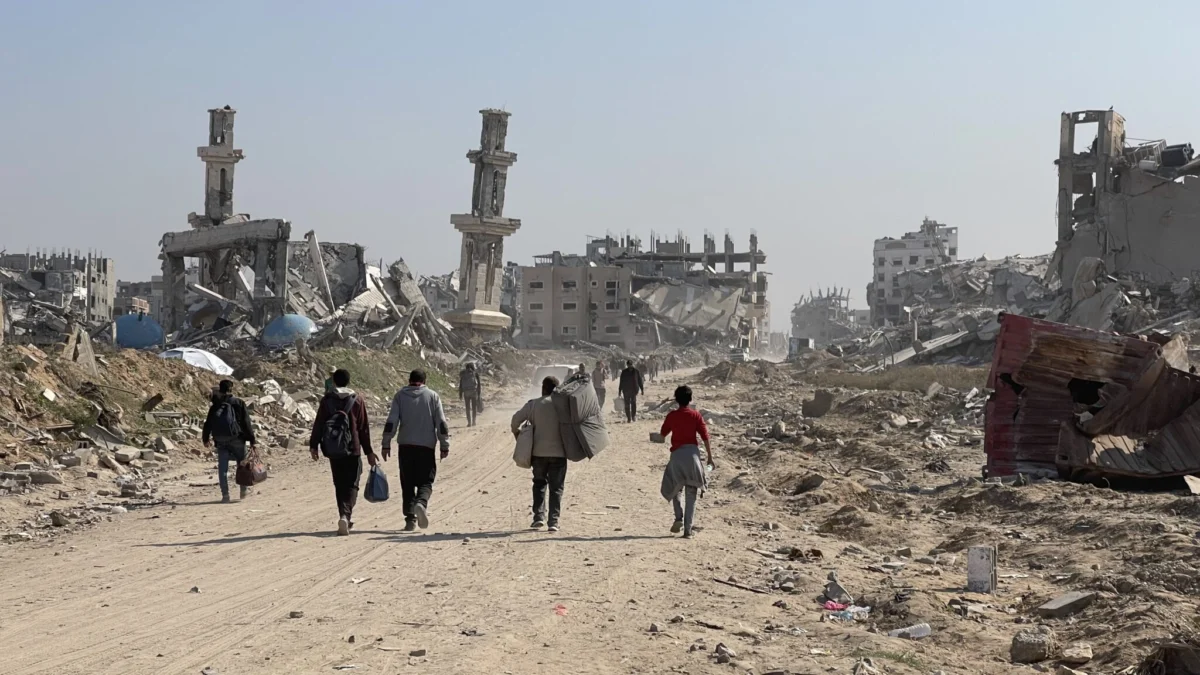
Throughout 2024 and 2025, the territory saw the systematic degradation of its agricultural base and local markets. By the close of 2025, an estimated 1.6 million people—the vast majority of the population—were living in conditions of acute food insecurity. The destruction of bakeries, water desalination plants, and electricity grids meant that even when food was available, it was often impossible to prepare or preserve.
July–August 2026: A Conditional Plateau
The recent joint assessment published in July 2026 by the Food and Agriculture Organization (FAO), UNICEF, and the WFP noted a slight, fragile improvement. The number of people facing "crisis or worse" conditions dropped from 1.6 million to 1.4 million. However, aid agencies were quick to clarify that this progress is entirely conditional. It relies on a delicate balance of continuous, unimpeded access through crossings like Kerem Shalom and sustained international funding—both of which remain subject to the volatility of the ongoing military operations.
Supporting Data: The Anatomy of Starvation
Data provided by international monitors paints a harrowing picture of daily life for the average Gazan household.
The Breakdown of Household Security
Surveys conducted throughout August 2026 reveal that approximately 50 percent of families in the territory have reported running out of food entirely at least once in the last month. For many, the reality is even grimmer:
- Meal Scarcity: A large majority of households report surviving on a single meal per day.
- Economic Barriers: The combination of a lack of liquid cash and skyrocketing prices has made food unaffordable for the average citizen. Since October 2023, the price of basic staples—flour, oil, and legumes—has increased by magnitudes that render them inaccessible to the unemployed and displaced.
- Infrastructure Deficit: With 90 percent of civilian infrastructure either damaged or destroyed, the distribution of food is not merely a supply issue; it is a logistical nightmare. The lack of electricity for refrigeration and the destruction of transport networks mean that aid must be distributed rapidly or it risks spoilage.
The Scale of Displacement
The movement of people remains a primary driver of the crisis. Millions of Palestinians remain displaced, moving from one "safe zone" to another as airstrikes and ground maneuvers shift. Each displacement event results in the loss of personal property, including cooking equipment, stored food, and access to local distribution networks.
Official Responses and Humanitarian Operations
The United Nations and its partners continue to operate under extreme duress. The recent surge in assistance, which reached 600,000 people, was facilitated by the use of the Kerem Shalom crossing.
The Role of International Agencies
The WFP has been at the forefront of the response, coordinating with the FAO and UNICEF to create a cohesive strategy that addresses both immediate hunger and long-term nutritional needs. Their recent reports emphasize that while relief is reaching the masses, it is insufficient to reverse the trends of malnutrition, particularly among children and the elderly.
The Call for Structural Change
Humanitarian leaders argue that "aid" is a temporary stopgap, not a solution. Their official stance, reflected in recent policy briefs, stresses the need for:
- Sustainable Access: The establishment of permanent, secure corridors for humanitarian aid that are insulated from military activity.
- Market Rehabilitation: Allowing commercial goods to enter the territory to stabilize prices and support local merchants, thereby reducing reliance on external food aid.
- Infrastructure Rehabilitation: The immediate repair of water, sanitation, and energy facilities to allow for food preparation and hygiene.
Implications: The High Cost of Inaction
The implications of the current crisis extend far beyond the immediate hunger of the population. They threaten to leave a permanent mark on the social and biological fabric of Gaza.
Long-Term Health Consequences
The persistent state of food insecurity, combined with a lack of clean water and medical care, is leading to a silent public health crisis. UNICEF has warned that the lack of proper nutrition for children, particularly in their developmental years, will result in stunting, cognitive delays, and increased vulnerability to disease. The medical system, already overwhelmed by conflict-related injuries, is now struggling to treat the secondary effects of malnutrition.
The Risk of Renewed Hostilities
Agencies have explicitly warned that any disruption in aid or an intensification of hostilities will quickly erase the fragile gains made in recent months. Because the current food security level is so precarious, there is almost no buffer. A single week of blocked crossings or a surge in airstrikes in densely populated areas could lead to a sudden, catastrophic increase in mortality rates.
The Geopolitical Dimension
The humanitarian situation in Gaza has become a focal point of global concern. International bodies and human rights organizations are increasingly documenting the role of infrastructure destruction in the hunger crisis. The report from the WFP and its partners serves as a grim reminder that as long as the underlying conflict remains unresolved, the humanitarian apparatus will be forced to treat the symptoms of the crisis without ever being able to cure the disease.
Conclusion: A Race Against Time
As the UN continues its efforts to distribute food, fuel, and hygiene items, the international community remains at a crossroads. The recent report from the WFP and its partners is a clarion call—an acknowledgement that while aid is preventing a total collapse, it is failing to restore a state of normalcy.
The people of Gaza are not merely victims of a conflict; they are victims of a system that has systematically stripped them of their ability to feed themselves. Whether the current levels of aid can be maintained—or improved—depends entirely on the political will to prioritize human life over the ongoing strategic objectives of the warring parties. Until such a commitment is made, the specter of starvation will continue to haunt the territory, turning every delivery of bread and fuel into a race against an encroaching, man-made disaster.