The spectacle of a humanoid robot performing basic manual labor—folding laundry, navigating a factory floor, or mimicking human gestures—has long been confined to the realm of science fiction and carefully curated YouTube demos. For years, the public’s perception of this technology was defined by the viral clips of Boston Dynamics’ Atlas and, more recently, the highly publicized development of Tesla’s Optimus.
However, beneath the veneer of social media hype, a seismic shift is occurring. The robotics industry is moving from "proof of concept" to "industrial reality." Driven by rapid advancements in Large Language Models (LLMs) and artificial intelligence, researchers have unlocked a new frontier: embodied AI. This technology allows robots to learn, adapt, and perform complex, non-repetitive tasks by processing the world much like a human brain.
As the promise of commercial viability nears, a new wave of industrial giants has entered the fray. The most significant of these are not Silicon Valley startups, but Chinese automakers, who are betting billions that the future of manufacturing—and perhaps the broader economy—lies in the humanoid form.
The Rise of the Automotive Robotics Giants
The automotive industry is currently facing a "profitability crisis." As the electric vehicle (EV) market saturates and margins compress due to aggressive price wars, legacy and new-energy automakers are searching for their next high-growth engine. Increasingly, that engine is being built with synthetic muscles and silicon brains.
Xpeng’s Landmark Funding
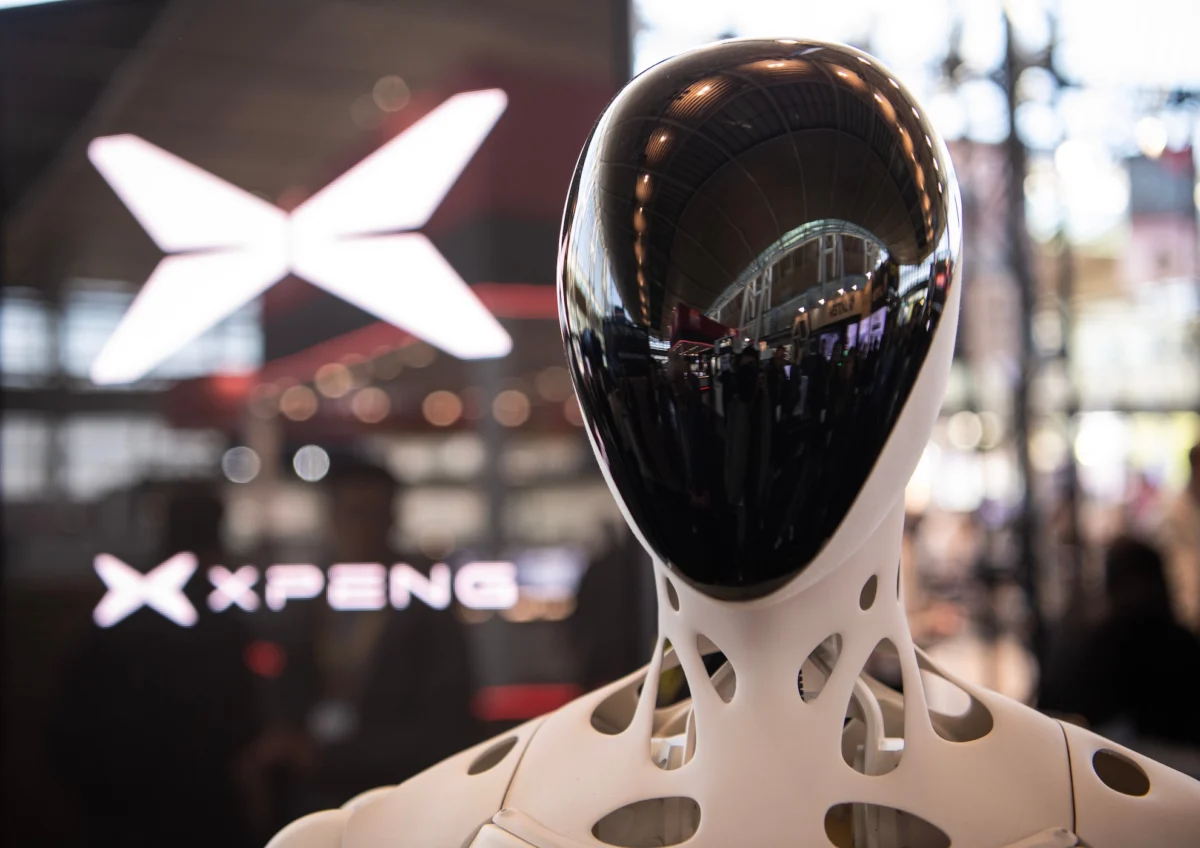
Earlier this week, the robotics division of Chinese EV giant Xpeng announced a historic milestone. The company successfully raised over $900 million at a staggering post-money valuation of more than $6.3 billion. The round, which saw participation from heavy hitters like IDG Capital, Gaorong Ventures, Tencent, and Alibaba, stands as the largest single-round private financing ever recorded in China’s burgeoning "embodied AI" sector.
This isn’t merely a corporate strategic shift; it is a personal one. Xpeng founder He Xiaopeng and co-president Brian Gu have reportedly invested $100 million of their own capital into the unit. This move signals a profound belief that the company’s "Iron" humanoid robot may soon eclipse its automotive business in both revenue and strategic importance.
The Chinese Automotive "Land Grab"
Xpeng is far from alone. The trend has swept across the Chinese automotive landscape:
- Chery Automobile: Its robotics arm, AiMOGA, is reportedly preparing for an IPO, targeting international markets for a 2026 debut.
- BYD: The global EV titan has unveiled "Xiao Di," a humanoid robot designed to integrate into its massive production ecosystems.
- Industry-wide Adoption: Companies including Changan, GAC, Li Auto, SAIC, and Seres have all initiated internal humanoid development programs, signaling a collective pivot that mirrors the earlier global transition to electrification.
Chronology: The Evolution of Embodied AI
To understand why this shift is happening now, one must look at the rapid acceleration of AI capability over the last 36 months.
- 2021–2022: The "Tesla Era" begins. Elon Musk unveils Optimus, bringing humanoid robotics into the mainstream business conversation. The focus is primarily on mechanical hardware and basic bipedal locomotion.
- 2023: The "LLM Breakthrough." Researchers realize that the transformer architecture—the backbone of ChatGPT—can be applied to robotics. By training robots on massive datasets of video and human movement, they can "learn" tasks without being explicitly programmed for every motion.
- 2024: Industrial Integration begins. Companies shift from general-purpose research to factory-specific applications. The focus moves from "can it walk?" to "can it pick and place parts?"
- 2025–2026 (The Current Horizon): The era of capitalization. Major funding rounds (like Xpeng’s) and corporate spin-offs (like Rivian’s Mind Robotics) define the landscape. We are currently witnessing the transition from laboratory R&D to the deployment of "Robot Metaplant" facilities.
Supporting Data: Why Automakers Have the Edge
Michael Dunne, CEO of Dunne Insights, argues that while Silicon Valley has the AI expertise, the automotive sector has the "manufacturing DNA" required to scale.
"They have all the hardware to get the job done," Dunne explains. "The question is whether they can catch Tesla on the AI side of the equation."
The Manufacturing Advantage
Automakers possess three distinct advantages that traditional robotics startups lack:
- Mass Production Infrastructure: Building 10,000 robots requires the same supply chain logistics as building 10,000 cars. Automakers already have the relationships with battery, sensor, and actuator suppliers.
- Testing Grounds: Automakers have their own factories. They don’t need to find external customers to test their robots; they can deploy them on their own assembly lines, collecting petabytes of data to improve the robots’ performance in real-time.
- Capital Reserves: Developing advanced robotics requires massive R&D spending. Large-scale automakers have the cash flow and the ability to absorb long-term losses while the technology matures.
Global Perspectives: The Race for Supremacy
While Chinese automakers are moving with unprecedented speed, they are competing in a crowded, globalized arena.
The Hyundai/Boston Dynamics Strategy
Hyundai’s approach is methodical. By acquiring Boston Dynamics, they secured the "gold standard" in robotics mobility. Their current strategy involves the "Robot Metaplant Application Center," a facility in the U.S. dedicated to teaching robots complex movements like lifting, turning, and sequencing parts. By partnering with Google’s DeepMind, they are attempting to fuse mechanical excellence with elite AI reasoning, aiming for full-scale factory deployment by 2028.
The Startup Ecosystem
Despite the rise of the giants, independent players continue to drive innovation:
- Agility Robotics: Focused on bipedal logistics solutions that are already being tested in warehouse environments.
- Apptronik: Prioritizing modularity and commercial-grade durability for labor-intensive industries.
- Figure: Perhaps the most direct competitor to Tesla, focused on achieving human-level intelligence in a humanoid form factor.
- Mobileye’s Acquisition: The recent $900 million purchase of Mentee Robotics by Mobileye underscores that autonomous driving companies are pivoting to "general purpose autonomy"—the idea that the same AI that drives a car can navigate a factory or a home.
Implications: The Future of Labor and Economics
The move toward humanoid robots carries profound socio-economic implications. If these companies succeed, the traditional manufacturing model will be upended.
1. The Death of the "Razor-Thin" Margin
As He Xiaopeng noted, the profit margins on automobiles are increasingly precarious. Robots, however, represent a high-margin, scalable product that can be sold to other manufacturers, logistics firms, and eventually, the service industry. By moving into robotics, automakers are essentially diversifying into the business of "selling labor."
2. The AI Divide
The real competition will not be about who builds the best legs or the strongest actuators; it will be about the software. The winner of this race will be the company that creates the most efficient "foundation model" for physical action—a digital brain that can be downloaded into any robot to give it instant proficiency in a new task.
3. Societal Shift
If humanoid robots achieve cost parity with human labor, the economic structure of global manufacturing will change. Countries that rely on low-cost manual labor as their primary economic competitive advantage may find that the cost of domestic, automated labor becomes more attractive. This could lead to a massive reshoring of manufacturing to developed nations.
Conclusion: The Road Ahead
We are in the midst of a transition as significant as the advent of the assembly line itself. The hype surrounding humanoid robots has finally met the cold, hard requirements of the balance sheet.
For the Chinese automakers, the risk is high—the investment required to lead in this space is astronomical. However, the potential reward is the ability to define the next century of industrial productivity. As these robots leave the R&D labs and step onto the factory floor, the distinction between a "car company" and a "robotics company" will continue to blur. The era of the embodied AI worker is no longer coming; it is being built, financed, and deployed, one bolt at a time.