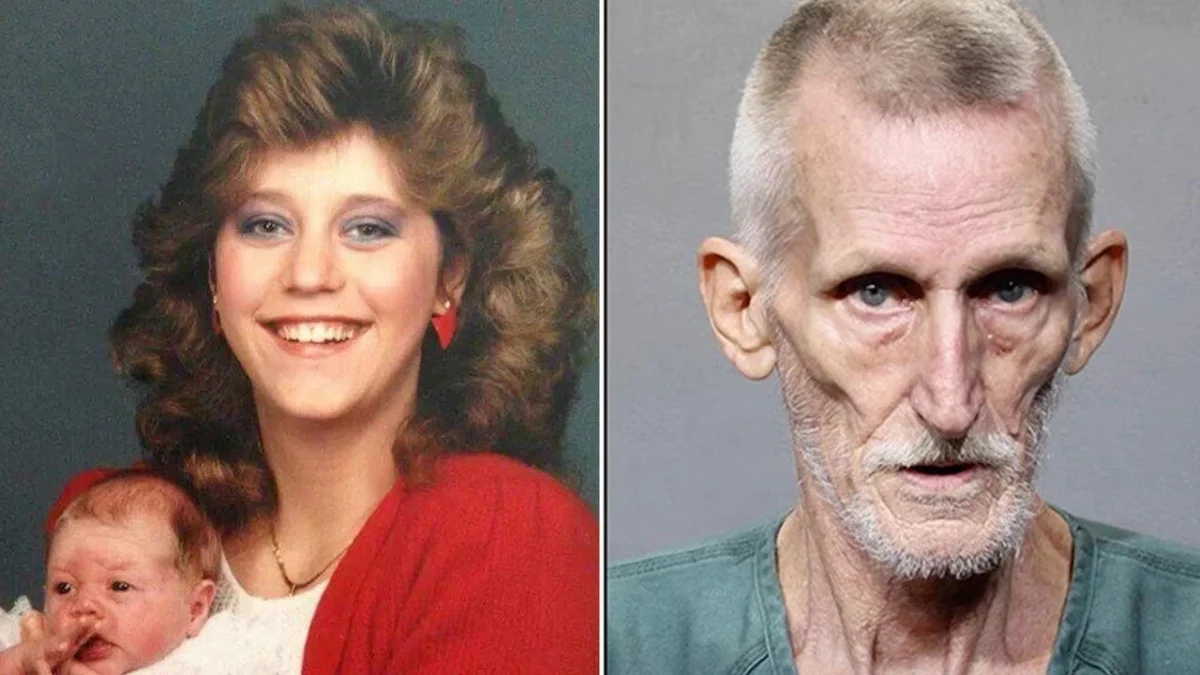
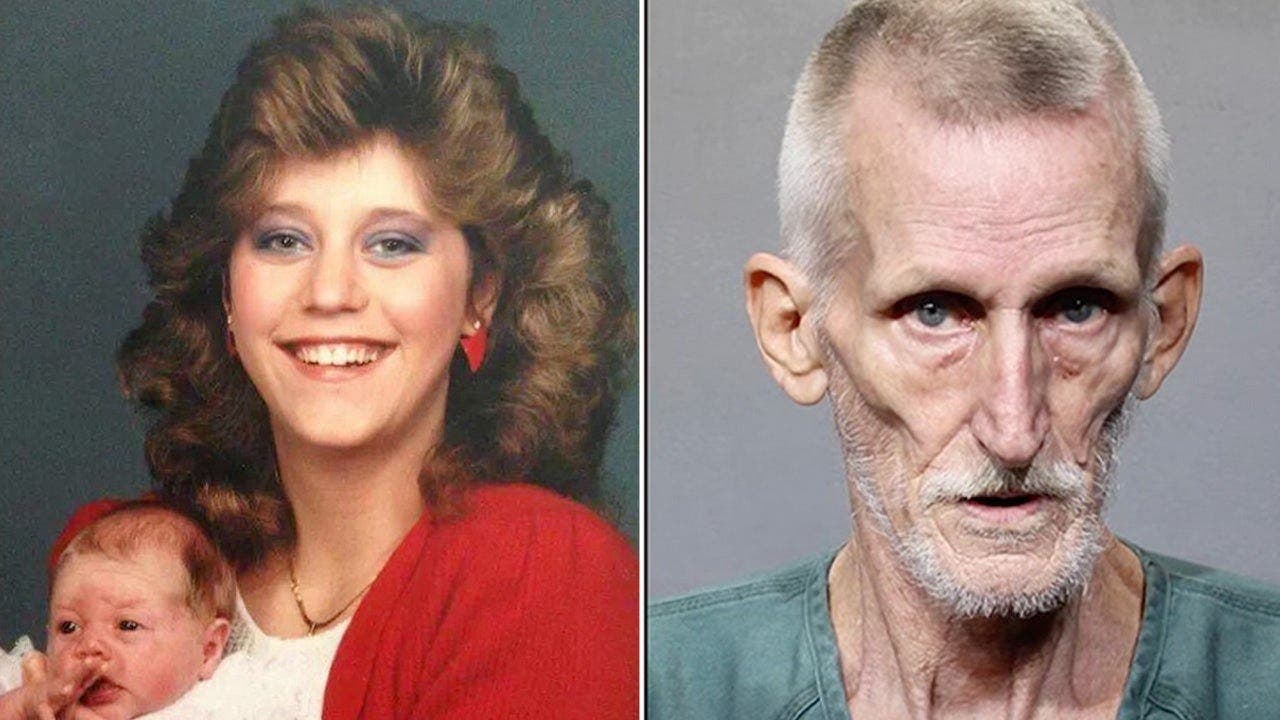
Nearly four decades after a young mother was brutally murdered inside her Jacksonville home, a sudden and unexpected telephone call to law enforcement has finally brought answers to a cold case that had baffled investigators for a generation. On July 8, 2026, Gary Edward Glowacz, now 70 years old, contacted authorities to confess to the 1987 slaying of 20-year-old Melissa Ellison.
The breakthrough highlights the unpredictable nature of cold case investigations, where the passage of time can sometimes act not as a barrier to justice, but as a catalyst for a suspect’s long-buried conscience. Glowacz’s detailed admissions, which included specific, non-public details about the crime scene, led to his immediate arrest and subsequent formal charging by Florida prosecutors.
Main Facts of the Case
Gary Edward Glowacz of Florida has been formally charged with second-degree murder and armed burglary with assault or battery in connection with the death of Melissa Ellison. The victim, a 20-year-old mother, was found dead in her Jacksonville residence on December 28, 1987. For 39 years, the case remained one of the city’s most stubborn unsolved homicides, with detectives exhausting all available leads in the years following the tragedy.
The resolution of the case began not with a forensic breakthrough or a tipster’s betrayal, but with the suspect himself. According to court records obtained from the Jacksonville Sheriff’s Office, Glowacz contacted the Clay County Sheriff’s Office expressing a desire to "set things straight" regarding Ellison’s death.
During subsequent interrogations with Jacksonville cold case detectives, Glowacz provided a highly detailed, self-incriminating account of the burglary and subsequent homicide. Investigators confirmed that Glowacz possessed "guilty knowledge"—information about the crime scene, the positioning of the victim’s body, and the murder weapon that had never been disclosed to the public or the media.
Following his confession, Glowacz was booked into custody. Prosecutors have since filed formal charges, alleging that Glowacz unlawfully entered Ellison’s home while armed with a dangerous weapon and caused her death by striking her.
Chronology of Events
The timeline of this case spans nearly forty years, beginning with a horrific discovery in the winter of 1987 and culminating in a quiet confession in the summer of 2026.
December 28, 1987: The Discovery
On the morning of December 28, 1987, roommates returning to their shared Jacksonville home made a distressing discovery. Upon entering the living room, they found Ellison’s 13-month-old child crying alone on a couch. Sensing something was deeply wrong, they searched the residence and discovered Melissa Ellison lying motionless on her bed.
Responding police officers and paramedics pronounced Ellison dead at the scene. The initial physical assessment revealed severe blunt-force trauma to her head and neck. Although investigators processed the scene thoroughly, collecting physical evidence and documenting the layout of the home, no viable suspects were identified at the time, and the case eventually went cold.
The Long Silence: 1987–2026
For decades, Ellison’s family lived without answers, and her child grew to adulthood knowing only that their mother had been murdered. Glowacz, meanwhile, continued his life in Florida. Unknown to detectives at the time, Glowacz had been living just half a mile from Ellison’s residence at the time of the murder. On the very day Ellison’s body was discovered, Glowacz was arrested by local police for an unrelated burglary in the immediate area. However, because of the chaotic nature of separate investigations and a lack of direct physical evidence linking him to the homicide, he was not tied to Ellison’s death at the time.
March 2026: The Trigger
According to investigators, the catalyst for Glowacz’s confession occurred in March 2026, when he happened to read a localized media report or public database article detailing the unsolved 1987 murder of Melissa Ellison. Glowacz later claimed to detectives that up until reading that article, he had not realized that Ellison had actually died from the injuries he inflicted. The realization of his actions reportedly began to weigh heavily on him.
July 8, 2026: The Confession and Arrest
Despite learning of Ellison’s death in March, Glowacz delayed contacting the police. He later explained to cold case detectives that he chose to wait several months because he wanted to spend one final spring and summer holiday season with his family before facing the legal consequences of his actions.
On July 8, 2026, Glowacz dialed the Clay County Sheriff’s Office. He told the responding deputy that he wanted to confess to a decades-old crime. Jacksonville Sheriff’s Office cold case detectives were immediately dispatched to interview him. During the interrogation, Glowacz laid out the events of December 28, 1987, in meticulous detail, leading to his immediate arrest.
Supporting Data and Forensic Evidence
The validity of a confession, particularly in a decades-old cold case, must be rigorously tested against the physical evidence preserved from the original crime scene. Investigators use "holdback details"—specific pieces of evidence deliberately withheld from the public—to distinguish genuine confessions from false ones. In this case, Glowacz’s statements perfectly aligned with the preserved physical evidence.

The Scene of the Crime
According to the 1987 arrest and booking reports, Ellison was found dead on her bed. The physical state of the room suggested a struggle and a subsequent search of the premises:
- Blunt-Force Trauma: The medical examiner in 1987 concluded that Ellison died of severe blunt-force injuries to her head and neck.
- The Weapon’s Signature: Crime scene technicians found soot and ash scattered on the bedsheets. Investigators concluded at the time that this residue was consistent with the victim being struck with a charred wooden log, likely taken from a fireplace.
- Positioning of the Body: Ellison’s head had been positioned beneath a pillow, her nightgown had been pulled up over her waistline, and her body appeared to have been dragged or manipulated on the mattress.
Glowacz’s Corroborating Statements
During his July 2026 interview, Glowacz provided a narrative that explained every anomalous detail of the 1987 crime scene:
- The Motive: Glowacz admitted that he was heavily using narcotics at the time of the incident. Desperate for quick cash or items to sell to fund his addiction, he broke into the residence.
- The Confrontation: Upon entering, he found Ellison and her 13-month-old baby in a bedroom. He exited the room, located a heavy wooden log inside the house, and returned to the bedroom, where he struck Ellison once in the head.
- The Child: In an unexpected detail that matched the roommates’ initial discovery, Glowacz admitted that after striking Ellison, he carried the crying 13-month-old infant out of the bedroom and placed the child safely on the living room couch before returning to search for valuables.
- The Search for Money: Glowacz told detectives that he returned to the bedroom and pulled Ellison’s body by the legs to move her out of the way. He then lifted a corner of the mattress to search underneath it for hidden cash. This matched the disarray of the bed and the specific positioning of Ellison’s body documented by technicians in 1987.
Detectives noted in the arrest report that these highly specific actions—such as moving the body to search under the mattress and the exact placement of the log—had never been released to the public and were not present in any media coverage of the case, proving the authenticity of Glowacz’s confession.
| Evidence Category | 1987 Crime Scene Findings | 2026 Suspect Confession Details |
|---|---|---|
| Murder Weapon | Soot and ash on bedsheets, consistent with a charred log. | Admitted to finding a wooden log in the house and striking the victim with it. |
| The Infant | Found crying on the living room couch by roommates. | Admitted to carrying the baby out of the bedroom and placing it on the couch. |
| Body Position | Head under a pillow, nightgown pulled up, body dragged. | Admitted to pulling the victim by her legs to lift and search under the mattress. |
| Geographic Link | Suspect arrested for burglary nearby on the same day. | Lived 0.5 miles away; admitted to burglarizing the home for drug money. |
Official Responses and Legal Proceedings
Following the verification of Glowacz’s confession, local law enforcement and prosecutors moved swiftly to initiate formal legal proceedings.
Law Enforcement Statements
The Jacksonville Sheriff’s Office expressed a sense of solemn relief regarding the arrest. Representatives emphasized that cold case detectives never truly close a file, and that the preservation of detailed crime scene records from 1987 was vital in verifying Glowacz’s confession. "This case demonstrates that time does not erase the need for accountability," an agency spokesperson noted. "Our detectives’ meticulous work in 1987 provided the foundation that allowed us to secure a charge today."
Prosecutorial Action
The State Attorney’s Office formally charged Glowacz with:
- Second-Degree Murder: Under Florida law, this charge alleges that Glowacz killed Ellison by committing an act imminently dangerous to another and demonstrating a depraved mind without regard for human life.
- Armed Burglary with Assault or Battery: This charge addresses his unlawful entry into the dwelling with the intent to commit theft, during which he armed himself with a dangerous weapon (the log) and assaulted the occupant.
According to the charging documents, the state intends to prove that Glowacz’s unlawful entry and subsequent violent actions directly caused Ellison’s death.

Defense Position
As of the latest court filings, Glowacz is being represented by a local public defender. When contacted by media outlets, the public defender’s office declined to comment on the specifics of the active case, citing standard policy regarding ongoing litigation. Glowacz remains held in custody pending his upcoming court appearances.
Implications and Broad Context
The resolution of Melissa Ellison’s murder carries profound implications for the fields of criminal justice, forensic psychology, and cold case methodology.
The Psychology of Aging Suspects
Criminologists and forensic psychologists frequently study the phenomenon of aging offenders who confess to long-forgotten crimes. Often, as individuals approach the end of their lives, they experience a shifting psychological landscape. Factors such as failing health, the desire to reconcile with their own conscience, or a reluctance to leave behind unresolved guilt for their families can prompt sudden confessions. In Glowacz’s case, the transition from living with a secret to actively seeking to "set things straight" highlights how the psychological burden of a homicide can intensify with age.
The Power of Public Archives and Media
This case also underscores the vital role that local media and digital archives play in keeping cold cases alive. Had an article about Ellison’s death not been published or preserved online in early 2026, Glowacz may never have realized the fatal outcome of his actions, and the case might have remained unsolved forever. Digital preservation of cold case files ensures that these stories remain accessible, occasionally reaching the eyes of the perpetrators themselves and forcing a confrontation with their pasts.
Generational Closure
For the family of Melissa Ellison—particularly her child, who is now an adult in their late late-30s—the arrest brings a bittersweet end to decades of painful uncertainty. Raised without a mother and with few details about her untimely death, the victim’s child finally has a clear understanding of what occurred on that December night in 1987. Though it cannot restore the years lost, the formal charging of Gary Edward Glowacz ensures that the truth is officially recorded, proving that even after nearly forty years, justice can still find its way home.