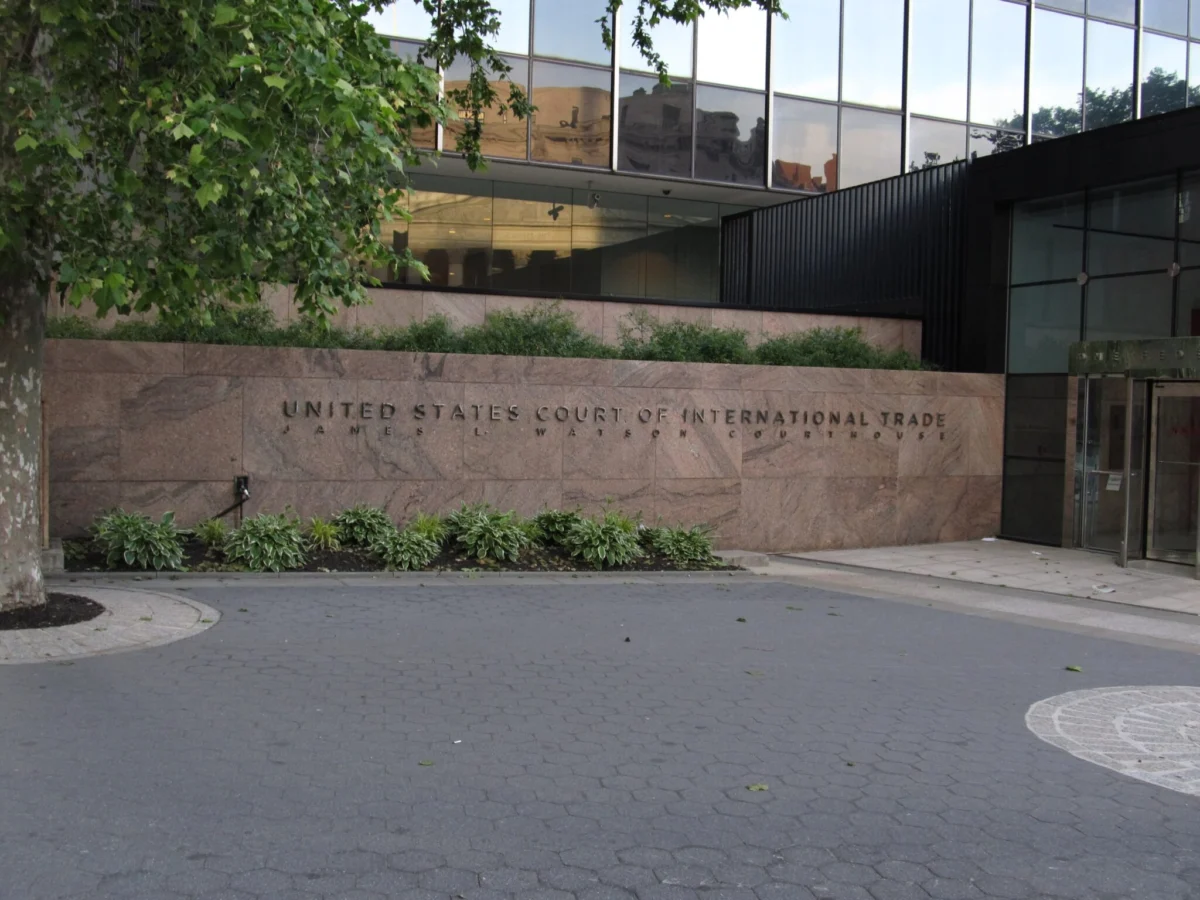
In a landmark ruling that reshapes the landscape of international commerce, the US Court of International Trade has affirmed the Trump administration’s authority to unilaterally eliminate the “de minimis” tariff exemption for low-cost imports. This decision marks a significant consolidation of executive power over trade policy, signaling a decisive shift toward protectionist economic strategies.
Main Facts: The Ruling and its Significance
On Thursday, the US Court of International Trade issued a summary judgment in favor of the Trump administration, effectively ending a legal challenge brought by Detroit Axle, an automotive parts distributor. The case centered on the president’s use of the International Emergency Economic Powers Act (IEEPA) to bypass existing statutory frameworks and revoke the long-standing "de minimis" rule—a policy that historically allowed individual shipments valued under $800 to enter the United States duty-free.
The court’s decision provides a robust legal foundation for the administration’s aggressive use of national emergency declarations to regulate trade. By determining that the "de minimis" exemption constitutes a "privilege" rather than a fundamental right, the court concluded that the president possesses the authority under IEEPA to “nullify or void” such privileges during periods of national emergency. This interpretation distinguishes the current case from the Supreme Court’s previous ruling in Learning Resources, Inc. v. Trump, which had limited the president’s ability to impose direct tariffs under the same act.
Chronology of the Conflict
The legal battle reflects the broader tension between executive prerogative and the constitutional authority of Congress. The timeline of this dispute highlights the rapid evolution of US trade policy:
- 2015: Congress passes legislation expanding the de minimis threshold from $200 to $800, aiming to reduce bureaucratic burdens on small businesses and stimulate consumer spending.
- May 2025: Detroit Axle initiates litigation against the Department of Commerce, challenging the executive order that suspended the exemption. The plaintiff argued that the administration’s actions overstepped the boundaries of delegated power.
- February 2026: The US Supreme Court issues a ruling in Learning Resources, Inc. v. Trump, holding that the IEEPA does not grant the president unilateral authority to impose new tariffs.
- August 2026: The US Court of International Trade rules in favor of the administration, distinguishing the revocation of a "privilege" (the exemption) from the imposition of a new tax.
- July 2027 (Scheduled): The statutory repeal of the de minimis exemption, as mandated by the One Big Beautiful Bill Act, is set to take effect, codifying the executive’s current temporary measures into permanent law.
The Legal Argument: Textualism vs. Executive Power
The court’s decision relied heavily on a blend of textual analysis and an assessment of legislative intent. Detroit Axle’s legal team contended that the term "privilege" within the IEEPA should be interpreted narrowly—restricted to traditionally recognized property interests. They argued that because the de minimis exemption is a statutory creation of Congress, only the legislative branch has the power to rescind it.
The "Nondelegation" Doctrine
A core pillar of the plaintiff’s argument was the "nondelegation doctrine," which posits that Congress cannot delegate its core legislative functions to the executive branch. Detroit Axle asserted that by picking and choosing which tariff exemptions to enforce, the president was effectively exercising a "line-item veto," a power the judiciary has historically viewed with skepticism.
The Court’s Rebuttal
The court rejected this characterization, emphasizing the “intelligible principle” test. Under this legal standard, if Congress provides a clear objective—in this case, the regulation of trade during a national emergency—the executive branch is granted the necessary discretion to fulfill that mandate. The court concluded that rescinding the exemption did not constitute an usurpation of the "power of the purse," but rather a tactical adjustment within existing tariff controls.
Furthermore, the court dismissed claims that the agency’s implementation of the rescission violated the Administrative Procedures Act (APA). It ruled that agency actions taken to implement a valid exercise of presidential discretion are generally shielded from the rigorous procedural requirements typically applied to administrative rule-making.
Supporting Data: Economic Context and Protectionism
The push to eliminate the de minimis exemption is deeply rooted in the Trump administration’s broader protectionist agenda. Proponents of the policy argue that the exemption, originally intended to facilitate small-scale commerce, had become a loophole for massive, duty-free shipments of low-cost goods, particularly from overseas e-commerce platforms.
Data from the Department of Commerce suggests that the sheer volume of "de minimis" entries has surged in recent years, creating a significant competitive disadvantage for domestic manufacturers like Detroit Axle. By removing the exemption, the administration aims to level the playing field, ensuring that imported auto parts and other consumer goods are subject to the same tariff requirements as domestic products.
However, critics point to the inflationary risks. Economists note that the $800 threshold was specifically designed to keep consumer prices low. By eliminating this buffer, the administration is effectively imposing an indirect tax on millions of daily consumer transactions, which could be passed on to the American public in the form of higher prices.
Official Responses and Stakeholder Positions
The business community remains sharply divided. Major logistics firms, many of whom have previously challenged the administration’s tariff policies, have expressed disappointment with the court’s decision. Representatives from the retail sector warned that the ruling could lead to significant supply chain disruptions, as customs officials struggle to process the sudden influx of shipments that will now require formal entry and tariff assessment.
Conversely, domestic manufacturing associations have hailed the ruling as a "victory for American industry." They argue that the previous system encouraged the "outsourcing of American jobs" by making it cheaper to import finished goods than to manufacture them domestically.
Government officials have maintained a firm stance, emphasizing that the ruling confirms the president’s primary duty to protect the national economy. A spokesperson for the Department of Justice stated, “The court has recognized that the president must have the tools necessary to defend American interests in an increasingly volatile global trade environment.”
Implications: A New Era for Global Trade
The implications of this ruling extend far beyond the immediate dispute over auto parts. By validating the use of IEEPA to dismantle trade exemptions, the court has provided a blueprint for future executive action.
1. Shift in Regulatory Authority
This decision significantly weakens the influence of the Administrative Procedures Act in matters of trade. By classifying the revocation of an exemption as an exercise of presidential discretion rather than agency rulemaking, the administration has effectively reduced the number of avenues available to businesses seeking to challenge trade policies in court.
2. The Future of the "De Minimis" Threshold
While the court’s ruling provides an immediate legal basis for the administration’s actions, the long-term future is already being written by the legislature. The One Big Beautiful Bill Act, passed in 2025, ensures that the de minimis exemption will be statutorily repealed by July 2027. This suggests that the executive’s current actions are a stop-gap measure—a precursor to a broader, permanent restructuring of US trade law that reflects a bipartisan, if protectionist, consensus.
3. Diplomatic Repercussions
Internationally, the move is expected to heighten tensions with trading partners who rely on the US market. Countries that have built significant export industries around the de minimis threshold may view this as a protectionist barrier, potentially leading to retaliatory measures. The ruling forces global exporters to re-evaluate their reliance on the American market, potentially accelerating the trend of "near-shoring" or regionalized supply chains.
4. A Precedent for Executive Overreach?
Finally, the ruling serves as a stark reminder of the evolving balance of power in Washington. By allowing the president to interpret the definition of "privilege" to suit emergency objectives, the judiciary has granted the White House a potent tool. Whether this tool will be used judiciously or as a recurring instrument of policy-by-decree remains the central question for the remainder of the decade. As the administration continues to frame global trade through the lens of "national security," the line between economic policy and foreign policy becomes increasingly blurred, leaving businesses to navigate a landscape defined by uncertainty and executive command.