Two hundred and fifty-two million years ago, the Earth experienced an apocalyptic transformation. Known to geologists as the Permian-Triassic extinction event, or the "Great Dying," this catastrophic collapse of life erased 96% of all marine species and 70% of terrestrial vertebrates. For eons, scientists have puzzled over why the destruction was so unevenly distributed—why some creatures vanished into the fossil record forever, while others survived to dominate the modern world.
A groundbreaking study led by Stanford University, published July 6 in the Proceedings of the National Academy of Sciences, has finally provided a definitive answer. By examining the metabolic differences between ancient and modern organisms, researchers have identified a "metabolic bottleneck" that dictated survival. The findings suggest that the same environmental pressures that reshaped the ocean floor millions of years ago—rapid warming and oxygen depletion—are currently echoing in our own rapidly changing seas.
The Great Shift: A Changing of the Guard
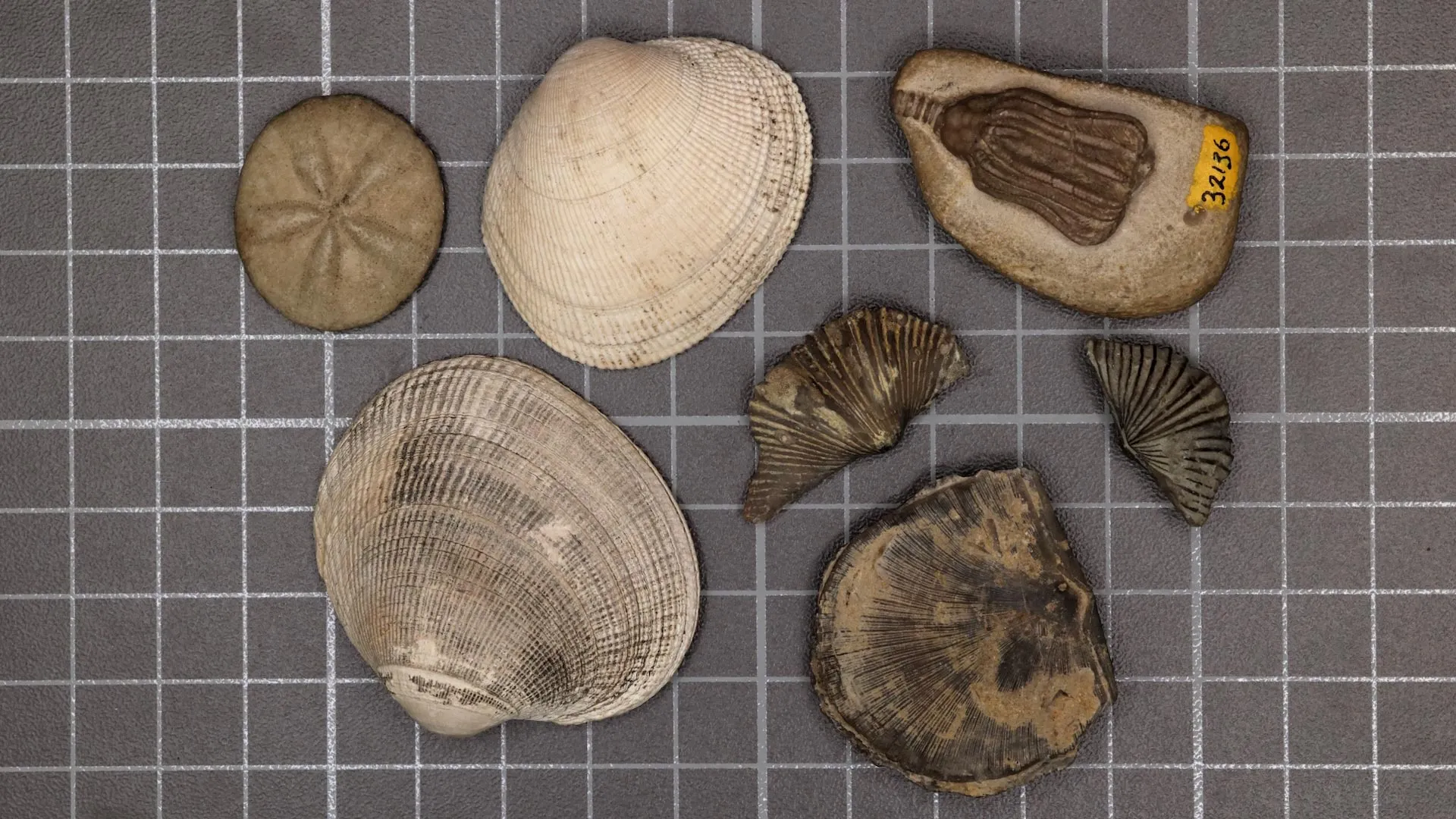
To understand the scale of this ecological turnover, one must look at the seafloor of the Paleozoic era. For nearly 280 million years, the oceans were the domain of the "sedentary majority." Brachiopods—small, clam-like organisms—along with crinoids (sea lilies) and various bottom-dwelling filter feeders, reigned supreme. These animals were slow-moving, low-energy inhabitants of a relatively cool, oxygen-rich environment.
When the Permian-Triassic event struck, the world changed in a geological blink of an eye. Massive volcanic eruptions, concentrated in what is now Siberia, unleashed a gargantuan pulse of carbon dioxide and methane into the atmosphere. The resulting global temperature spike triggered a cascade of oceanic crises.
As the oceans warmed, they lost their ability to hold oxygen. The sedentary species, adapted to a stable, oxygen-abundant world, could not pivot. They were annihilated. In their place rose the modern marine fauna: mollusks, clams, snails, fish, and echinoderms like starfish and sea urchins. These groups were biologically "pre-adapted" for the chaos that followed, possessing higher metabolisms and more complex physiological mechanisms to thrive in warmer, less oxygenated waters.
Today, we see the results of this transition every time we walk along a beach. The shells we collect are almost exclusively the descendants of those survivors—the bivalves—rather than the once-ubiquitous brachiopods, which have been reduced from masters of the ocean to a biological curiosity of roughly 400 remaining species.
Chronology of a Crisis: From Stability to Collapse
The Permian-Triassic transition serves as the ultimate cautionary tale in Earth’s history. The timeline of this extinction reveals a brutal progression:
- The Pre-Extinction Equilibrium: For hundreds of millions of years, the Earth’s climate remained relatively stable. Oceans were well-oxygenated and cool, providing an ideal, low-stakes environment for "lazy" organisms like brachiopods to flourish.
- The Volcanic Trigger: Approximately 252 million years ago, the Siberian Traps—a vast volcanic province—began a series of eruptions that lasted for thousands of years. This released massive volumes of greenhouse gases.
- The Thermal Spike: Global temperatures rose by 8–12°C. As the water warmed, it became physiologically hostile. Warmer water holds less dissolved oxygen, and simultaneously, the metabolic rate of ectothermic animals increases with temperature, causing their oxygen demand to skyrocket.
- The Metabolic Bottleneck: Animals with high metabolic "overhead" (those built for active, predatory lives) were able to utilize more efficient gills and muscular systems to compensate for the oxygen shortage. The slow-moving, low-metabolism filter feeders could not keep up; they effectively suffocated in their own environment.
- The New World Order: Following the mass extinction, the vacuum left by the brachiopods was rapidly filled by the surviving mollusks and fish. This shift created the foundation for the trophic structures we observe in our oceans today.
Supporting Data: Unlocking the Secret of Metabolism
The Stanford team, led by senior author Erik Anders Sperling and lead author Jose Andres Marquez, sought to bridge a critical knowledge gap. While previous studies had established that warming and oxygen loss were the primary killers of the Permian era, they relied on data from modern organisms, often overlooking the very species that went extinct.
To rectify this, the team conducted extensive fieldwork, including the collection of living brachiopods in Washington state’s San Juan Islands. By comparing these ancient-style survivors with modern bivalves in laboratory settings, the researchers were able to measure oxygen consumption under various temperature stressors.
The data provided clear evidence: while Paleozoic animals were actually more efficient at surviving in extremely low-oxygen environments under cool conditions, they lacked the physiological flexibility to deal with rising temperatures. Their oxygen demand increased exponentially as the water warmed, whereas modern species—having evolved in more dynamic, fluctuating environments—possessed the biological machinery (like advanced muscular pumps and complex gills) to adapt.
"This is why we eat clam chowder and we don’t eat brachiopod chowder," remarked Sperling. "Brachiopods have almost no meat." This colloquial observation highlights the fundamental physiological divergence: the bivalves’ need to move, burrow, and hunt necessitated a high-energy, high-metabolism body plan, which ultimately proved to be an evolutionary shield during the planet’s greatest catastrophe.
Official Perspectives: A Call for Scientific Urgency
The findings have been received as a landmark contribution to the field of paleobiology. By moving beyond simple correlation and into the mechanics of metabolic physiology, the researchers have created a blueprint for understanding how life reacts to environmental stress.
"This study is really the final nail in the coffin for what caused the Permian-Triassic mass extinction," says Professor Sperling, who serves as an associate professor of Earth and planetary sciences in the Stanford Doerr School of Sustainability. "The biggest mass extinction of all time started from a world that is very similar to today… Understanding how Earth and Earth’s biota responded back then could inform us of what’s to come."
The researchers emphasize that while ocean acidification (the result of CO2 absorption) was certainly a factor, it was secondary to the lethal combination of heat and oxygen loss. This distinction is vital for modern climate policy, as it highlights that temperature regulation and the maintenance of oxygen-rich marine zones are the most pressing survival requirements for modern biodiversity.
Implications: A Mirror to the Future
The shadow of the "Great Dying" looms large over the current climate crisis. The researchers warn that while the Permian extinction occurred over thousands of years, modern climate change is compressing similar warming trends into a timeframe of mere centuries.
Current projections indicate that by the year 2100, global temperatures could be 1.5–4°C higher than pre-industrial levels. While this is less than the 8–12°C spike of the Permian, the rate of change is unprecedented. Marine life today is being forced to adapt at a pace that may outstrip the evolutionary capacity of many species.
The Modern Warning
The study serves as more than just a historical analysis; it is a diagnostic tool. By identifying which organisms are most metabolically vulnerable, scientists can better predict which marine ecosystems are on the verge of collapse.
"The bad news is, we are on track for Permian-Triassic levels of warming in worst-case scenario projections," Sperling notes. "But the good news is, we’re still at the point where we can change things and do something about it."
The Stanford team plans to broaden their research to include a wider array of marine taxa, exploring the interplay between acidification, warming, and deoxygenation. As human activity continues to alter the chemical and thermal composition of the seas, the history of the brachiopod and the clam serves as a stark reminder: when the environment shifts, it is the organisms with the metabolic capacity to endure that define the future of the planet.
For now, the study stands as a testament to the resilience—and the fragility—of life. The ocean, once a stable cradle for the slow and the steady, has become a high-stakes arena where metabolic agility is the currency of survival. As we look toward the next century, the lessons of the Permian suggest that our greatest challenge is not merely to observe the warming of our oceans, but to recognize that we are currently conducting a massive, uncontrolled experiment on the very life-support systems that have allowed modern biodiversity to thrive.