Honey Trehan’s Satluj—a harrowing excavation of extrajudicial violence in 1990s Punjab—is a film that seems destined to exist more in the shadows of controversy than in the light of the cinema. While the film offers a somber, hagiographic portrait of Sikh activist Jaswant Singh Khalra, its most compelling narrative lies outside the frame. The story of its production, its sudden disappearances from festival circuits, and its ephemeral digital footprint serves as a meta-commentary on the very themes it explores: the suppression of truth and the reach of an unchecked administrative machinery.
The Genesis of a Forbidden Narrative
At its core, Satluj (formerly titled Punjab ’95) is a biographical drama centered on the life of Jaswant Singh Khalra, a modest bank manager whose pursuit of a missing relative unraveled a labyrinth of state-sanctioned terror. In the early 1990s, as Punjab grappled with the fallout of the Khalistan separatist movement, the region became a theater for what the film portrays as systemic extrajudicial executions.
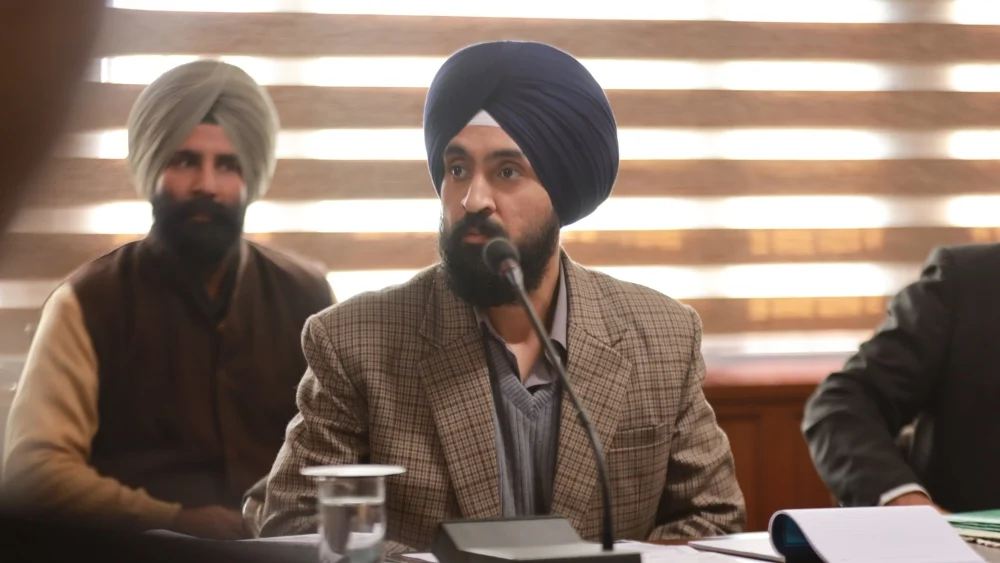
The narrative prologue is deceptively quiet. It opens with the mundane, almost bureaucratic conversations of police officers, punctuated by the cold efficiency of moonlight executions. The film posits that these killings were framed under the guise of "curbing terror," a justification that allowed local authorities to operate with total impunity. When Khalra, played with a stoic, ethereal gravity by pop icon Diljit Dosanjh, begins investigating the disappearance of an elderly woman’s husband, he inadvertently pulls the thread that threatens to unravel the entire tapestry of state-sponsored "disappearances."
Chronology of a Canceled Release
The journey of Satluj to the screen has been as turbulent as the history it depicts. The film’s path to the audience has been marked by a series of interventions that suggest a profound discomfort within official circles regarding its content.
- September 2023: The film, then titled Punjab ’95, was abruptly pulled from its premiere slot at the Toronto International Film Festival (TIFF). No official explanation was provided by organizers or the production team, though speculation immediately centered on mounting political pressure regarding the film’s depiction of the Indian state.
- July 3, 2024: Following a protracted battle with the Central Board of Film Certification (CBFC)—which reportedly demanded over 120 cuts to the film—Satluj was released on the Indian streaming platform Zee5.
- July 5, 2024: Within 48 hours of its domestic debut, the film was pulled from the platform for Indian viewers.
- July 2024 (Mid-Month): The film was similarly withdrawn for international audiences, rendering it effectively "lost" to the mainstream digital landscape.
These maneuvers have transformed the film from a piece of historical cinema into a symbol of resistance. As the film has vanished from legal streaming platforms, it has resurfaced in the form of "rogue" community screenings across India, where the act of viewing the film has become an act of civic defiance.
The Anatomy of State-Sanctioned Silence
The title Satluj refers to one of the major rivers of Punjab, which in the film’s grim reality becomes a repository for the state’s dark secrets—a silent witness to the bodies discarded along its banks. The film’s structure operates as a mystery, yet it is one where the villains are known and the crimes are an open secret.
Trehan’s direction highlights the banality of the evil involved. Everyone in the community knows the authorities are kidnapping and killing dissenters, yet the culture of fear is so pervasive that the truth remains unspoken. As Khalra delves deeper, he unearths the harrowing paper trail of "mass cremations," where individuals labeled "missing" by police were, in fact, systematically executed and disposed of.
The film’s focus on the "paper trail" is significant. It moves the conversation from the emotional to the forensic, portraying the state’s violence not as a series of chaotic incidents, but as an illicit, organized machinery. When Khalra shifts from bank employee to full-time activist, the film’s tension ratchets up, as he transforms into a primary target of the very apparatus he is exposing.
Performance and Aesthetics: The Liturgy of Duty
Despite its didactic and sometimes repetitive structure—which clocks in at a sprawling 164 minutes—Satluj finds its strength in the textures of performance. Diljit Dosanjh’s turn as Khalra is less of a standard biopic performance and more of a spiritual invocation. He portrays Khalra as an "ego-less saint," a man whose motivations are rooted in a deep sense of Sikh duty.
The collaboration between Trehan, cinematographer K. U. Mohanan, and composer Marc Marder creates an environment that feels simultaneously ethereal and suffocating. The film frames spirituality not as a flight from reality, but as a visceral, gut-wrenching response to injustice. The cinematography captures the landscape of Punjab with a sense of looming dread, while the sound design reinforces the weight of history that the characters are forced to carry.
The Politics of Omission
Critically, Satluj maintains a strategic ambiguity regarding the broader political backdrop of the 1980s. While it references the assassinations and riots that thrust the Sikh community into national focus, it remains largely silent on the ideological specifics of the Khalistan movement itself.
By avoiding a deep dive into the separatist rhetoric, Trehan creates a narrative that is, in one sense, more palatable to a mass audience. It reframes the conflict as a struggle between individual human rights and state overreach, rather than a debate over national sovereignty. However, this choice also serves a narrative function: it exposes how the labels of "terrorist" or "insurgent" are weaponized by the state to dehumanize victims, turning every citizen into a potential target for state violence.
Implications for Freedom of Expression
The suppression of Satluj is a sobering case study in the current state of cultural expression within India. The demand for 120 cuts by the CBFC, followed by the platform-wide removal of the film, underscores a growing trend of institutional censorship. By targeting the film, the state has inadvertently amplified its message.
The film’s "bloat"—the repetitive nature of its courtroom-style dialogue and its insistence on hammering home its point—becomes an asset rather than a liability. In an era of shrinking attention spans, the film demands a long, sustained engagement with uncomfortable truths. It functions as a record, a testimony, and a reminder of the thousands of lives that remain unaccounted for in the official histories of the state.
Conclusion: A Living Document
Honey Trehan has crafted more than just a historical drama; he has created a living document that speaks to the power of the image in the face of institutional erasure. Satluj is a film that refuses to be silenced, even as its digital existence is repeatedly erased. By centering the story on Jaswant Singh Khalra, Trehan provides a human face to a systemic tragedy, ensuring that the history of these "missing" individuals remains a part of the public consciousness.
While the film has its narrative flaws—the pacing is inconsistent, and the voiceover-heavy exposition can feel didactic—its power lies in its moral clarity. In the final analysis, Satluj serves as a poignant reminder that while a government may be able to censor a film, it cannot as easily delete the memory of the events it depicts. The "ancillary drama" of the film’s release is now inseparable from the film itself, cementing its place as a crucial, if contested, entry in contemporary Indian cinema. As the digital copies are scrubbed and the official streams are deactivated, the film’s legacy continues to circulate in the only way it can: through the persistent, collective memory of the people it seeks to honor.