By International Correspondent
July 20, 2026
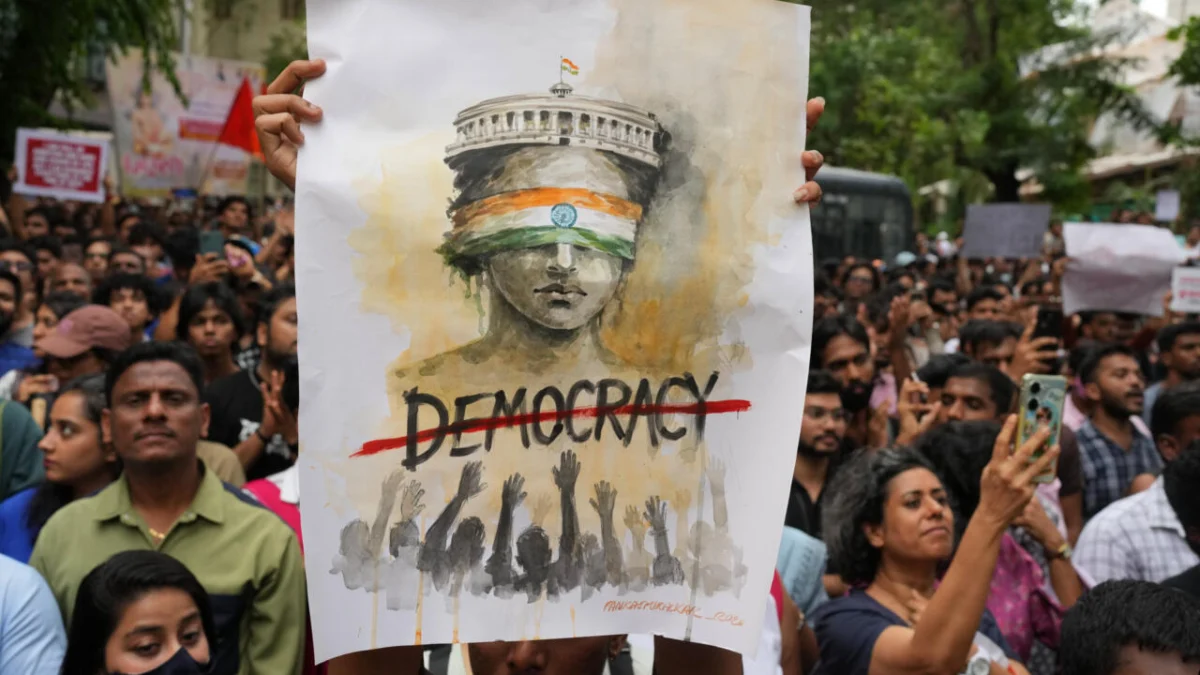
The streets of Mumbai became a theater of political defiance this weekend as thousands of demonstrators, organized under the banner of the newly formed "Cockroach Janta Party" (CJP), converged on the city center to demand the immediate resignation of India’s Union Education Minister, Dharmendra Pradhan. The protests, which saw a heavy security presence and significant disruption to urban traffic, signal a growing frustration among the youth and academic communities regarding the current state of national examination integrity and institutional oversight.
Main Facts: A Movement Born of Frustration
The protest, which took place on July 19, 2026, was marked by the unconventional branding of the "Cockroach Janta Party." The name, which has gone viral across social media platforms, is a satirical yet biting critique of what protesters describe as the "tenacious and pervasive" nature of corruption within the Indian education system.
The primary grievance driving the movement is the persistent pattern of paper leaks, administrative failures in conducting competitive exams, and a perceived lack of accountability at the ministerial level. Protesters carried placards featuring insect motifs and slogans demanding that Minister Pradhan "clean the rot" or step aside.
The movement represents a diverse coalition of students, unemployed graduates, and civil society activists. Their demands are clear: a complete overhaul of the National Testing Agency (NTA), the establishment of an independent judicial inquiry into recent exam irregularities, and a formal apology from the Ministry of Education for the mental and financial toll taken on millions of students.
Chronology: The Escalation of Dissent
The current wave of unrest did not emerge in a vacuum; it is the culmination of a series of crises that have plagued the Indian education sector over the past eighteen months.
- January 2026: Initial reports of irregularities in regional recruitment examinations surfaced, leading to minor protests in several state capitals. The Ministry of Education initially dismissed these reports as "isolated incidents."
- March 2026: A major national entrance examination was compromised when a digital breach led to the early circulation of question papers. The resulting cancellation of the exam affected over 500,000 students.
- May 2026: The formation of the "Cockroach Janta Party" was announced in a clandestine social media campaign. The group used the metaphor of the cockroach to signify their intent to "survive and persist" despite government crackdowns.
- June 2026: Tensions boiled over after a secondary leak was discovered in a prestigious professional entrance exam. The Minister held a press conference promising "zero tolerance," but failed to announce structural changes, further alienating student unions.
- July 19, 2026: The Mumbai demonstration. Tens of thousands gathered at the historic Azad Maidan, defying municipal restrictions to voice their collective outrage.
Supporting Data: The Scale of the Crisis
The dissatisfaction is backed by staggering statistics that highlight the systemic strain on India’s competitive examination infrastructure.
According to data compiled by independent educational think tanks, the frequency of examination-related litigation has increased by 45% since 2024. In the first half of 2026 alone, at least four major national-level examinations have faced either postponement or cancellation due to "logistical errors" or security breaches.
Furthermore, the economic impact is profound. The average student in India spends between 20,000 to 50,000 INR annually on coaching and registration fees. When exams are cancelled, this capital is essentially lost, placing an undue burden on middle-class families already struggling with inflation. Surveys conducted during the July 19 protest indicated that over 70% of participants had taken at least two exams that were cancelled in the past year, leading to a profound "loss of faith in the meritocratic promise" of the Indian state.

Official Responses: A Government Under Siege
The response from the Ministry of Education has been a blend of defensive rhetoric and promises of reform. Minister Dharmendra Pradhan, speaking from New Delhi, characterized the protestors as being "misled by vested political interests."
"The government is fully committed to the sanctity of examinations," Pradhan stated in a televised address on the evening of July 19. "We are in the process of implementing a blockchain-based secure transmission system for question papers. However, disruptive tactics and the politicization of academic issues by groups like the CJP only serve to derail the progress we are making toward a modernized, transparent system."
Ministry spokespersons have further emphasized that they are working closely with law enforcement to track down the digital footprints of the paper-leak syndicates. They argue that the issue is one of criminal activity rather than administrative negligence. However, this narrative has failed to appease the CJP, who argue that the government’s focus on "criminal gangs" is a deflection from the fundamental lack of internal oversight within the NTA.
Implications: A Shifting Political Landscape
The rise of the "Cockroach Janta Party" serves as a bellwether for a broader shift in Indian politics. It demonstrates that single-issue movements, if effectively mobilized through social media, can challenge the status quo even in a highly polarized political environment.
1. The Politicization of the Youth Vote
The CJP has successfully tapped into the anxiety of "Generation Z" in India. By framing their protest around the right to a fair career path, they have distanced themselves from traditional partisan politics while maintaining a potent political voice. If this momentum continues, major political parties may find themselves forced to adopt "educational reform" as a cornerstone of their manifestos for the upcoming regional elections.
2. Institutional Reform vs. Political Stability
The challenge for the Ministry of Education is twofold: they must restore the technical integrity of the examination process while simultaneously rebuilding public trust. The demand for the Minister’s resignation is not merely about a change in leadership; it is a demand for a change in the culture of governance. Failure to address these concerns may result in further protests, potentially spreading from Mumbai to other major metropolitan hubs like Bangalore, Delhi, and Hyderabad.
3. The Digital Battlefield
The use of encrypted messaging apps and decentralized organizational structures by the CJP highlights the changing nature of protest in the digital age. Traditional containment methods—such as blocking streets or restricting press access—have proven ineffective against a movement that operates on a fluid, digital-first model.
Conclusion: A Long Road Ahead
As the dust settles on the streets of Mumbai, the "Cockroach Janta Party" has vowed to continue its campaign of "persistent vigilance." Their slogans—“We do not die, we multiply”—have become a rallying cry for a generation that feels betrayed by the institutions tasked with their future.
Whether Minister Dharmendra Pradhan will withstand the pressure or become the first major casualty of this student-led movement remains to be seen. What is certain, however, is that the issue of examination integrity has moved from the back pages of educational journals to the front lines of national political discourse. The "cockroaches" have made their presence felt, and for the Indian government, the task of cleaning the system has never been more urgent.