Since its humble inception in 1984 in Sauk City, Wisconsin, Culver’s has evolved from a local favorite into a Midwestern juggernaut. With over 1,000 locations spanning from the Great Lakes to the Gulf Coast, the chain has built a cult-like following centered on its signature "ButterBurger" and fresh, frozen custard. As the company continues its aggressive national expansion, millions of new customers are discovering the brand’s unique service model. However, behind the bright blue sign and the friendly "Welcome to Culver’s" greeting lies a complex, fast-paced operational environment.
To gain insight into the day-to-day realities of life behind the counter, we analyzed extensive discussions among current and former staff members on platforms like Reddit’s r/Culvers. What emerges is a clear picture: while staff take pride in the "made-to-order" philosophy that defines the chain, there are several recurring customer behaviors that disrupt efficiency, decrease morale, and complicate an already demanding shift.
The Reality of "Freshly Made": An Operational Overview
Unlike many competitors in the fast-food sector that rely on heat lamps and pre-cooked patties, Culver’s operates on a "cooked-to-order" basis. This distinction is the bedrock of their brand identity. When a customer orders a ButterBurger, the patty begins its journey on the grill at that moment. While this ensures a superior culinary product, it also mandates a rigid timeline for employees.
When this operational model meets high-volume traffic, the system can become fragile. Any disruption—whether it is a confusing order, a request for a menu item that doesn’t exist, or a bottleneck in the drive-thru—can cause a cascading delay that impacts wait times for everyone. Understanding these pressures is the first step toward a smoother experience for both the patron and the crew.
1. The "Clean-As-You-Go" Expectation
Fast food dining rooms are high-traffic environments, and the cleanup burden often falls on staff members who are already juggling kitchen and drive-thru responsibilities. Employees report a recurring frustration with patrons who leave behind excessive amounts of trash, including smeared condiment packets, half-eaten custard, and spilled beverages.
"It’s a misconception that we are personal waitstaff for every table," one employee noted in a popular forum. The irritation stems not just from the mess itself, but from the disregard for the shared communal space. In some instances, when tables are left in states of disarray, staff have been known to politely request that customers dispose of their own waste, a practice aimed at maintaining the restaurant’s standards of hygiene.
2. Culinary Terminology: Why Names Matter
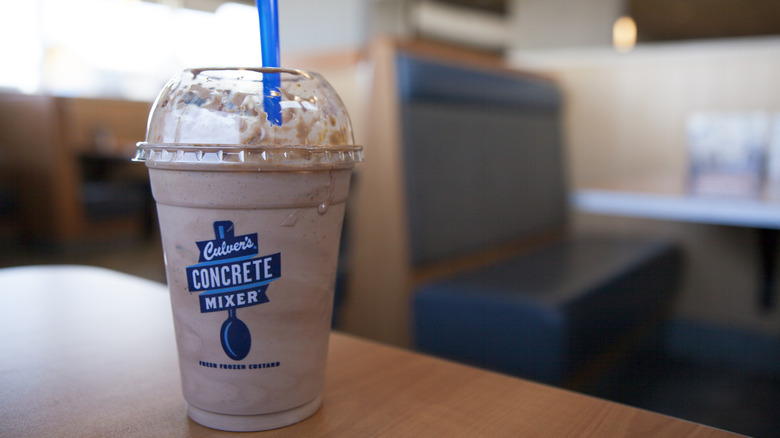
The naming conventions at Culver’s are specific for a reason. The "ButterBurger" is named for the lightly buttered, toasted bun, and the "Concrete Mixer" is a dense, blended custard treat. Employees frequently report "losing patience" when customers attempt to use terminology from competing chains.
Calling a Concrete Mixer a "Blizzard" (Dairy Queen), a "Blast" (Sonic), or a "McFlurry" (McDonald’s) is more than just a linguistic error; it creates confusion in the Point of Sale (POS) system. Furthermore, using incorrect terms like "Concrete Shake" can lead to genuine errors in preparation. A Concrete Mixer and a hand-spun shake are two distinct menu items with different consistencies and preparation methods. Precision in ordering ensures the kitchen team can fulfill requests accurately without needing to pause for clarification.
3. The "Closing Time" Dilemma
Perhaps the most universal pain point for any service industry worker is the large, complex order placed moments before the doors lock. Kitchen teams often begin the extensive cleaning process of the grill and fryers well before the official closing time to ensure they can clock out promptly after a 12-hour shift.
When a massive order for 40-plus burgers and dozens of sides arrives five minutes before closing, it forces the entire team to restart equipment that was being sanitized. This can lead to significant overtime and immense frustration. Employees emphasize that while they are happy to serve guests, a lack of consideration for closing hours is a major source of burnout.
4. Patience in the Queue
Culver’s service is intentionally "made-to-order," which inherently takes longer than the "heat-and-serve" models of other fast-food giants. Impatience is a common grievance among staff. When customers see a long line and proceed to complain to the cashier about the wait, they are essentially criticizing a process that is designed to provide them with a better-quality meal.
Staff members point out that they have no control over the volume of the orders ahead of the guest. The "Culver’s experience" is a slow-cooked, deliberate one, and guests who expect the immediate turnover of other fast-food outlets often find themselves disappointed by the reality of the brand’s operational model.
5. The Dynamics of the Drive-Thru
The drive-thru is the most high-pressure zone in any Culver’s location. Employees are often tracked on strict timing metrics. Two specific behaviors regularly hamper these efforts:
- Shouting: When a speaker system is misinterpreted or a customer is asked to repeat an order, raising one’s voice is not only unnecessary but perceived as aggressive. Clear, moderate speech is sufficient for modern audio equipment.
- The "Pull-Forward" Rule: When an order is not ready, staff will ask the driver to pull into a designated space so the line behind them can continue to move. Frequently, drivers will only pull forward one car length rather than moving entirely out of the way. This clogs the drive-thru and forces employees to leave the store repeatedly to manage traffic, further delaying the service times that the company monitors.
6. Communication Etiquette
Rudeness often manifests as a lack of basic social grace. Employees report that being ignored when they offer a standard "Hello" is particularly demoralizing. A polite greeting is not merely a formality; it is a way to establish a rapport and ensure the customer is ready to provide their name for the order. Corporate policy often requires that names be attached to orders to ensure accuracy. When a customer ignores the greeting and jumps straight into a list of items, the process is disjointed, leading to a higher margin of human error.
7. The Diet Root Beer Conundrum
An interesting, highly specific grievance involves the pouring of Diet Root Beer. Due to its carbonation profile and viscosity, this specific soda is notorious for excessive foaming. Employees have developed specialized pouring techniques—such as tilting the cup and slowly swirling—to manage the beverage. Despite these efforts, it remains a frequent source of frustration. While it is a fan-favorite drink, some staff members jokingly refer to it as one of the most "annoying" items to serve during a busy lunch rush.
8. The Necessity of Specificity
Culver’s boasts a diverse menu, ranging from various burger builds to seafood and chicken sandwiches. A vague order—such as simply asking for a "ButterBurger"—leaves the employee with a long list of follow-up questions regarding cheese, toppings, and meal options.

When guests provide complete, concise information—such as "A single ButterBurger with cheese, a medium fry, and a diet soda"—the transaction time is halved. Being specific is not just about personal preference; it is about respecting the time of the cashier and the patrons waiting in line behind you.
Implications for the Future of Service
As Culver’s continues to expand, the pressure on its service model will likely intensify. The brand has built its reputation on a "Gold Standard" of customer service that relies on the human touch and high-quality ingredients. However, the disconnect between customer expectations and the reality of an "in-the-moment" kitchen prep model remains a friction point.
The overarching theme from the staff perspective is simple: the restaurant operates on a system of mutual respect. Because Culver’s is not a "fast-food" restaurant in the traditional sense, it requires a different type of consumer engagement. By cleaning up, using correct terminology, and acknowledging the operational constraints of the kitchen, customers can help ensure that their favorite neighborhood spot remains efficient, profitable, and staffed by happy, well-supported employees.
Ultimately, the best Culver’s experience is one where the customer recognizes that the person on the other side of the counter is not just a facilitator of a meal, but a critical component of a complex, labor-intensive culinary process.