The third week of July 2026 has proven to be a watershed moment for the international community, characterized by the visceral intersection of sporting triumph, environmental catastrophe, and deepening social volatility. From the high-stakes drama of the World Cup in North America to the stifling heatwaves strangling European infrastructure and the burgeoning civil unrest in Southern Africa, the headlines of the past seven days reflect a world struggling to maintain its equilibrium.
As France 24 surveys the week’s most striking imagery, a narrative emerges of a planet pushed to its limits. Whether it is the exhaustion of athletes under record-breaking temperatures or the plumes of smoke choking Canadian skylines, these snapshots provide more than just a record of events—they serve as a grim barometer for the state of global affairs in the summer of 2026.

The World Cup: Highs, Lows, and the Changing of the Guard
The 2026 World Cup has reached its crescendo, and the tournament will be remembered for the shifting tides of footballing power. For Les Bleus, the dream of glory was extinguished in the heat of Texas, as the French side—led by the indomitable Kylian Mbappé—fell to a surging Spanish squad spearheaded by the teenage prodigy Lamine Yamal. The defeat marks a painful transition for the French national team, who struggled to contain the technical fluidity of a Spanish side that seems to have mastered the next generation of tactical play.
England’s Third-Place Consolation
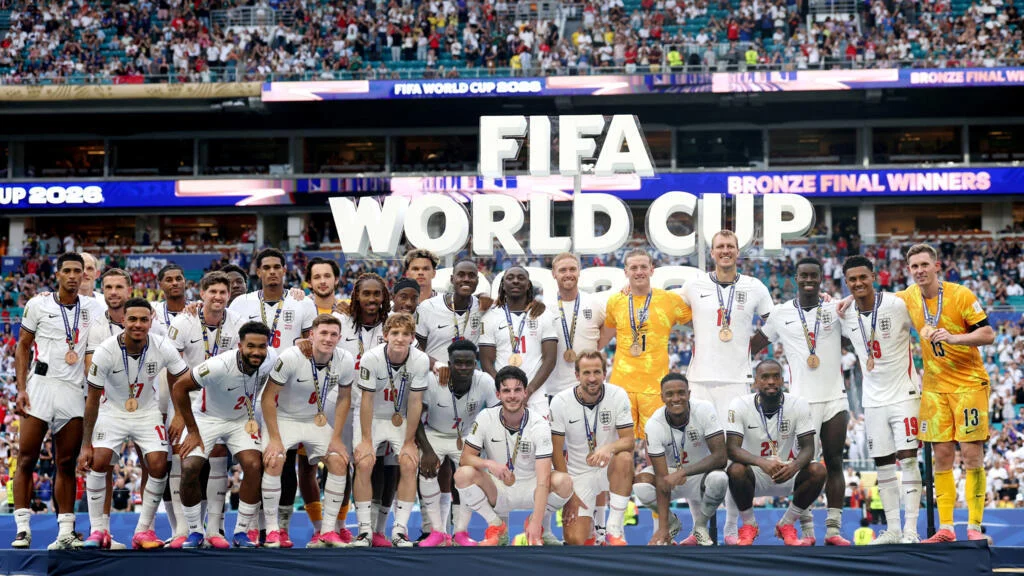
While heartbreak defined the French campaign, England managed to secure a third-place finish. In a high-pressure match in Miami on July 18, the English squad showcased resilience, securing the bronze medal. The images of the English players posing with their medals offered a poignant contrast to the celebrations of previous tournaments; for England, third place is a testament to consistency, yet the lingering question remains whether the "Three Lions" can finally bridge the gap to the ultimate trophy.

The Fever in New York
As the tournament nears its conclusion, the fervor has spilled over into the heart of New York City. On the eve of the final, thousands of Argentina fans descended upon Times Square, turning the urban canyon into a sea of blue and white. The sheer scale of the gathering underscores the unique capacity of the World Cup to suspend the realities of the modern world, even as the backdrop of the tournament—the extreme climate and political instability—remains inescapable.
A Planet Under Pressure: The Climate Crisis Intensifies
If the World Cup provided the week’s spectacle, the climate crisis provided its haunting subtext. Across three continents, the environment has turned hostile, directly impacting human movement and safety.

The Tour de France Stalled
In France, the iconic Tour de France, a symbol of endurance and national identity, was forced to a standstill. As temperatures soared to record-breaking levels, the heatwave transformed the race from a sporting challenge into a public health concern. The decision to halt stages of the race was not merely an administrative one; it was an admission that human physical limits are being met by an increasingly unforgiving climate.
Wildfires from Minnesota to Ontario
The imagery of the week has been heavily colored by the haze of smoke. In the United States, the Boundary Waters Canoe Area Wilderness in Minnesota is currently ravaged by the "Camp Fire," with thick plumes of smoke obscuring the horizon over Moose Lake. Simultaneously, across the border in Canada, the Toronto skyline has been reduced to a ghostly silhouette, blanketed by smoke from provincial wildfires.

The image of a Canada Goose standing on the shoreline of the Toronto Islands, framed against a smog-choked downtown, has become an accidental, yet powerful, symbol of the week. It captures the intersection of natural beauty and ecological decay, a visual reminder that the heatwave is not a localized event but a systemic failure of environmental stability.
Social Unrest and Geopolitical Tension
Beyond the climate and sports arenas, the fabric of society is showing signs of fraying. Two distinct regions of the world—South Africa and the Middle East—have seen significant volatility, driven by long-standing grievances that have reached a boiling point in mid-July.

Xenophobia and Tensions in South Africa
In Umzimkhulu, South Africa, the atmosphere remains tense following the expiration of an unofficial June 30 deadline set by local anti-immigrant groups for undocumented migrants to leave the country. Demonstrations held by groups such as "March and March" have highlighted a dangerous rise in xenophobic sentiment, testing the resolve of the South African government to maintain social order and uphold human rights standards. The images of these demonstrations reveal a society grappling with the economic pressures of the post-pandemic era, channeled into exclusionary nationalism.
Escalation in the West Bank
Simultaneously, the situation in the West Bank has deteriorated further. On July 17, observers captured the harrowing sight of Israeli settlers throwing stones near a roadside fire intentionally set by Palestinians to block access to the village of Sinjil. This cycle of obstruction, confrontation, and violence serves as a stark reminder that the region remains locked in a static conflict, with every week bringing new, localized flare-ups that threaten to ignite broader instability.

Chronology of the Week (July 13–19, 2026)
- July 13: Anti-immigrant demonstrations surge in Umzimkhulu, South Africa, following the expiration of unofficial deadlines for migrant workers.
- July 14: France is eliminated from the World Cup by Spain in Arlington, Texas, in a match defined by the tactical brilliance of Lamine Yamal.
- July 14–15: Wildfires worsen in the Boundary Waters of Minnesota and across Ontario, Canada, resulting in dangerous air quality levels.
- July 15: The Tour de France is halted by extreme heat, sparking debate about the future of summer sports in a warming world.
- July 17: Violent clashes are reported in the West Bank, centering on access to the village of Sinjil.
- July 18: England celebrates its third-place finish in the World Cup in Miami; Argentine fans rally in New York City ahead of the final.
- July 19: Global assessments begin regarding the economic impact of the week’s climate-induced infrastructure stoppages.
Implications: The Summer of 2026 as a Turning Point
The events of this week are not isolated incidents; they are symptomatic of a global system in transition.
- The Climate-Sport Paradox: The halting of the Tour de France and the extreme heat during the North American World Cup highlight a looming crisis for professional athletics. If the primary months for global sporting events are no longer climatically safe for athletes or spectators, the industry faces an existential need to reorganize its calendar.
- Economic Dislocation and Nationalism: The xenophobic protests in South Africa are a direct consequence of perceived economic scarcity. When governments fail to provide long-term solutions to poverty, populist movements often scapegoat marginalized populations. This trend is being observed globally, suggesting that the next year of political discourse will likely be dominated by migration and border security.
- The Fragility of Infrastructure: The wildfires in Minnesota and Ontario demonstrate the vulnerability of critical infrastructure to climate change. Governments are increasingly forced to divert resources from development to disaster response, creating a cycle that hinders long-term economic recovery.
Official Responses and Future Outlook
While international bodies continue to call for "urgent climate action," the reality on the ground—the smoke-filled air, the stalled races, and the burning forests—suggests that policy lags far behind the environmental shift. In the coming months, expect increased pressure on G20 nations to expedite infrastructure resilience projects.

Furthermore, the social unrest in regions like South Africa and the Middle East highlights the need for renewed diplomatic engagement. The "March and March" movement and the ongoing tensions in the West Bank represent local conflicts that, if left unaddressed, could have regional implications for trade, migration, and security.
As the world looks toward the final of the 2026 World Cup, the jubilation of the fans in New York is a brief respite from a reality that demands our immediate attention. This week has shown that while we may be united by global spectacles, we are divided and challenged by the very environment we share. The images of July 2026 are not just snapshots; they are a warning.