Introduction
The lines between collegiate athletics, state governance, and political fundraising in Texas have blurred significantly following a series of events involving Attorney General Ken Paxton and the Texas Tech University System. At the center of the controversy is a substantial campaign donation made by the chairman of the Texas Tech Board of Regents to Paxton’s U.S. Senate bid—a donation that coincided precisely with the Attorney General’s aggressive legal intervention on behalf of a Texas Tech quarterback embroiled in a sports betting scandal.
The situation has sparked widespread debate regarding the influence of major donors on state policy and the extent to which the Texas Attorney General’s office should involve itself in the internal disciplinary proceedings of private athletic conferences.
Main Facts: A Convergence of Timing and Influence
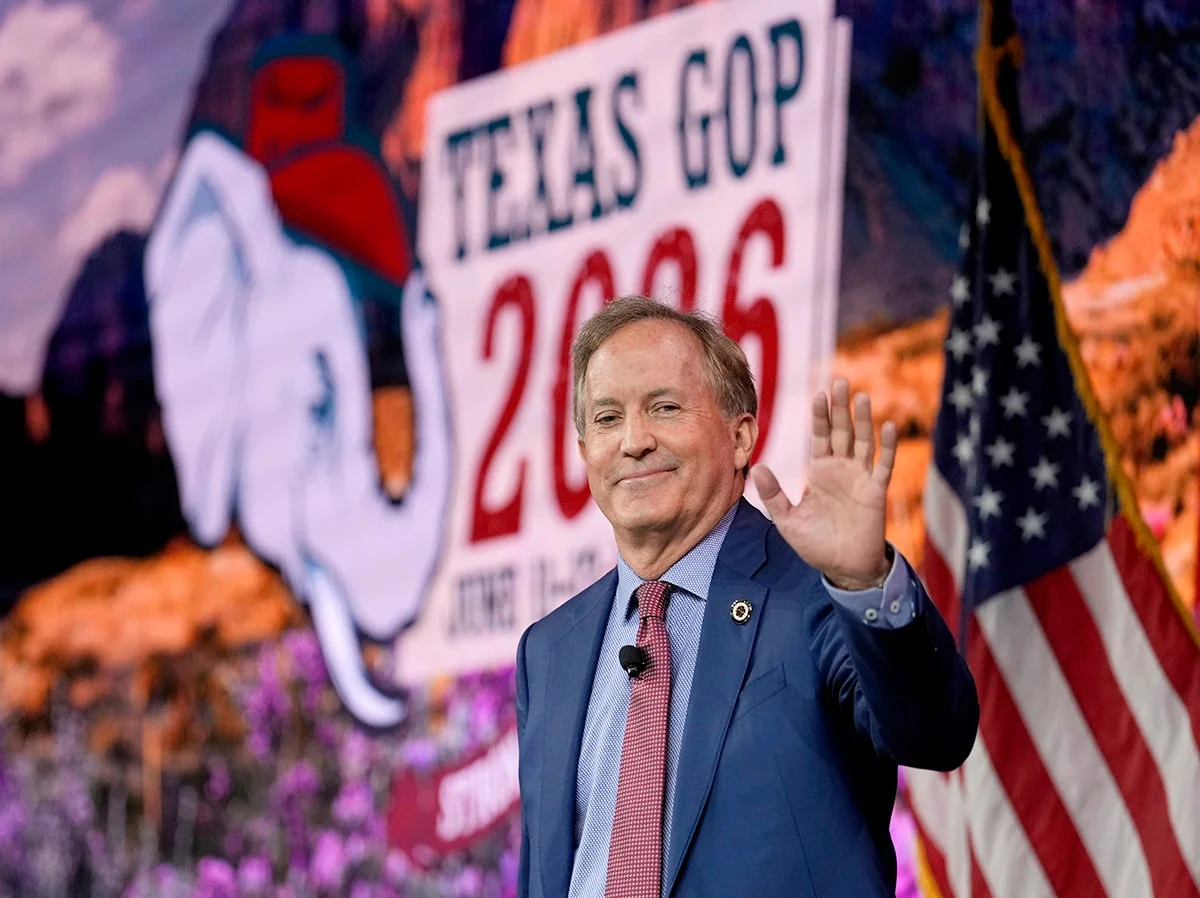
On June 10, 2026, Cody Campbell, the chairman of the Texas Tech University Board of Regents, contributed $274,300 to Texas Attorney General Ken Paxton’s campaign for the United States Senate. The following day, Paxton’s office issued a formal letter to the Big 12 Conference, demanding that the governing body respect a temporary injunction that would effectively shield Texas Tech quarterback Brendan Sorsby from repercussions related to his admitted involvement in improper sports betting.
Paxton’s letter was not merely a suggestion; it carried the weight of the state’s chief legal officer. He warned the Big 12 that any sanctions levied against the university for permitting Sorsby to participate in athletic activities would be deemed "unlawful." Furthermore, Paxton suggested that such disciplinary actions could expose the conference to as much as $200 million in legal damages. The proximity of the financial transaction to the state’s legal posturing has prompted investigative scrutiny into whether the donation influenced the Attorney General’s decision to intervene in what is traditionally considered an internal university and conference matter.
Chronology of Events: From Betting Admission to Political Fallout
The Betting Scandal Emerges
The controversy began when Brendan Sorsby, the highly touted quarterback for Texas Tech, admitted to participating in improper sports betting, an activity strictly prohibited by both NCAA regulations and conference bylaws. Under standard operating procedures, such an admission typically triggers an immediate suspension and a formal investigation, potentially resulting in long-term eligibility impacts.
The Injunction and the Donation
On June 10, 2026, legal proceedings regarding Sorsby’s eligibility reached a critical juncture. A temporary injunction was issued, aimed at preventing the Big 12 from enforcing standard sanctions. On that same day, campaign finance records reveal that Cody Campbell, a prominent businessman and the leader of the Texas Tech Board of Regents, transferred $274,300 to Ken Paxton’s Senate campaign.
The Attorney General’s Intervention
By June 11, Paxton’s office had mobilized. The letter sent to the Big 12 Conference asserted that the temporary injunction rendered any attempt by the conference to punish the university or the player an illegal act. By invoking the potential for $200 million in damages, Paxton effectively attempted to freeze the conference’s ability to uphold its own integrity standards.
The NFL Supplemental Draft Complication
The narrative took an unexpected turn in late June 2026. Rather than remaining at Texas Tech to face the fallout of the betting scandal, Sorsby attempted to bypass collegiate repercussions entirely by entering the NFL supplemental draft. However, in a blow to both the player and his supporters, the NFL denied his application, leaving Sorsby in a state of professional and academic limbo.
Supporting Data: Campaign Finance and Legal Threats
The $274,300 donation from Cody Campbell is significant not only for its size but for its timing. Campbell, who has been a vocal defender of Sorsby throughout the investigation, is a powerful figure within the Texas Tech hierarchy. Critics point to the contribution as a classic example of "pay-to-play" politics, where donors leverage their financial power to secure the assistance of state officials in private business or institutional disputes.

The threat of a $200 million lawsuit, as articulated in Paxton’s letter, is an extraordinary escalation. Legal experts note that while state attorneys general often represent the interests of public universities, the threshold for intervening in a private conference’s disciplinary process is high. The "unlawful" label applied by Paxton is a strategic legal characterization intended to intimidate the Big 12 into silence, effectively shifting the burden of proof onto the conference to justify its disciplinary procedures in a hostile courtroom environment.
Official Responses and Public Statements
The Texas Tech Position
Cody Campbell, through his representatives, has declined to provide on-the-record comments regarding the donation or his specific efforts to shield Sorsby. The university system has maintained a relatively low profile, with official statements emphasizing their commitment to due process and the protection of their student-athletes’ rights.
The Attorney General’s Office
Representatives for Ken Paxton have consistently defended the intervention as a standard exercise of the Attorney General’s duty to protect the interests of state-funded institutions. They argue that the Big 12 Conference’s disciplinary mechanisms were overstepping, and that the state has a vested interest in ensuring that Texas Tech is not subjected to arbitrary or "unlawful" punishments that could negatively impact the university’s reputation and financial health.
The Big 12 Conference
The Big 12 has remained cautious, acknowledging receipt of the Attorney General’s letter but stopping short of detailing their next steps. Internally, conference officials are reportedly weighing the costs of a prolonged legal battle against the state of Texas versus the need to maintain uniform compliance with NCAA betting regulations.
Implications: The Future of Collegiate Athletics and State Oversight
The "Texas Model" of Intervention
This incident is indicative of a growing trend in Texas where the state’s executive branch increasingly intervenes in the operations of universities and conferences. By positioning the Attorney General as the primary arbiter of athletic justice, the state is effectively creating a "Texas-first" shield for its student-athletes, regardless of the broader national rules governing collegiate sports.
Challenges to NCAA Authority
The NCAA and its member conferences have long struggled to maintain a uniform standard of discipline. When state officials like Paxton threaten massive damages, the ability of these governing bodies to enforce integrity rules is severely undermined. If other states follow suit, the current model of collegiate athletics—which relies on centralized regulation—could be replaced by a fragmented, state-by-state patchwork of rules and legal protections.
The Ethical Question of Campaign Funding
Beyond the athletic implications, the case serves as a focal point for the broader ethical conversation regarding campaign finance. In Texas, where limits on individual donations to state candidates are non-existent, the influence of wealthy donors is uniquely magnified. When those donations are followed by immediate, high-profile government action that benefits the donor’s personal or professional interests, the public’s trust in the impartiality of the justice system is inevitably eroded.
The Path Forward for Brendan Sorsby
Brendan Sorsby’s career now sits at a crossroads. With the NFL draft path closed and his status at Texas Tech under a cloud of uncertainty, his future remains precarious. His case has become a cautionary tale of how high-stakes college athletics can pull powerful politicians into the fray, often to the detriment of the very student-athletes they claim to protect.
Conclusion
The intervention of Ken Paxton in the Texas Tech betting scandal is more than just a sports story; it is a manifestation of the complex, often opaque relationship between political power and institutional influence. Whether the $274,300 donation was the catalyst for the Attorney General’s actions or merely a coincidental act of political support remains a subject of intense speculation. However, the precedent set by this incident—that state-level legal threats can be used to override the disciplinary autonomy of athletic conferences—will likely be felt in athletic departments and statehouses across the country for years to come. As the legal dust settles, the fundamental question remains: to what extent should the apparatus of the state be used to defend the eligibility of a student-athlete, and at what cost to the integrity of the game?