In an era where the film industry often relies on established cinematic universes and multi-film franchises to guarantee ticket sales, Christopher Nolan has once again proven that the most powerful brand in Hollywood is, quite simply, his own name. Universal Pictures’ The Odyssey—a three-hour, R-rated epic based on Homer’s 3,000-year-old classic—has stormed theaters, generating a staggering $264.1 million globally in its opening weekend.
This performance is not merely a financial success; it is a cultural phenomenon that defies the conventional wisdom of the modern blockbuster. By securing $124.5 million domestically and $139.6 million internationally, the film has firmly cemented itself as a heavyweight, proving that audiences remain hungry for singular, auteur-driven experiences that prioritize scale, craft, and narrative ambition.
The Chronology of a Blockbuster
The journey of The Odyssey to the silver screen has been marked by high expectations and intense industry scrutiny. Following the historic, Oscar-winning success of Oppenheimer in 2023, Nolan became one of the few directors in history with the "blank check" creative freedom typically reserved for studio heads.
- Development and Vision: Nolan spent years meticulously crafting the screenplay, intending to adapt the ancient Greek epic not as a dusty period piece, but as a visceral, high-stakes action-adventure.
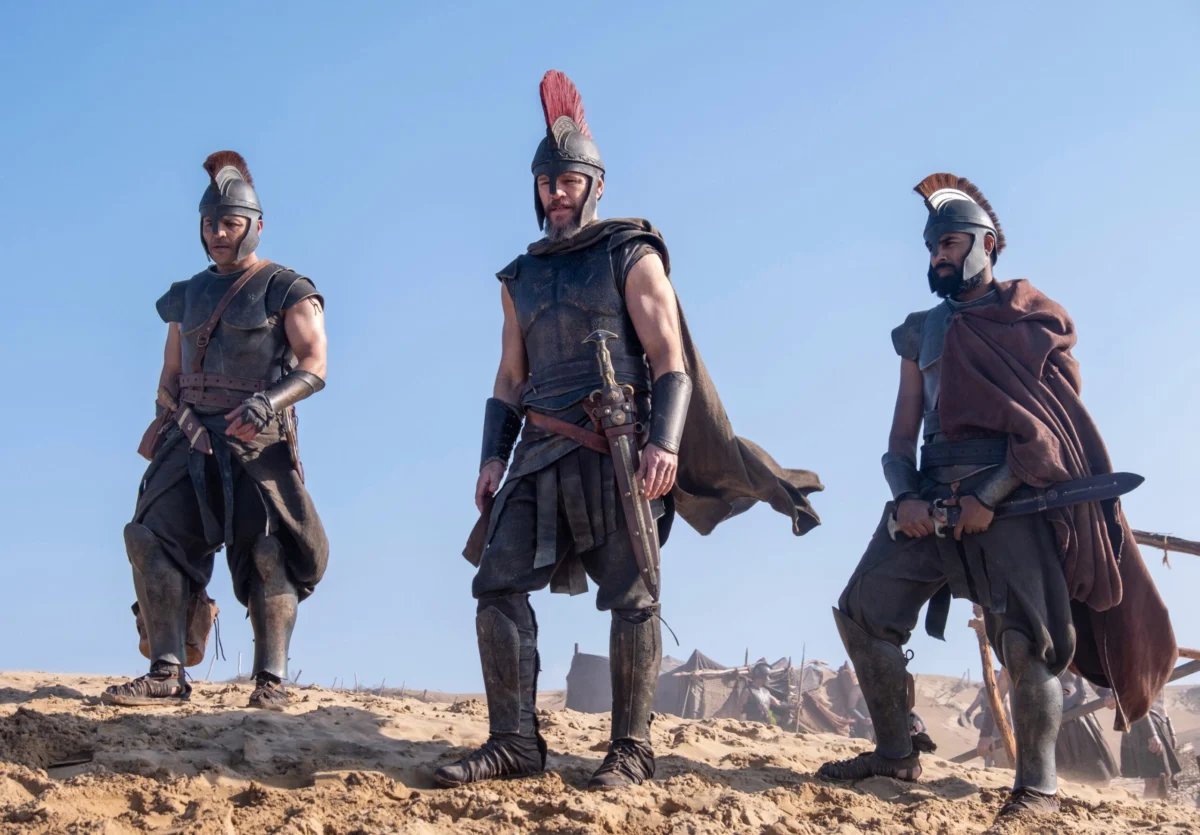
- The Production Phase: Filmed entirely with IMAX cameras—a first for a feature film—the production became a showcase for technological innovation. The ensemble cast, featuring Matt Damon as the weary King Odysseus, alongside stars like Tom Holland, Anne Hathaway, and Robert Pattinson, was announced to fanfare that generated massive pre-release buzz.
- The Global Rollout: Opening across 73 international markets, the film was positioned as the "must-see" event of the season. Universal’s marketing campaign leaned heavily into the prestige of the director and the sheer physical scale of the production, effectively priming audiences for the theatrical experience.
- The Opening Weekend: As the first reports surfaced on Saturday morning, it became clear that The Odyssey was over-performing in almost every key demographic, setting the stage for its record-breaking final tally.
A Statistical Breakdown: Measuring the Myth
The numbers behind The Odyssey are as gargantuan as the protagonist’s journey itself. To understand the scale of this achievement, one must look at how it stacks up against both Nolan’s own filmography and the broader 2024 landscape.
Nolan’s Personal Best
The Odyssey now holds the title for the biggest worldwide opening of Nolan’s storied career. It has surpassed the debuts of The Dark Knight Rises ($249 million) and The Dark Knight ($198 million). While critics note that these figures are not adjusted for inflation, the achievement remains significant given that those previous records were set by a globally recognized superhero franchise. The Odyssey, by contrast, is a standalone historical adaptation.
The 2024 Competitive Landscape
Currently, the film sits comfortably as the third-biggest opening of the calendar year. It trails only the massive animation hits The Super Mario Galaxy Movie ($372.5 million) and Toy Story 5 ($312 million). The fact that an R-rated, three-hour epic is competing directly with family-oriented intellectual properties is a testament to the "Nolan Effect."
Regional Dominance
The international performance was bolstered by record-setting numbers in key European territories. The United Kingdom and Ireland led the way with $17.4 million, followed by France ($13.7 million) and Italy ($11.5 million). Notably, in 48 of the 73 international markets, this film represents the biggest opening of Nolan’s career. Furthermore, Universal Pictures has secured its own largest-ever debut in 11 of those markets, signaling that the studio’s bet on this project has paid off in unprecedented dividends.
The IMAX Factor: A Technological Odyssey
One of the defining narratives of this release is the partnership between Nolan and IMAX. The film is the first feature to be shot entirely with IMAX cameras, a decision that has directly translated into revenue.
Global IMAX ticket sales accounted for $51.8 million—a massive 23% of the total revenue. Internationally, IMAX contributed $22.2 million, or 16% of the overseas take. These figures have eclipsed the opening of Avengers: Endgame in like-for-like markets, effectively proving that the "premium large format" (PLF) experience is not just a niche preference, but a primary driver for major box office success.
The film is currently pacing 47% ahead of Oppenheimer in the IMAX format. When considering that Oppenheimer earned $35 million in IMAX globally in its opening and eventually reached $180 million by the end of its run, the projections for The Odyssey suggest a potential for a record-shattering long-term theatrical presence.
Official Responses and Industry Sentiment
The reception from industry leaders has been one of collective awe. Richard Gelfond, CEO of IMAX, did not mince words when discussing the cultural weight of the film.
"If you don’t see The Odyssey in IMAX, you aren’t seeing it in the way that Chris Nolan intended," Gelfond stated during a press briefing. He described the weekend as a "transcendent moment" for the exhibition industry. Gelfond further predicted that the success of this film will create a ripple effect, incentivizing the development of more premium theaters and signaling to studios that audiences are willing to travel and pay a premium for high-quality, immersive experiences.
Universal Pictures has also expressed profound satisfaction, noting that the combination of critical acclaim and "word-of-mouth" is setting the stage for what they describe as a "long, long run" in theaters. The studio is particularly pleased with the film’s reach among younger demographics, who were initially expected to be less interested in a classical epic but were drawn in by the star-studded ensemble cast.
The Implications for the Future of Cinema
The success of The Odyssey carries profound implications for the future of the motion picture industry. For years, analysts have questioned whether the "mid-budget" drama or the "serious" epic could survive in a world dominated by sequels and reboots.
1. The Power of the Auteur
Nolan’s success suggests that audiences are increasingly seeking out "filmmaker-driven" cinema. In a marketplace saturated with content, the director’s reputation serves as a quality-control mechanism for the public. This may lead studios to invest more heavily in established directors with strong individual voices, rather than solely focusing on acquiring existing intellectual property.
2. The Return of the "Event" Film
The Odyssey has been marketed as an experience that must be witnessed in a theater. By emphasizing the IMAX format and the sheer technical labor behind the production, Universal has successfully transformed a three-hour historical drama into an "event" on par with a major superhero crossover. This strategy is likely to be replicated by other studios looking to compete with the convenience of streaming services.
3. The R-Rating Ceiling
The film has effectively shattered the ceiling for R-rated features. Traditionally, studios feared that an R-rating would limit the potential audience for a high-budget epic. However, The Odyssey proves that a sophisticated, mature, and intense narrative can attract massive global crowds, provided the quality of the production is undeniable.
4. Awaiting the Asian Markets
While the film has seen historic success in Europe and North America, it has yet to open in China, Japan, or South Korea. Given the film’s massive scale and visual spectacle, these markets are historically receptive to Nolan’s work. The industry is watching closely to see how the film performs in these regions, which could potentially push the final global tally into the rarified air of the highest-grossing films of the decade.
Conclusion: A New Horizon
As the sun sets on a historic opening weekend, The Odyssey stands as a beacon for the theatrical industry. It is a film that demands to be seen on the largest screen possible, anchored by a performance from Matt Damon that critics are already calling career-defining.
Whether the film can maintain this momentum remains to be seen, but the early data points to a sustained, months-long run. For now, Christopher Nolan has once again proven that the epic is not dead—it has simply been waiting for the right director to bring it home. As audiences continue to flock to theaters to witness the trials of Odysseus, one thing is clear: the appetite for grand, intentional, and technically masterful storytelling is stronger than ever.