In the annals of human evolution, few milestones are as transformative as the mastery of fire. It provided warmth against the chill, protection from predators, and, crucially, a means to process food, unlocking the caloric potential necessary for the expansion of the human brain. Now, a groundbreaking study published in Quaternary Science Reviews has offered an unprecedented glimpse into the domestic lives of early humans living 800,000 years ago at the Gesher Benot Ya’aqov (GBY) site in northern Israel.
The research reveals that these ancient communities were not merely opportunistic fire-users; they were sophisticated planners who recognized the strategic value of their environment. By analyzing a rare, expansive collection of charcoal, an international team of scientists has determined that these early hominins relied on a convenient, high-efficiency fuel source—driftwood—to sustain the hearths that served as the beating heart of their social existence.
The Landscape of the Middle Pleistocene: A Gathering Place
Approximately 800,000 years ago, the region surrounding the paleo-Lake Hula in the Jordan Rift Valley was a lush, vibrant corridor of life. It was here that Acheulian hunter-gatherers repeatedly returned, establishing a long-term presence that spanned tens of thousands of years.
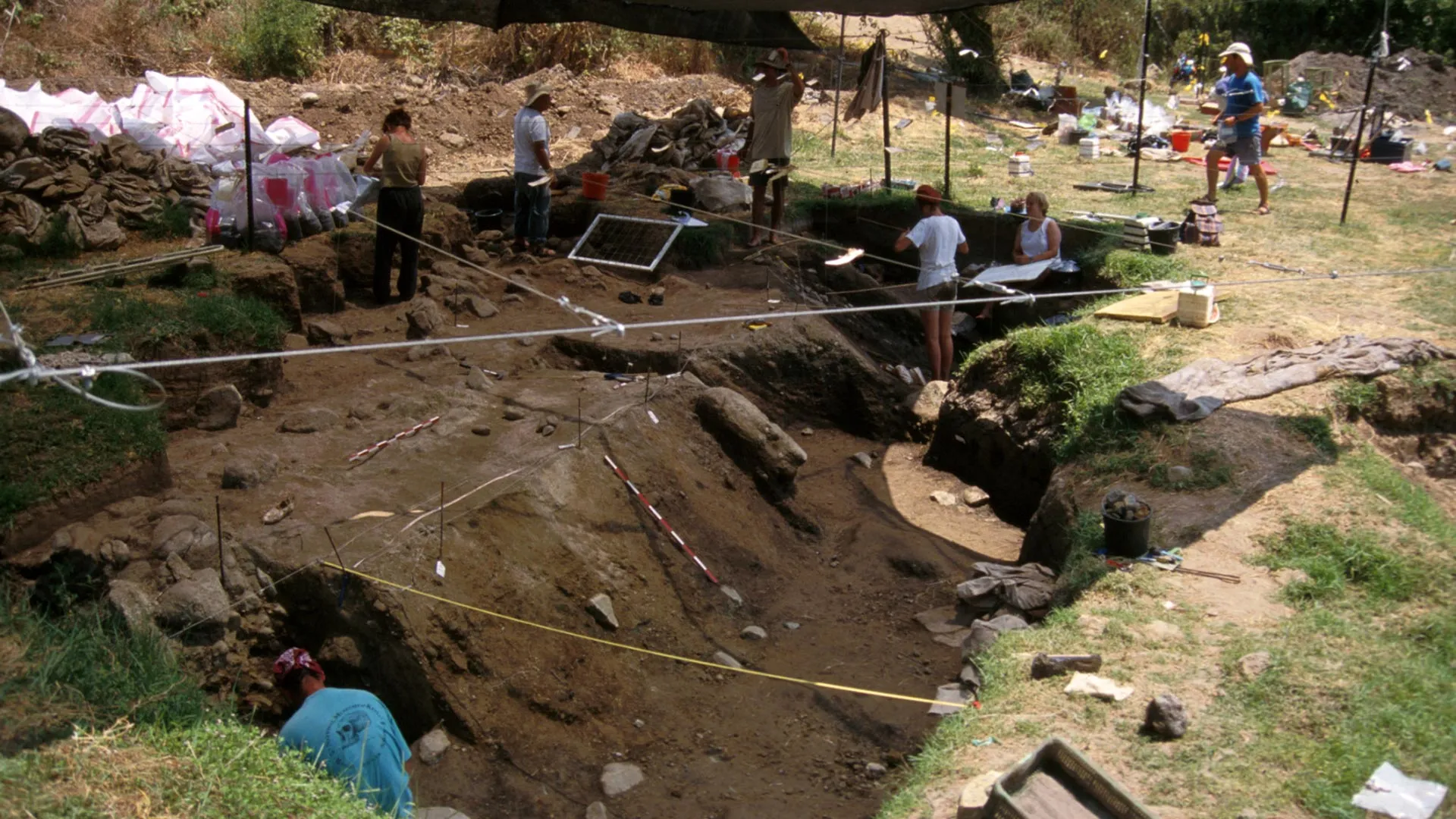
Excavations at GBY, directed by Prof. Naama Goren-Inbar of the Hebrew University of Jerusalem, have painted a vivid picture of a bustling, semi-permanent base camp. The site is a treasure trove of the Pleistocene era, yielding stone tools fashioned from flint, basalt, and limestone, alongside the remnants of a diverse diet that included fruits, nuts, seeds, and the protein-rich carcasses of megafauna. Among the most striking discoveries is evidence of a massive, organized hunt: the butchered remains of a straight-tusked elephant, suggesting a community capable of complex cooperation and labor division.
Yet, it is the fire that provides the most compelling narrative. Evidence suggests that for the inhabitants of GBY, fire was not an occasional tool, but a constant companion. It was here, around the crackle of communal hearths, that the daily rhythms of life—tool manufacturing, social bonding, and food preparation—were choreographed.
The Charcoal Chronicles: A Rare Window into Ancient Behavior
Charcoal is notoriously fragile and rarely survives the ravages of time. In most archaeological contexts, the absence of charcoal leads to speculative theories about fire management. However, the GBY site is a notable exception. The preservation of over 20 distinct archaeological layers has allowed researchers to reconstruct the environmental and behavioral patterns of these early ancestors with surgical precision.
A multi-national team—comprising experts from Hebrew University, Bar-Ilan University, the Universitat Rovira i Virgili, and Leuphana University—subjected 266 charcoal fragments from a single occupation layer to rigorous microscopic analysis. By identifying the anatomical structures of the wood species preserved within the carbonized remains, the team was able to map the surrounding forest and, more importantly, the fuel-gathering habits of the inhabitants.
The species identified represent a surprisingly diverse ecological spectrum: ash, willow, grapevine, oleander, olive, oak, pistachio, and pomegranate. Notably, the presence of pomegranate charcoal marks the earliest documented evidence of this fruit tree in the Levant, highlighting the site’s role in our understanding of prehistoric botanical history.
The Strategy of Convenience: Why Driftwood Changed Everything
Perhaps the most significant finding in the study is the method by which these hominins sourced their fuel. Contrary to the assumption that early humans might have actively targeted specific woods for their burning properties, the evidence suggests a much more practical strategy: they scavenged.
The variety of wood species identified in the charcoal is far greater than that found in the local seeds or fruit remains. This indicates that the fuel was not necessarily gathered from the immediate forest canopy, but rather collected as driftwood along the shoreline of Lake Hula.
For a community of hunter-gatherers, this provided a "force multiplier" for their survival. Driftwood, naturally accumulated by the flow of water, offered a reliable, high-yield source of fuel that required minimal effort to harvest. Instead of trekking into the dense woodlands to fell trees—a labor-intensive and potentially dangerous task—the residents of GBY could simply patrol the shoreline. This suggests that the location was chosen not only for its proximity to water and game but for its inherent sustainability as a fire-maintenance hub.
Culinary Innovation: Cooking the Catch of the Day
The implications of this consistent fire use extend to the dinner plate. The study identified a strong spatial correlation between concentrations of charcoal and the remains of freshwater fish, specifically the teeth of large carp.
This spatial overlap provides some of the most compelling evidence to date that these early humans were actively cooking fish. By utilizing controlled fire to prepare their catch, they were able to eliminate pathogens, soften tough tissues, and improve the digestibility of their food. This shift toward processed diets is widely considered a pivotal moment in human evolution, providing the high-quality nutrition necessary to support the metabolic demands of an increasing brain size.
Expert Perspectives: A Shift in Cognitive Understanding
The researchers involved in the GBY project argue that these findings necessitate a re-evaluation of the cognitive capabilities of Middle Pleistocene hominins.
"We are seeing a level of environmental awareness and planning that was previously underestimated," the team notes. Prof. Nira Alperson-Alfil, who pioneered the identification of fire use at GBY, emphasizes that the reliance on fire suggests a social structure capable of long-term maintenance and protection of hearths.
The ability to identify and exploit a resource like driftwood suggests that these early humans were not merely reacting to their environment—they were observing it, understanding the hydrological cycles that brought wood to their doorstep, and integrating that knowledge into their survival strategy. They possessed the foresight to recognize that staying in one place provided a distinct advantage: the security of a dependable fire.
Implications: Fire as a Foundation for Settlement
The findings at Gesher Benot Ya’aqov challenge the traditional "nomadic" narrative of early human existence. By demonstrating that groups returned to the same lakeshore location generation after generation, the study suggests that the mastery of fire acted as a "tether."
Fire turned a temporary campsite into a home. It provided a focal point for social interaction, a defense against nocturnal predators, and a tool for environmental modification. When combined with the easy access to driftwood, the hearth became the primary factor in site selection.
This research elevates our understanding of the Acheulian culture, moving away from the image of disorganized scavengers toward a portrait of a highly capable, observant, and resource-conscious species. As we continue to excavate the layers of history at GBY, we are learning that the foundations of modern human behavior—planning, resource management, and social cohesion—were being laid in the embers of a lakeshore fire nearly a million years ago.
Key Takeaways for the Scientific Community
- Environmental Planning: Early humans at GBY demonstrated an ability to map their local environment and leverage natural occurrences (driftwood accumulation) to minimize energy expenditure.
- Dietary Sophistication: The consistent presence of fish remains near hearths indicates an advanced understanding of food preparation and a diverse diet.
- Long-Term Strategy: The recurring occupation of the site over tens of thousands of years confirms that these hominins had established a stable, sedentary-like relationship with their environment, largely enabled by the control of fire.
- Technological Continuity: The site serves as a vital record for the evolution of human tool-making and resource management, bridging the gap between primitive survival and the more complex behaviors of later hominins.
As the international team continues their work, the charcoal from GBY remains one of our most precious datasets. It is a reminder that while the tools of the past—the stone axes and the bone fragments—tell us what these people did, the ash tells us how they lived. In the embers of Lake Hula, we find the echoes of a humanity that was already looking for ways to make the world not just survivable, but manageable.