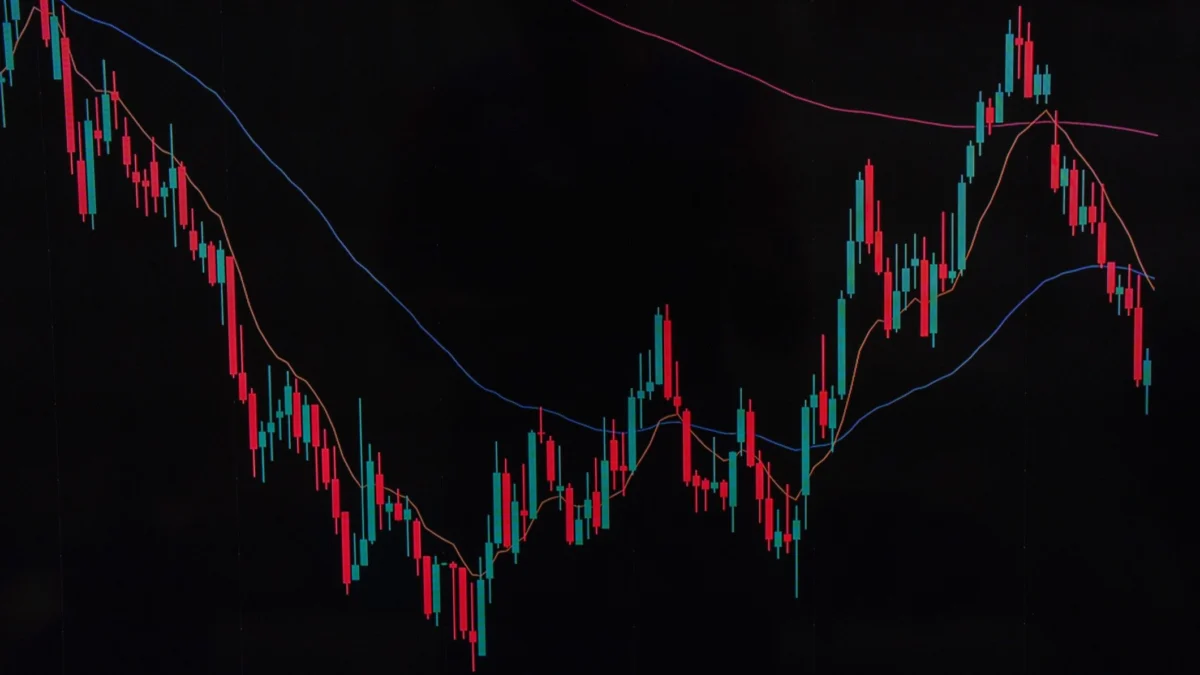
The U.S. equity markets experienced a session of pronounced volatility on Thursday as investors grappled with a conflicting narrative: a resilient healthcare sector buoyed by regulatory breakthroughs and acquisition activity, contrasted against a deepening correction in the previously high-flying semiconductor space. As the trading day concluded, the major indices reflected the underlying tension, with the tech-heavy Nasdaq Composite absorbing the brunt of the selling pressure.
By the closing bell, the Dow Jones Industrial Average had slipped 0.2% to 52,552, while the S&P 500 retreated 0.5% to 7,533. The Nasdaq Composite bore the heaviest burden, slumping 1.5% to settle at 25,881. This divergence highlights a broader trend in the current market environment: while defensive and pharmaceutical sectors are seeing capital rotation due to idiosyncratic news, the momentum-driven technology trade is facing a critical period of price discovery and profit-taking.
A Tale of Two Sectors: Healthcare’s Regulatory Tailwinds
While the broader market struggled for direction, the healthcare sector emerged as a rare bright spot. The Dow Jones Industrial Average found a floor for its losses thanks largely to a landmark FDA approval for Merck & Co. (MRK). The pharmaceutical giant saw its shares climb 3.3% following the regulatory green light for "LIPFENDRA" (enlicitide), the first FDA-approved oral PCSK9 inhibitor designed to treat cholesterol.
Industry experts view this as a pivotal moment for the company’s long-term strategy. "Merck’s approval is significant because it is the first oral PCSK9 inhibitor," notes William Soliman, Ph.D., founder and CEO of the Accreditation Council for Medical Affairs (ACMA). "It offers the LDL-lowering power historically associated with injectable PCSK9 medicines in a once-daily pill format. Strategically, this move demonstrates that Merck is successfully pivoting beyond its heavy reliance on oncology, specifically preparing for the eventual loss of exclusivity for its flagship drug, Keytruda."
Complementing this, UnitedHealth Group (UNH) provided a secondary pillar of strength for the blue-chip index. Shares of the nation’s largest health insurer rose 1.2% after the company disclosed second-quarter financial results that surpassed analyst consensus on both the top and bottom lines. Perhaps more importantly for investors, management issued a confident full-year guidance raise. Oppenheimer analyst Michael Wiederhorn, who maintains an "Outperform" rating on the stock, characterized the report as an "impressive beat-and-raise," noting that the second quarter typically sets the trajectory for the remainder of the fiscal year.
Semiconductor Sell-Off: The AI Trade Faces Reality
The sentiment in the technology sector, particularly among chipmakers, was significantly more somber. The catalyst for the decline was the quarterly earnings report from Taiwan Semiconductor Manufacturing (TSM). Despite posting strong year-over-year growth fueled by relentless demand for artificial intelligence infrastructure, the stock fell 2.3% on Thursday.
The decline appears rooted in a "sell the news" reaction compounded by warnings regarding the company’s legacy technology portfolio. While the AI-centric business remains a juggernaut, TSM reported quarter-over-quarter revenue declines in several non-AI segments. Needham analyst Charles Shi, Ph.D., suggests this is a flashing warning light for the broader industry: "This is likely a signal that elevated memory prices may already be placing strain on mainstream semiconductor demand."
The ripple effects were immediate and severe. Micron Technology (MU) tumbled 5.7%, continuing a sharp correction that has seen the stock shed 26% of its value since the start of July. Even more dramatic was the 12.6% slide in SanDisk (SNDK), which is now down 38% for the month. While these corrections are steep, market analysts caution against viewing them in a vacuum; both companies remain up significantly on a year-to-date basis—gains of 200% and 493%, respectively—suggesting that the current volatility is as much about profit-taking as it is about fundamental concern.
Strategic Consolidation: Eli Lilly’s $3.8 Billion Bet
In a move that electrified the mid-cap space, AtaiBeckley (ATAI) surged 33.4% following the announcement that Eli Lilly (LLY) intends to acquire the psychedelics drugmaker. The deal is valued at $2.8 billion in upfront cash, with an additional $1 billion contingent upon the achievement of specific development and regulatory milestones.
This acquisition signals a broader shift in how pharmaceutical titans are deploying the record capital generated by their dominant franchises. "Lilly is using the financial strength generated by its obesity and diabetes franchises to diversify into neuroscience and other high-need therapeutic areas," ACMA’s Soliman explained.
The rationale behind the acquisition is rooted in the "unmet need" of treatment-resistant depression. While investors typically view such speculative biotech acquisitions with caution, the deal represents a negligible risk to Eli Lilly’s balance sheet. With $7.3 billion in cash and cash equivalents reported at the end of 2025, the $3.8 billion total price tag is effectively a strategic R&D expense for a company of Lilly’s scale.
Chronology of Market Movements
- Pre-Market: Futures opened lower as investors anticipated the TSM earnings print, with sentiment tempered by the ongoing chip sector correction.
- Mid-Morning: News of the FDA approval for Merck’s LIPFENDRA hit the wires, providing immediate support for the Dow and offsetting broader selling.
- Early Afternoon: TSM earnings were released. While the headline growth numbers were positive, the guidance regarding capital expenditures and the weakness in legacy chips triggered a sell-off in the semiconductor space.
- Late Afternoon: Eli Lilly’s acquisition of AtaiBeckley was announced, sparking a rally in the small-cap biotech sector and providing a brief moment of optimism in an otherwise red-dominated tape.
- Closing Bell: The indices settled near their lows, confirming that the "chip-led" drag outweighed the "healthcare-led" gains, with the Nasdaq closing down 1.5%.
Implications for the Portfolio
The trading session on Thursday serves as a microcosm of the current investment landscape: a market in transition. The massive rally in semiconductor stocks earlier this year was driven by the promise of the AI revolution, but as we move into the second half of the year, investors are demanding more than just "AI growth." They are looking for margin stability, consistent demand across all product lines, and evidence that capital expenditures are yielding durable returns.
The rotation into healthcare is equally telling. As economic uncertainty looms, investors are seeking the stability of companies with massive cash reserves and the ability to innovate through regulatory pathways. Merck and UnitedHealth represent the "fortress" model of investing, while the volatile swings in companies like Micron and SanDisk represent the high-risk, high-reward nature of the current tech cycle.
Strategic Outlook
Looking ahead, the market will likely continue to scrutinize the divergence between AI-specific growth and the stagnation of legacy tech. If the "memory price" issue identified by analysts continues to manifest in future earnings reports, the semiconductor correction could deepen. Conversely, the success of companies like Merck in diversifying their pipelines will likely dictate the health of the broader indices as they navigate the remainder of the 2025 fiscal year.
Investors should remain vigilant regarding the following:
- Earnings Revisions: Watch for further guidance updates from companies heavily exposed to non-AI semiconductor demand.
- M&A Activity: As seen with the AtaiBeckley deal, large-cap pharmaceutical firms are hunting for innovation. This may provide a valuation floor for smaller, high-potential biotech companies.
- Market Breadth: The fact that the Dow held up better than the Nasdaq indicates that a "flight to quality" is underway. Monitoring the performance of defensive sectors compared to high-beta tech will be critical for assessing the overall health of the market through the end of the quarter.
Ultimately, while the headline numbers for the Nasdaq and S&P 500 were disappointing, the underlying market activity suggests that the bull market is not necessarily ending—it is simply shifting its focus from growth-at-any-price to a more selective, value-driven strategy. Investors who can successfully navigate this pivot between the "AI hype cycle" and the "healthcare defensive play" are likely to be the ones who maintain their portfolios’ health in the coming months.