By International Desk
The Middle East teetered on the precipice of a full-scale regional conflagration on Thursday as Tehran launched a series of coordinated drone and missile strikes against United States military facilities across Jordan, Kuwait, and Bahrain. The retaliatory offensive followed an aggressive 90-minute wave of daytime US airstrikes targeting Iranian infrastructure, marking a dramatic intensification of a conflict that has paralyzed global shipping lanes and shattered long-standing geopolitical norms in the region.
The exchange of fire represents the most significant escalation since the reimposition of a naval blockade on Iranian ports, a move by Washington designed to cripple Tehran’s economy. With the Strait of Hormuz effectively shuttered and threats mounting to close the Bab el-Mandeb gateway, the global energy market is facing its most precarious moment in decades.
Chronology of the Escalation: A Rapid Deterioration
The current cycle of violence did not emerge in a vacuum, but rather as the culmination of weeks of deteriorating diplomatic channels and failed back-channel negotiations.
- Early July: Tensions spiked as Washington announced a return to a "maximum pressure" campaign, citing Iranian-backed disruptions to maritime security.
- July 14: In a surprise development, US-mediated negotiations between Israel and Lebanon in Rome yielded a tentative agreement. The parties agreed to establish "pilot zones" in Southern Lebanon, where Israeli forces were slated to withdraw in exchange for Lebanese Army control—a rare glimmer of diplomatic progress.
- July 15 (Daytime): The fragile calm was shattered when the US military initiated a sustained 90-minute aerial bombardment of Iranian military assets. Simultaneously, the US Navy formalized a blockade of Iranian ports, effectively severing the country’s primary economic artery.
- July 15 (Evening): Tehran issued a formal ultimatum, threatening to halt all regional energy exports if the blockade was not lifted immediately.
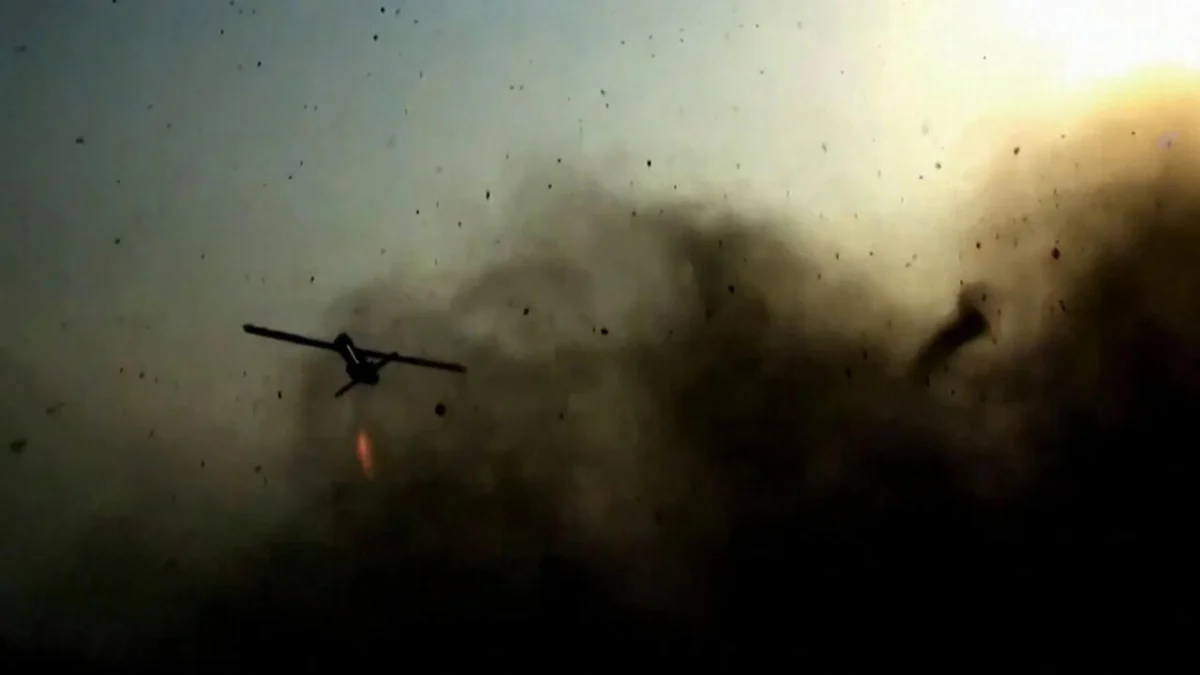
- July 16 (Thursday): Tehran operationalized its rhetoric. In a multi-pronged assault, Iranian forces launched drone and missile attacks on US facilities in Jordan, Kuwait, and Bahrain. Jordan’s government confirmed the violation of its airspace, reporting that its air defense systems successfully intercepted and destroyed eight incoming Iranian missiles.
Supporting Data: The Strategic Landscape
The conflict is currently centered on three critical pillars: naval dominance, energy security, and regional military positioning.
The Naval Blockade and Global Trade
The reimposition of a naval blockade on Iran is a strategic maneuver intended to squeeze the Iranian treasury. However, the geographic reality of the region makes this a double-edged sword. By sealing the Strait of Hormuz—the world’s most important oil chokepoint—the US has inadvertently triggered a global supply chain crisis. Approximately 20% of the world’s total petroleum consumption passes through this narrow passage daily.
The Bab el-Mandeb Threat
Tehran’s threat to expand its blockade to the Bab el-Mandeb—the gateway between the Red Sea and the Gulf of Aden—is a move of profound consequence. Unlike Hormuz, which primarily affects Gulf crude, the Bab el-Mandeb is a vital conduit for trade between Asia and Europe, including critical energy exports from Saudi Arabia. Should this route be compromised, the economic shock would be felt far beyond the Middle East, likely triggering inflationary spikes in Western economies.
Military Capability and Interception Rates
The Jordanian confirmation that it intercepted eight Iranian missiles provides a rare glimpse into the defensive capabilities currently deployed in the theater. The coordination between the US military and its regional partners (Jordan, Kuwait, and Bahrain) suggests that while the US is the primary target, the security architecture of the region is highly integrated. However, the successful infiltration of drones into these high-security zones raises questions about the efficacy of current air defense systems against swarm-drone tactics.
Official Responses and Diplomatic Posturing
The rhetoric from both Washington and Tehran has been uncompromising, leaving little room for de-escalation in the immediate term.
Washington’s Stance
The White House has characterized the US strikes as a "necessary and proportional response" to Iranian "state-sponsored maritime terrorism." Defense officials have reiterated that the US maintains a "robust and ready" posture across the Gulf, emphasizing that any further attacks on US personnel will be met with "decisive force." Washington maintains that the naval blockade is a legal enforcement measure aimed at curtailing nuclear proliferation and funding for regional proxy groups.
Tehran’s Stance
Iranian leadership remains defiant. The Islamic Revolutionary Guard Corps (IRGC) issued a statement on Thursday declaring the strikes on US bases to be a "successful demonstration of our reach and resolve." Tehran insists that it has no interest in a wider war, but warned that if the "economic strangulation" of its ports continues, it is prepared to render the entire region’s energy infrastructure "inoperable."
Regional Mediators
The role of regional actors remains strained. While Jordan has publicly condemned the breach of its sovereignty by Iranian missiles, the kingdom—along with other Gulf states—is walking a diplomatic tightrope. They are caught between a desire to maintain their security alliances with Washington and the urgent need to avoid becoming a primary battlefield in a direct US-Iran confrontation.
Implications for the Future
The implications of this latest escalation are profound, spanning the immediate military situation to long-term global economic stability.
1. The Energy Crisis
The immediate concern for global markets is the stability of energy prices. With the Strait of Hormuz closed and the threat to the Bab el-Mandeb, the world is facing a potential supply shortfall. Insurance premiums for tankers traversing the region have skyrocketed, and several major shipping lines have already announced the suspension of operations in the Gulf, citing an "untenable risk environment."
2. The Collapse of Regional Diplomacy
The Rome negotiations regarding Lebanon and Israel, which offered a brief window for peace, have effectively been overshadowed. The focus of the international community has shifted entirely to the Gulf, and it is highly unlikely that further diplomatic progress can be made in the Levant while the two primary patrons of the region—the US and Iran—are engaged in direct military strikes.
3. The Future of US-Gulf Relations
This crisis is testing the durability of the US-Gulf security architecture. For years, the US has provided a security umbrella for Gulf states. However, as those states become targets for Iranian retaliation, their leaders are being forced to re-evaluate whether the benefits of the US alliance outweigh the costs of being drawn into an escalating regional conflict.
4. Risk of Miscalculation
Perhaps the most dangerous element of the current situation is the high risk of miscalculation. With limited communication channels, both sides are operating based on intelligence that may be incomplete. A single wayward strike—perhaps one that hits a civilian center or a major oil refinery—could trigger an automatic and overwhelming response, spiraling into a conflict that neither side initially intended to provoke.
Conclusion
As Thursday concludes, the region remains on high alert. The "pilot zones" in Lebanon, once seen as a triumph of diplomacy, now appear as a distant memory in the face of the ongoing exchange of fire between Washington and Tehran. The international community is currently engaged in frantic behind-the-scenes efforts to establish a "de-confliction" line to prevent a further slide into total war.
However, until the core issues of the naval blockade and the security of regional energy routes are addressed, the Middle East remains a powder keg. The world watches with bated breath, hoping that the rhetoric of "proportionality" holds, and that the current cycle of tit-for-tat strikes does not evolve into a broader conflagration that would reshape the global order for years to come.