The conflict in Ukraine has entered a volatile new phase, with the Black Sea emerging as the primary theater for a brutal war of attrition. On Wednesday, the port city of Odesa—Ukraine’s maritime gateway to the world—bore the brunt of a calculated Russian assault that left three civilians dead and several others hospitalized. This latest surge in violence marks a significant intensification of hostilities, underscoring the precarious state of Ukraine’s wartime economy and the increasingly blurred lines between civilian infrastructure and military logistics.
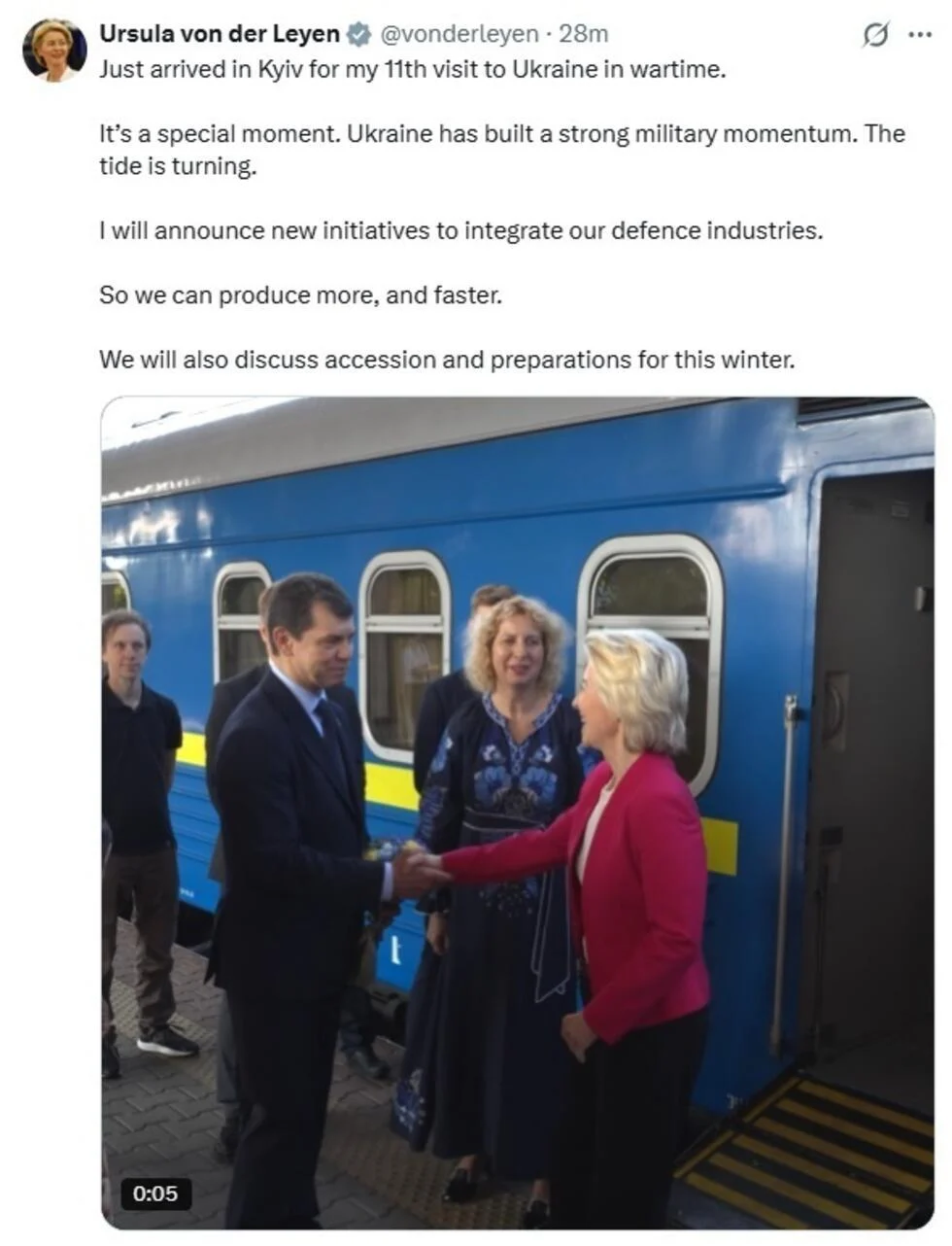
As the smoke clears over Odesa, European Commission President Ursula von der Leyen has arrived in Kyiv, signaling a pivotal shift in the European Union’s approach to the conflict: a move toward the deep integration of European and Ukrainian defense industrial bases.
The Wednesday Assault: A City Under Siege
The strike on Odesa was not an isolated incident but part of a sustained campaign against Ukraine’s vital maritime infrastructure. Serhiy Lysak, head of the city’s military administration, confirmed via Telegram that three individuals had been killed, with at least three others rushed to medical facilities with varying degrees of injury. The assault also inflicted damage upon residential buildings, serving as a grim reminder that in modern warfare, the boundary between port logistics and civilian living spaces has effectively dissolved.
The Russian Ministry of Defence wasted no time in claiming responsibility, framing the strikes as “precision-guided” operations aimed at dismantling the logistical backbone of the Ukrainian Armed Forces. According to the Kremlin, the targets included fuel storage facilities, lubricant unloading infrastructure, and, most notably, four cargo vessels docked in the ports of Chornomorsk and Dnipro-Buh. Moscow claims these vessels were carrying vital supplies for the Ukrainian military, a charge that highlights the increasingly aggressive nature of Russia’s naval and aerial interdiction efforts.
A Chronology of Escalation
The events of Wednesday are merely the latest in a rapid-fire series of maritime engagements that have redefined the security landscape of the Black Sea over the past 48 hours:
- Tuesday Morning: Regional Governor Oleh Kiper reported an overnight drone strike targeting port infrastructure. The attack resulted in two civilian deaths and caused significant damage to a commercial vessel flying the Marshall Islands flag.
- Tuesday Night/Wednesday Morning: In a massive retaliatory operation, Ukrainian drone forces launched a wide-scale strike against the Russian fleet. Robert Brovdi, commander of Kyiv’s drone forces, reported that 20 Russian vessels had been struck, including 17 oil tankers, two gas tankers, and a tugboat. This operation represents one of the most significant drone-led naval strikes by Ukraine since the conflict began.
- Wednesday Midday: European Commission President Ursula von der Leyen arrived in Kyiv to discuss the strategic alignment of defense industries.
- Wednesday Afternoon: Reports confirmed the death toll from the Russian strike on Odesa, bringing the civilian casualty count for the region to five within a 24-hour period.
Supporting Data: The Cost of War
The human toll of this conflict is reaching levels unseen in recent years. The United Nations recently reported that June was the deadliest month for Ukrainian civilians in four years, a chilling statistic that continues to climb as strikes on civilian-adjacent infrastructure become routine.
The strategic importance of the Odesa region cannot be overstated. These deepwater ports are the lifeblood of the Ukrainian economy, accounting for the vast majority of the nation’s grain and commodity exports. By systematically targeting the "Greater Odesa" cluster, Russia is not only attempting to degrade Ukraine’s military capabilities but is also engaging in a campaign of economic strangulation. The damage to the Marshall Islands-flagged ship on Tuesday signals that international commercial shipping, even with neutral-country registration, is no longer considered off-limits by Russian forces.
Official Responses and Strategic Shifts
The rhetoric emanating from both Kyiv and Brussels suggests that the war is shifting from a battle of territorial control to a battle of industrial endurance.
The European Perspective
Upon her arrival in Kyiv, Ursula von der Leyen emphasized that the time for piecemeal aid is over. Her mission is to catalyze a structural shift in how Europe supports Ukraine’s defense industry. "I will announce new initiatives to integrate our defense industries," she stated on X. "So we can produce more, and faster."

This integration is intended to bypass the supply-chain bottlenecks that have hampered Ukraine’s efforts to sustain high-intensity operations. By linking European manufacturing capacity directly with Ukrainian engineering and combat experience, the EU hopes to create a self-sustaining defense ecosystem capable of outlasting the Russian war machine.
The Russian Perspective
The Kremlin continues to maintain that its strikes are strictly "military-industrial" in nature. By targeting fuel depots and supply ships, Russia is attempting to create a "no-go" zone for maritime logistics. The inclusion of commercial tankers in their target list suggests a deliberate policy of raising the "war risk" insurance costs for any vessel entering Ukrainian waters, thereby forcing a de facto blockade through intimidation rather than just naval presence.
Implications: A New Era of Maritime Conflict
The implications of the current trajectory are profound and multi-faceted:
1. The Weaponization of Infrastructure
The attacks on Odesa’s ports demonstrate a transition toward the total weaponization of critical infrastructure. When fuel storage tanks located near residential zones become primary targets, the civilian population is forced to bear the brunt of the strike’s collateral impact. This has become a defining feature of the 2026 phase of the war.
2. The Technological Arms Race
The massive Ukrainian drone strike on 20 Russian vessels underscores the effectiveness of asymmetric warfare. By utilizing low-cost, long-range drones, Ukraine has managed to project power against a numerically superior naval fleet. This suggests that the future of maritime security in the Black Sea will be defined by the density and sophistication of drone swarms rather than traditional naval combat vessels.
3. The Future of the Ukrainian Economy
If the "Greater Odesa" ports are rendered inoperable, Ukraine’s ability to fund its war effort through exports will be severely compromised. The international community, led by the EU, now finds itself in a position where it must not only provide weapons but also ensure the physical security of the trade routes that keep the Ukrainian state solvent.
4. European Defense Sovereignty
Von der Leyen’s focus on integrating defense industries suggests that Europe is preparing for a long-term conflict that will require a permanent, high-output industrial base. This move away from "emergency procurement" toward "integrated production" signals a fundamental change in the EU’s role in global security, moving the bloc toward a more militarized, self-reliant posture.
Conclusion
The tragedy in Odesa serves as a grim marker in a conflict that shows no signs of abatement. With civilian lives lost, commercial vessels caught in the crossfire, and the leaders of Europe arriving in a war-torn capital to rewrite the rules of industrial warfare, the situation in the Black Sea is at a breaking point.
As Russia doubles down on its strategy of economic and logistical destruction, and as Ukraine—bolstered by new European partnerships—shifts toward a more integrated, drone-heavy defensive posture, the Black Sea remains the most dangerous, and most critical, front in the war. The coming weeks will likely see an intensification of these naval and aerial exchanges, as both sides attempt to gain the upper hand in a conflict that has moved far beyond the trenches and into the heart of global trade.