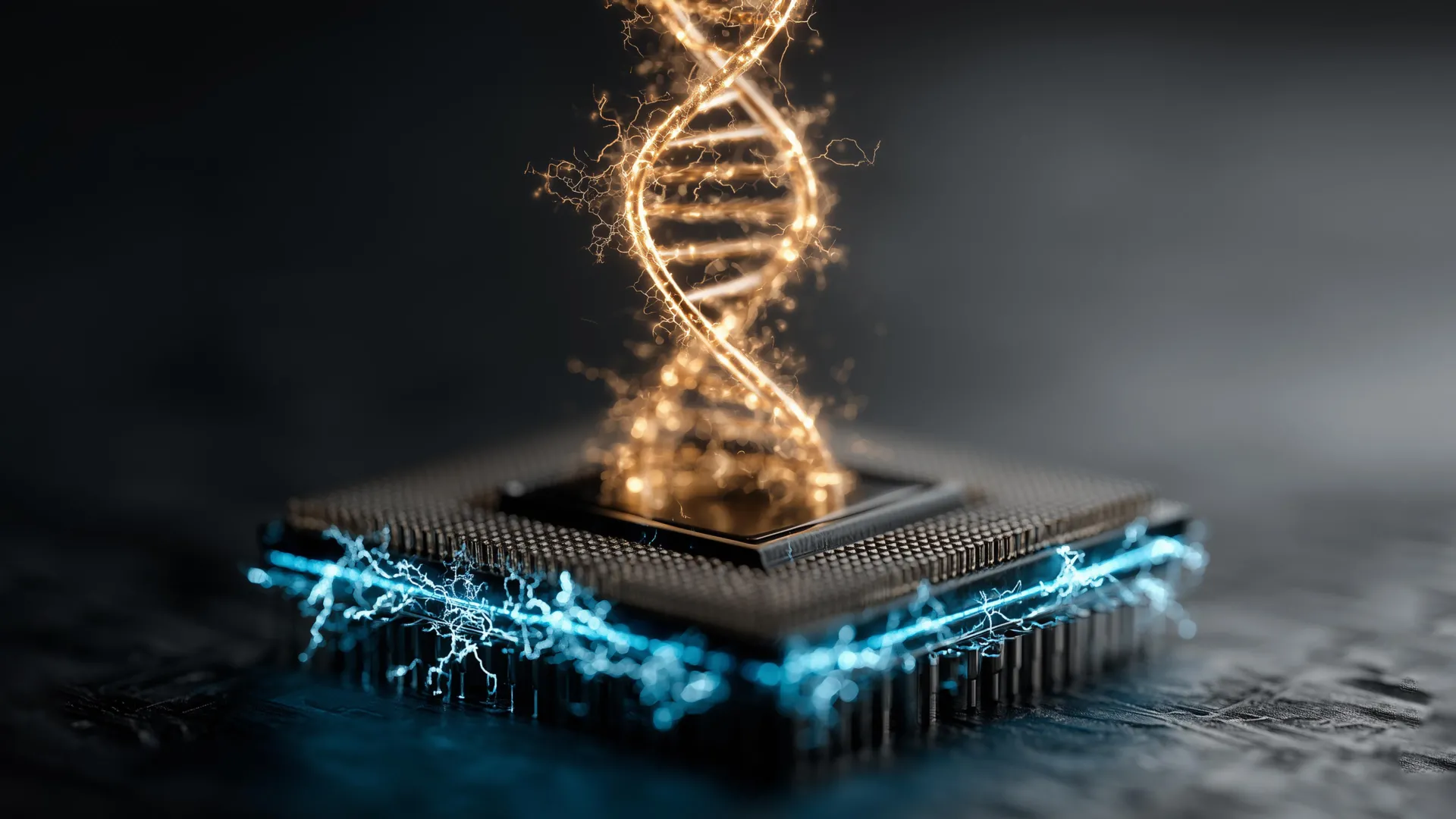
For decades, silicon chips have functioned as the undisputed engines of the information age, acting as the bedrock for everything from the smartphone in your pocket to the supercomputers driving global finance. Yet, a paradigm shift is underway. Researchers are now pivoting these masterworks of semiconductor engineering away from pure information processing and toward the complex, fluid world of biotechnology.
In a landmark study published in Nature Electronics, a team led by Harvard University researchers has unveiled a transformative technology: a silicon chip capable of synthesizing 64 unique DNA sequences simultaneously. By replacing hazardous, solvent-heavy industrial processes with a precise, water-based enzymatic method, this innovation promises to make the "writing" of life’s code cleaner, faster, and more accessible.
The Core Innovation: Moving Away from Chemical Hazards
Synthetic DNA is no longer a niche curiosity; it is a fundamental pillar of modern science. From the development of life-saving cancer therapies and precision diagnostics to the ambitious field of genome engineering, the ability to custom-build DNA sequences is essential. However, the current industrial standard—a technique known as phosphoramidite chemistry—carries a significant environmental and logistical burden.
The Conventional Bottleneck
Since the 1980s, phosphoramidite chemistry has been the workhorse of the biotech industry. It is highly efficient, capable of producing millions of strands in parallel. Yet, it relies heavily on volatile organic solvents and requires centralized, high-cost facilities to manage the hazardous chemical waste. These limitations constrain where and how quickly DNA can be synthesized, creating a bottleneck for rapid-response research and localized diagnostic manufacturing.
The Enzymatic Alternative
The Harvard team’s approach leverages the natural elegance of biology. By using enzymes—the same biological catalysts that living cells use to replicate and repair their own genetic material—the team has developed a water-based synthesis method. This "gentler" chemistry mimics nature, offering a pathway toward synthesis systems that are not only safer for the environment but also smaller and more portable, potentially moving DNA manufacturing out of centralized factories and into the laboratory bench or clinic.
Chronology of a Breakthrough
The journey to this silicon-enabled synthesis was not a linear path of planned engineering, but rather a profound example of "crosspollination" between disparate scientific fields.
- Phase I: The Neurological Origins: The foundational technology for the chip was originally designed by Jeffrey Abbott, then a PhD student in the lab of Donhee Ham, the John A. and Elizabeth S. Armstrong Professor of Engineering and Applied Sciences at Harvard’s SEAS. The goal was to build a chip that could record electrical activity from massive populations of neurons. The chip required extreme precision in current injection to "permeabilize" or open up neuronal membranes.
- Phase II: The Pivot: As the researchers refined the chip’s surface electrodes, they recognized a parallel between the electrical requirements of a neuron and the chemical requirements of DNA synthesis. The team questioned whether the same precision in electrical current could be repurposed to localize the chemical conditions necessary for building DNA.
- Phase III: The Proof of Concept: By replacing neuron-facing electrodes with concentric ring-electrode pairs, the team successfully created a prototype that could control pH levels at the micron scale. The resulting chip demonstrated the synthesis of 64 DNA sequences, each 39 nucleotides long—a massive leap forward from previous enzymatic methods, which were largely limited to roughly a dozen sequences.
- Phase IV: Future Scaling: Following the successful demonstration, the team is now working to address the next major hurdle: chemical interference, which limits how densely these sites can be packed on a single chip.
How the Chip "Writes" Life
To understand the genius of the Harvard device, one must look at the mechanics of DNA synthesis. DNA is built one nucleotide at a time. Each new nucleotide is added to a growing chain, but it is protected by a "blocking group" that prevents it from reacting until it is time for the next addition. The deprotection process—the removal of this block—is typically triggered by acidic conditions (low pH).
The challenge lies in confining this acidity to specific sites on the chip without the reaction leaking into neighboring, distinct sequences.
The Electrode Architecture
The surface of the Harvard chip is divided into 64 distinct synthesis sites. Each site acts as a miniature, independent chemical factory:
- The Inner Ring: When a specific site is activated, the inner electrode generates protons. These protons lower the pH, successfully stripping away the blocking group and allowing the DNA strand to grow by one nucleotide.
- The Outer Ring: Simultaneously, the outer electrode acts as a scavenger, removing protons that attempt to migrate outward. This creates a "containment zone," ensuring the acidity remains localized at the site of the reaction.
By cycling this process, the chip can build 64 unique, high-fidelity DNA strands in parallel across its surface.
Official Responses and Expert Perspective
The implications of this technology were noted by the lead investigators during the release of the study. Donhee Ham, reflecting on the transition from neuroscience to synthetic biology, noted: "A defining feature of the chip was precision current injection… At a certain point, we wondered whether that same current control could be redirected from cells to molecules. It worked."
Woo-Bin Jung, a co-first author of the study and currently an assistant professor at POSTECH, highlighted the long-term vision for this technology. "DNA data storage asks DNA synthesis to operate at a scale far beyond today’s needs," Jung stated. "That is why enzymatic synthesis in water can matter. If far more than 64 sequences can be synthesized in parallel, it could offer an environmentally friendly route toward writing DNA at a very large scale."
Han Sae Jung, another co-first author, provided a candid look at the technical hurdles that remain. "The chip did what we asked it to do: it localized low pH at selected sites," he noted. "The limitation came from the deprotection chemistry, not from the silicon. That leaves a clear next step for the field—develop a more direct acid-driven deprotection chemistry that can keep pace with the chip."
Broader Implications: From Diagnostics to Data Storage
The ability to synthesize DNA on a microchip opens doors that were previously locked by the constraints of industrial manufacturing.
1. Rapid Diagnostics and Personalized Medicine
With a portable, chip-based synthesizer, a hospital or field clinic could theoretically print custom DNA probes or primers on-demand. This would drastically reduce the time required to diagnose novel pathogens or customize genetic therapies for individual patients.
2. The Future of Data Storage
DNA is an incredibly dense medium for information. A single gram of DNA can theoretically store petabytes of data for thousands of years. While current synthesis costs and speeds remain prohibitive, the shift toward water-based, parallelized chip synthesis makes DNA-based data storage a more realistic, environmentally sustainable goal. By moving away from toxic solvents, the energy and environmental footprint of "writing" the world’s digital archive into DNA could be minimized significantly.
Conclusion: The Chemistry Bottleneck
While the silicon chip has proven it can handle the complexity of DNA synthesis, the research team’s failed attempt to increase the density of the sites revealed a critical insight. The bottleneck is no longer the hardware; it is the chemistry.
When the researchers attempted to place sites closer together, they discovered that the intermediate molecules produced during the deprotection step could "drift" into neighboring sites. This crosstalk effectively blurred the lines between different DNA sequences.
The path forward is clear: it is time for chemical innovation to match the progress made in semiconductor design. By developing deprotection chemistry that is more direct and less prone to intermediate-molecule drift, scientists could pack thousands or even millions of synthesis sites onto a single chip.
The marriage of silicon engineering and synthetic biology represents a convergence of two of the most powerful forces in modern technology. If the history of the computing chip is any indicator, this new platform for DNA synthesis is not just a laboratory experiment—it is the precursor to a fundamental change in how we interact with the building blocks of life itself.
Research Support and Acknowledgments
The development of this platform was a collaborative effort involving researchers from Harvard University, the Broad Institute, DNA Script, and the Pohang University of Science and Technology (POSTECH). The intellectual property surrounding this technology has been filed by Harvard’s Office of Technology Development.
Financial support for the study was provided by the Office of the Director of National Intelligence (ODNI) and the Intelligence Advanced Research Projects Activity (IARPA) under contract 2019-19081900002. Further support was provided by the Horizon Europe Hyperion project (ID: 101115253) and the Samsung Research Funding & Incubation Center for Future Technology of Samsung Electronics (Project Number SRFC-IT2402-09).