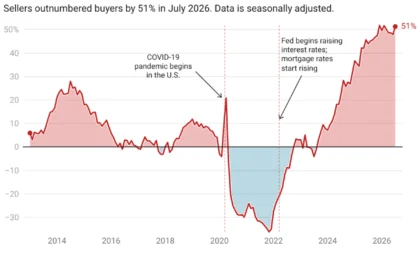
The U.S. housing market has remained firmly entrenched in a state of recalibration since the onset of the pandemic. Characterized by elevated mortgage rates, record-high list prices, and a volatile economic climate, the current landscape has forced many prospective buyers to the sidelines. For sellers, this shift has transformed the vast majority of the country into a buyer’s market, where properties linger on the market longer and negotiations have become significantly more complex.
However, the narrative of a stagnant market is only half the story. While the days of the hyper-competitive, post-2020 frenzy are behind us, data indicates a landscape of pockets of resilience and recovery. For homeowners looking to exit their properties without sacrificing equity, the key lies in sophisticated strategy, data-backed pricing, and an unwavering commitment to "screen appeal."
Main Facts: The Current State of the Market
As we move through 2026, the fundamental dynamics of real estate have shifted from "velocity" to "value." Sellers can no longer rely on the scarcity-driven bidding wars of the recent past. Instead, the current environment demands a proactive approach to home preparation.
- The Power Shift: Buyers are firmly in the driver’s seat. With high borrowing costs, buyers are increasingly selective, frequently demanding concessions or price adjustments.
- The Data Reality: Statistics from early 2026 show that more than one-third of sellers have been forced to initiate price cuts before securing a viable offer. Furthermore, nearly 50% of transactions now involve some form of seller concession, such as rate buydowns or repair credits.
- Market Divergence: While many regions face cooling demand, specific sectors—particularly in the Midwest, the Northeast, and specialized segments of the Bay Area—continue to show competitive strength.
Chronology: A Strategic Timeline for Sellers
Timing is rarely accidental in real estate. While personal circumstances often dictate when a home must hit the market, those with the luxury of planning should adhere to a seasonal strategy to maximize returns.
The Seasonal Sweet Spot
Historical data consistently points to late April and early May as the optimal window for listing. During these months, inventory typically meets peak buyer demand, leading to both faster transaction times and higher final sale prices.
The Weekly Cadence
Even the day of the week matters. Analysis suggests that listings hitting the market on Wednesday often achieve the highest price points, while those launching on Thursday tend to move the fastest. Conversely, listings appearing on Sundays often suffer from lower engagement, as buyer traffic patterns typically peak mid-week.
Supporting Data and Essential Strategies
To compete in a market where the average time on the market has stretched toward the 50-day mark, sellers must treat their home as a product that requires professional marketing.

1. The Necessity of Local Expertise
While the temptation to save on commission fees is understandable, the data supports professional representation. Over 95% of successful transactions in 2025 involved a licensed real estate agent. An agent provides more than just a listing on the Multiple Listing Service (MLS); they offer comparative market analysis (CMA), staging advice, and, most importantly, emotional distance during high-stakes negotiations.
2. Pricing for the Current Reality
"Many sellers are still mentally anchored in 2021," notes Daryl Fairweather, Redfin’s Chief Economist. "That market no longer exists." Accurate pricing is the most effective tool a seller has. By utilizing local "comps"—the prices at which similar nearby properties have actually closed—sellers can avoid the "stale listing" trap that occurs when a property is overpriced and lingers on the market, eventually requiring deep, desperate price cuts.
3. The Pre-Listing Inspection
Proactivity is a defensive asset. By conducting a pre-listing inspection, sellers uncover potential deal-breakers—such as foundation issues, outdated electrical work, or roof damage—before the buyer’s inspector does. This allows the seller to address concerns on their own terms, preventing a buyer from using a surprise report as leverage to demand an excessive price reduction.
4. Maximizing "Screen Appeal"
In an era where the vast majority of home searches begin on a smartphone, the digital first impression is the only impression that matters.
- Professional Visuals: High-definition photography, natural light, and 3D virtual tours are no longer luxury add-ons; they are requirements.
- Decluttering: A neutral canvas is essential. Removing personal items and excess furniture allows potential buyers to project their own lives onto the space.
- Modern Upgrades: High-demand features like hardwood flooring, renovated kitchens, and smart-home integration continue to drive higher sale-to-list ratios.
Official Responses and Expert Perspectives
Industry experts emphasize that the current market requires a shift in mindset. When a property sits on the market for more than 45 days, buyer interest naturally wanes, and the property becomes "stigmatized."
"Sellers have to be prepared for the reality of concessions," says one industry analyst. "Today’s buyer isn’t just looking at the sticker price; they are looking at the total cost of ownership, including interest rates. If you can bridge that gap by offering a home warranty or a contribution toward closing costs, you are far more likely to see a successful closing."
Implications: Alternatives to the Traditional Sale
For homeowners who find the traditional listing process too time-consuming or complex, several alternatives exist, though they come with distinct trade-offs.

The "We Buy Houses" Route
Companies that purchase homes for cash offer speed and convenience. They are often the preferred route for sellers in urgent financial distress or those holding properties that require significant repairs. However, these buyers typically offer significantly below-market value, and sellers should be wary of predatory practices or aggressive, non-standard contract terms.
iBuyers and Automated Platforms
Platforms like Opendoor and Offerpad provide a middle ground. They offer near-instant cash offers with the reliability of a corporate entity. The convenience of a short closing window is the primary benefit, though the service fees and lower offer amounts compared to a competitive retail sale must be carefully weighed.
The For Sale By Owner (FSBO) Approach
Attempting to sell without an agent can save a seller the commission fee, which typically hovers around 5% of the purchase price. However, the burden of marketing, legal paperwork, compliance, and managing open houses shifts entirely to the homeowner. Without access to the full power of the MLS and the negotiating experience of an agent, FSBO sellers often find that the savings on commission are eclipsed by a lower final sale price.
Final Thoughts: The Path Forward
Selling a home in 2026 is entirely possible, but it requires shedding the expectations of the pandemic-era boom. The market is not broken; it is simply more demanding. Success today is defined by the three pillars of modern real estate:
- Strategic Pricing: Based on current, local data rather than outdated historical highs.
- Visual Excellence: Presenting the home through the lens of a mobile-first buyer.
- Flexibility: Being open to the realities of concessions and the necessity of accommodating buyer needs.
Even in a complex economic climate, a home remains one of the most significant assets an individual can own. By focusing on preparation, hiring the right professional, and maintaining a realistic outlook on market velocity, sellers can position themselves to secure a successful outcome. Whether you choose the traditional route, an iBuyer, or a private sale, the key is to remain data-driven, objective, and prepared for the nuances of your specific neighborhood. As the market continues to evolve, the homeowners who succeed will be those who adapt their strategy to match the current, rather than the historical, reality.