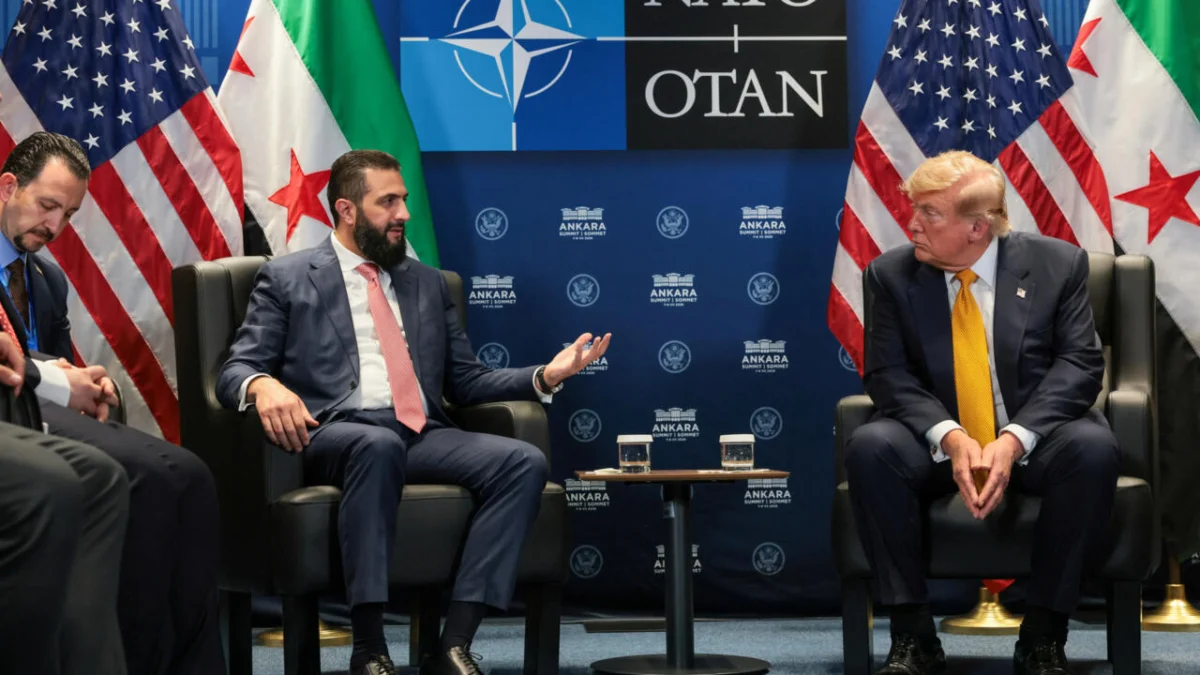
ANKARA – In a seismic shift of American foreign policy that marks the culmination of a dramatic geopolitical realignment in the Middle East, President Donald Trump announced on Wednesday his decision to remove Syria from the United States’ list of designated state sponsors of terrorism. The announcement, delivered via a personal letter to Syrian leader Ahmed al-Sharaa during a high-stakes summit in Ankara, signals the final dismantling of the containment strategy that defined US-Syria relations for decades.
The decision, which follows the total collapse of the Assad regime in late 2024 and the rise of a new power structure in Damascus, paves the way for the normalization of trade, the influx of international capital, and the full reintegration of Syria into the global financial architecture.
The Core Mandate: Ending the "Barriers to Prosperity"
In his correspondence with al-Sharaa—a document later verified by Reuters—President Trump was explicit about his intentions to pivot from confrontation to commercial engagement.
"I promised to remove all barriers stopping you from rebuilding your country, and very soon, you will finally be able to do so," Trump wrote. The President underscored the role of the American private sector in this new chapter, noting that US firms are currently finalizing preparations to invest in Syrian infrastructure, energy, and reconstruction projects. "We have US companies ready to invest in Syria and help make your country greater and more prosperous than ever before," the letter stated.
For the Syrian administration, the move is a definitive victory. Central Bank Governor Safwat Raslan took to Telegram shortly after the announcement to herald the decision, describing it as the "key" to unlocking broader investment opportunities and ending the long-standing economic malaise that has plagued the nation.
Chronology of a Geopolitical Pivot
The path to this moment has been paved with rapid, often jarring, developments that have reshaped the Levant over the last three years:
- Late 2024: The total collapse of the Bashar al-Assad regime. The transition of power to a coalition led by Ahmed al-Sharaa, the former commander of the Nusra Front who had formally severed ties with al-Qaeda in 2016.
- December 2025: President Trump signs a landmark executive order terminating the long-standing US sanctions program against Syria, effectively ending the country’s status as a financial pariah.
- Early 2026: A wave of diplomatic rapprochement begins as Gulf states, led by Saudi Arabia, signal their intent to bankroll Syrian reconstruction with multi-billion-dollar commitments.
- July 2026: Trump and al-Sharaa meet in Ankara. The President formally notifies Congress of his intent to remove Syria from the list of state sponsors of terrorism, initiating a mandatory 45-day review period.
Supporting Data: The Economics of Reconstruction
The removal of the terrorist designation is more than a diplomatic gesture; it is a financial catalyst. Under the previous classification, Syria faced severe restrictions on foreign assistance, defense exports, and, most crucially, access to international credit markets.
The Investment Landscape
The shifting political climate has already drawn significant interest from regional powers. Saudi Arabian conglomerates have reportedly earmarked billions of dollars for infrastructure projects, aiming to stabilize the Syrian economy and secure influence in the post-Assad reconstruction market. These investments are viewed by regional analysts as a "Marshall Plan for the Levant," intended to create a buffer against lingering regional instability.
Financial Normalization
With the US sanctions program already dismantled via the 2025 executive order, the delisting process removes the "compliance risk" that has kept Western banks from engaging with Syrian entities. Central Bank Governor Raslan suggests that once the 45-day Congressional review concludes, the Central Bank of Syria expects to see an immediate influx of liquidity as international commercial banks begin to re-establish correspondent banking relationships in Damascus.
Official Responses and Diplomatic Nuance
The reaction to the news has been varied, reflecting the complex nature of the transition in Syria.

The White House Perspective
President Trump has framed the decision through the lens of "pragmatic realism." In his public comments following the Ankara meeting, Trump offered a rare endorsement of al-Sharaa. "He’s respected by everybody, including me," the President remarked, specifically highlighting al-Sharaa’s efforts in combatting remnants of the Islamic State (IS) in the border regions. Trump’s administration argues that by empowering the current Syrian leadership, the US secures a valuable partner against radical elements, while simultaneously opening lucrative markets for American firms.
Legislative Hurdles
While the President has signaled his intent, the process is not yet complete. The notification sent to Congress triggers a 45-day review period. While the Republican-led executive branch is pushing for swift approval, critics in Congress have raised concerns regarding human rights accountability and the previous affiliations of the current Syrian leadership. However, given the current geopolitical consensus, the administration remains confident that the move will face minimal effective opposition.
Implications: A New Regional Order
The removal of Syria from the US terror list signifies a monumental shift in the "Great Game" of the Middle East.
1. The Death of the "Assad-Era" Isolation
For decades, Syria was the primary subject of US-led economic containment. By reversing this, the United States is effectively abandoning the policy of "regime change" as a primary tool for influencing Syrian internal affairs. Instead, the focus has shifted toward "regime stabilization" through economic integration.
2. Strategic Realignment with Turkey and the Gulf
The choice of Ankara for the meeting between Trump and al-Sharaa is highly symbolic. Turkey, a key NATO member, has played a pivotal role in mediating the transition. Coupled with Saudi and Gulf state financial backing, this development suggests that a new regional security architecture is being built—one where Syria is no longer a vacuum for conflict but an active participant in a regional economic bloc.
3. The Counter-Terrorism Paradox
Critics of the move point to the irony of removing a nation from the terrorism list that was, until recently, led by a former commander of the Nusra Front. The administration’s defense is rooted in the "realpolitik" of the region: that al-Sharaa’s break from al-Qaeda in 2016 and his subsequent effective campaign against the Islamic State have rendered the old designation obsolete. Washington is gambling that by bringing the Syrian state into the international fold, it can effectively neutralize the threat of extremist insurgencies more efficiently than it could through continued sanctions and isolation.
4. A Boost for American Industry
The economic implications for the US are clear. With massive reconstruction contracts on the table—ranging from power grid restoration to telecommunications and oil-and-gas exploration—American companies are poised to capture a significant share of the Syrian market. This aligns with the Trump administration’s broader "America First" strategy of utilizing foreign policy to generate domestic economic growth.
Conclusion: Looking Ahead
As the 45-day Congressional review begins, the world watches to see if this pivot will deliver the stability the region so desperately craves. The decision is undoubtedly one of the most significant foreign policy gambles of the decade.
If successful, it will turn Syria from a war-torn battleground into a beacon of post-conflict recovery, integrated into the global economy and aligned with Western and Gulf interests. If it fails, the United States risks legitimizing a leadership whose history remains fraught with complexity.
For now, the message from the White House is clear: the era of isolation is over, and the era of reconstruction—backed by the full weight of American capital—is set to begin. The road ahead for Syria remains long and challenging, but the barriers, both political and economic, are falling away with unprecedented speed.