The wearable technology landscape is undergoing a profound transformation. While industry behemoths like Meta and Snap are engaged in a high-stakes battle to dominate the market with camera-equipped AI smart glasses, a leaner, more focused competitor is quietly capturing the attention of the executive class. Shenzhen-based startup Even Realities has emerged as a formidable challenger, recently securing a $150 million pre-Series B funding round that catapults the three-year-old firm into "unicorn" status with a $1 billion valuation.
Led by Meituan and supported by returning backer Tencent, this influx of capital signals a pivotal shift in investor sentiment: the market is no longer solely interested in social media-centric hardware. Instead, it is hungry for sophisticated, privacy-conscious productivity tools. As tech giants scramble to put lenses on our faces, Even Realities is betting that the future of wearable computing lies not in capturing the world, but in intelligently displaying it.
The Chronology of a Disruptor
The story of Even Realities is one of rapid iteration and tactical precision. Founded in 2023 by a cohort of industry veterans—including former Apple engineers who cut their teeth on the development of the iPhone and Apple Watch—the company was built on a foundation of hardware expertise. The team’s pedigree is further bolstered by experts from the luxury eyewear sector, including designers from the prestigious Danish brand Lindberg, ensuring that the hardware is as aesthetically refined as it is technically advanced.
By 2024, the company hit the ground running with the launch of the Even G1, which was marketed as the lightest waveguide smart glasses available at the time. The product defied industry skeptics, blowing past the company’s internal goal of 10,000 units and effectively proving that there was a hungry, albeit niche, market for head-up displays.
The company’s growth trajectory has been nothing short of explosive. In just one year, the firm ballooned from a boutique team of 30–40 employees to a robust workforce of 300–400. This expansion was fueled by the November 2024 launch of its flagship device, the Even G2, which solidified the company’s "camera-free" philosophy. By focusing on a seamless integration of hardware, software, and optics, Even Realities has transformed from a startup experiment into a profitable, high-end player in the global wearables market.
The "Optics-First" Philosophy: Why Tech Stacks Matter
At the heart of the Even Realities value proposition is a rejection of the "consumer electronics" approach to smart glasses. Will Wang, the founder and CEO, argues that many current market participants make the fatal error of treating smart glasses like miniaturized smartphones.
"With a phone or a watch, the display is just a conventional OLED or LCD screen," Wang explains. "Smart glasses are the first product category to rely on optical displays, which require an entirely different technology stack. You have to design the microchip, the optics, and the waveguide together. That’s where we’ve invested the most."
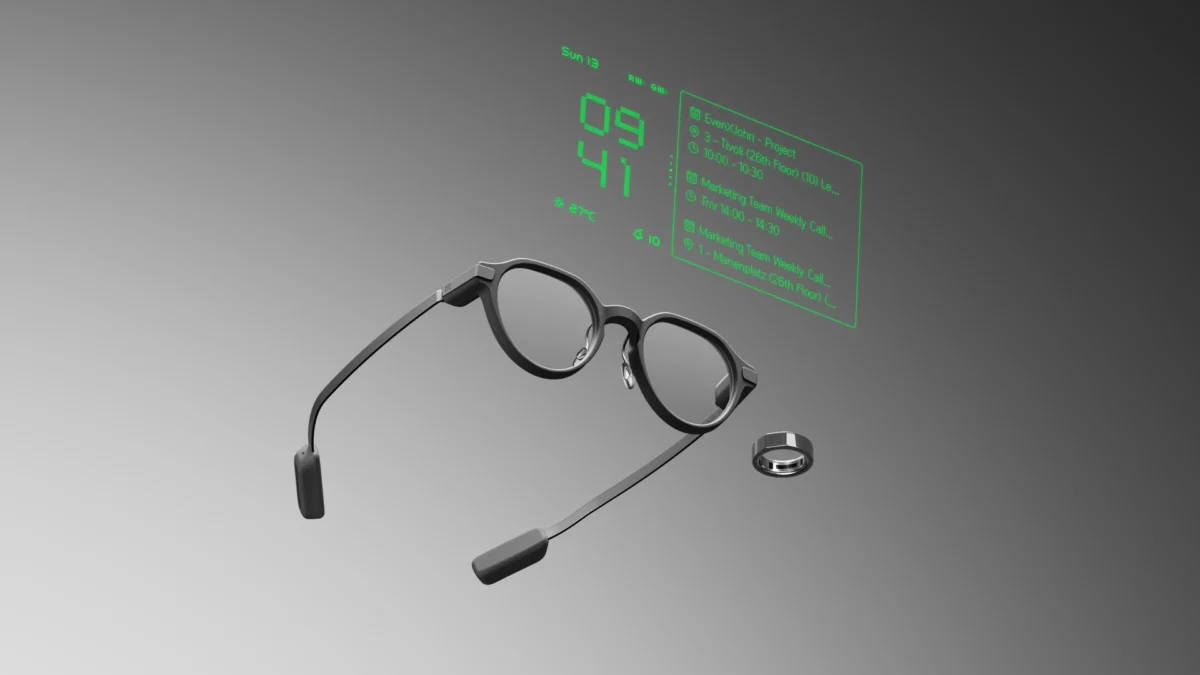
This focus led to the development of Even HAO (Holistic Adaptive Optics). Unlike competitors who often source components from various vendors and attempt to fuse them together, Even Realities designs its microchip, waveguide, and prescription lens support as a unified, end-to-end system. This proprietary approach minimizes latency, optimizes power consumption, and ensures that the "heads-up" information beam is crisp, clear, and non-intrusive.
Privacy as a Design Principle
In an era where "always-on" cameras on spectacles have triggered intense debates regarding surveillance and social friction, Even Realities has made the radical choice to remove the camera entirely. This is not merely a feature omission; it is a core pillar of their brand identity.
Wang posits that smart glasses are destined to become the most personal computing device a human will ever own. "Worn on the face all day, they have to feel comfortable to both the wearer and those around them," he says. By stripping away the camera, the company avoids the "creep factor" that has hampered the adoption of devices like the original Google Glass or even some modern iterations of AR frames.
Instead of video recording, the G2 relies on the Even R1, a companion smart ring. Users navigate the interface through a series of subtle taps and swipes on the ring, allowing them to pull information into their peripheral vision without engaging in the performative gestures often required by voice-only or gaze-tracking systems.
For the power user, the crown jewel is Conversate, an AI-driven copilot. The system transcribes audio into text in real-time, providing the wearer with definitions for complex jargon or suggesting follow-up questions during a meeting. Crucially, the system is designed with a "privacy-first" architecture: audio is transcribed rather than stored, data is encrypted locally, and the infrastructure is built to comply with the stringent data protection regulations of the European Union.
Supporting Data: The Profile of the Modern Wearer
The market demographics for Even Realities reveal a clear picture of who is currently driving the adoption of "pro-sumer" smart glasses. Despite a high price point—the frames retail for $599, with prescription lenses and the R1 ring bringing the average total order to approximately $1,000—the company reports strong, consistent sales.
- Geographic Reach: More than half of the company’s users are based in the United States, followed by Japan, South Korea, the Middle East, and Europe.
- Target Audience: The core user base consists of male professionals aged 30 to 50.
- Executive Adoption: Perhaps most telling is the company’s internal survey data, which suggests that roughly one-third of their users identify as company executives.
This data suggests that smart glasses are currently finding their product-market fit as tools for efficiency and cognitive augmentation in the professional sector, rather than as mass-market social gadgets for the general public.
The Road Ahead: Global Expansion and Market Implications
As Even Realities looks toward the future, the primary challenge will be balancing its rapid growth with the demands of scaling. While the company manufactures its products in China, it has yet to enter the Chinese retail market, citing a need to ensure that its infrastructure and support systems are perfectly calibrated for the unique demands of the region.
The implications for the broader tech industry are significant. The success of Even Realities serves as a warning to tech giants that a "one-size-fits-all" approach—relying on cameras and social media integration—may not be the only path to the future of AR. By focusing on niche, high-value productivity tasks and addressing the deep-seated societal anxieties regarding privacy, startups are carving out a significant piece of the pie.
Furthermore, the rise of companies like Even Realities highlights the maturation of the optics industry. As display technology becomes the true "bottleneck" for wearables, the advantage will likely shift toward firms that control their own hardware stacks rather than those who rely on off-the-shelf components.
As the industry moves toward 2026 and beyond, the competition between the "camera-heavy" giants and the "optics-first" upstarts will define the next generation of computing. Whether consumers ultimately prefer the social capture capabilities of Meta’s devices or the focused, information-dense utility of the Even G2 remains to be seen. However, one thing is certain: the race to own the space in front of our eyes has only just begun.