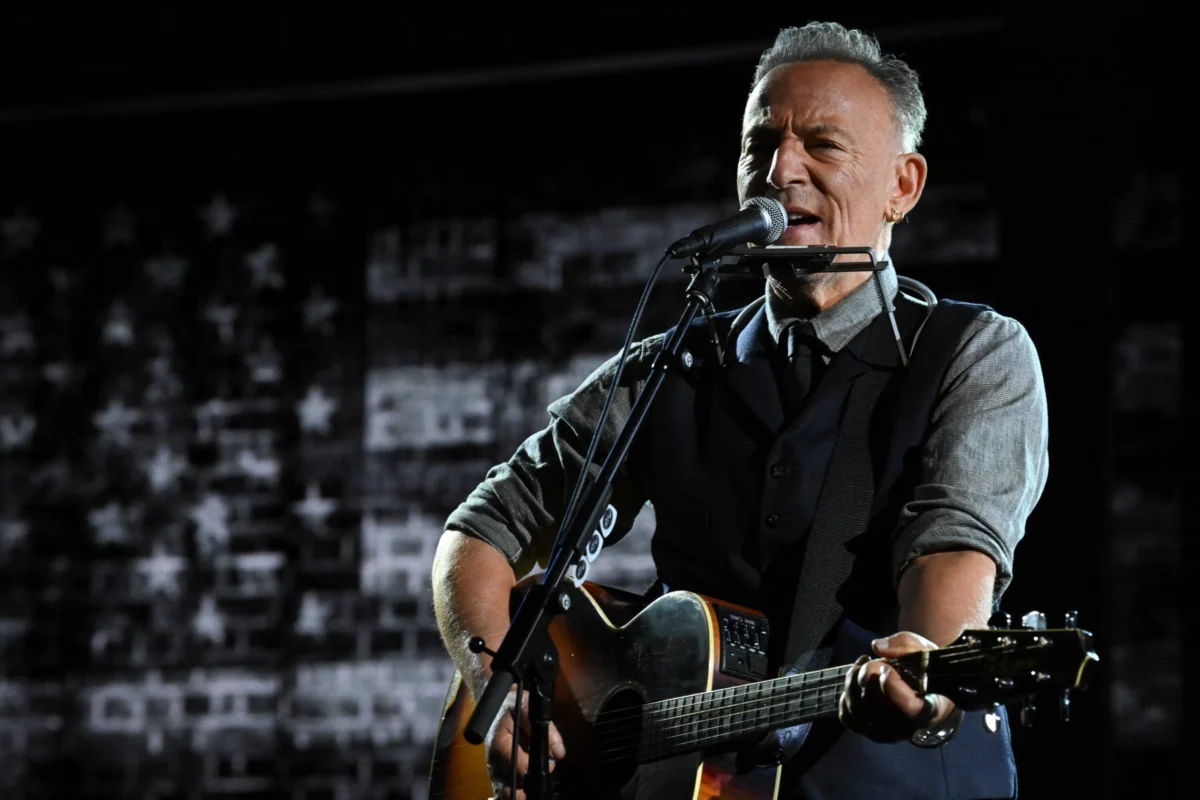
In the polarized landscape of modern American politics, few cultural figures command as much influence—or draw as much ire—as Bruce Springsteen. Often dubbed "The Boss," the legendary musician has spent decades channeling the anxieties, hopes, and disillusionments of the American working class. Recently, however, his role has shifted from cultural observer to an active, outspoken participant in the country’s high-stakes political discourse.
The latest chapter in this ongoing saga unfolded during his recent PBS special, Bruce Springsteen: Finding America in Song. While the program serves as a retrospective of his storied career, it also provided a platform for Springsteen to articulate a philosophy he calls "critical patriotism." In a time when the term "patriot" is frequently weaponized by opposing sides of the aisle, Springsteen’s definition suggests a more demanding, introspective approach to citizenship.
The Philosophy of Critical Patriotism
During the PBS special, Springsteen offered a nuanced perspective on what it means to love a country that is clearly struggling with deep internal fractures.
"I believe in critical patriotism," Springsteen stated. "I believe that’s the definition of a patriot, you know, that you love your country so much that you are willing to look at it clearly, recognize its faults, encourage it to be a better place, and believe that you carry in your heart the country that is waiting."
This statement serves as the intellectual bedrock for his current public stance. For Springsteen, patriotism is not a passive act of unquestioning allegiance or flag-waving jingoism. Instead, it is an active, often uncomfortable duty. It requires a citizen to hold their government accountable and to demand that the nation live up to the ideals inscribed in its founding documents. By framing dissent as the ultimate act of devotion, Springsteen is attempting to reclaim the narrative of "American values" from those who define it solely through the lens of nationalist pride.
Chronology of a Public Feud
The tensions between Springsteen and President Donald Trump have been brewing for years, but they have reached a boiling point during the current administration.
The friction became undeniable during the opening night of Springsteen’s recent Land of the Hope and Dreams tour in Minneapolis. Springsteen, never one to mince words, utilized the stage as a pulpit. He directly addressed the administration’s policies and personnel, specifically targeting former Attorney General Pam Bondi.
"She prosecutes our president’s perceived enemies, covers up for his misdeeds and protects his powerful friends," Springsteen told the audience, a comment that quickly rippled through cable news cycles. The critique did not stop there. Springsteen transitioned to the President himself, famously declaring, "You want to talk about snowflakes? We have a president who can’t handle the truth."
The response from the White House was swift and characteristically personal. President Trump took to Truth Social, his preferred digital megaphone, to issue a scathing rebuttal. In a post that bypassed policy critiques in favor of ad hominem attacks, the President labeled Springsteen a "bad, and very boring singer" and mocked his physical appearance.
"The guy is a total loser who spews hate against a President who won a Landslide Election," Trump wrote, referencing his recent electoral victories. He concluded his tirade by calling for a MAGA-led boycott of Springsteen’s music and concert venues, effectively drawing a line in the sand for his supporters.
Supporting Data: The Political Divide in Music
The clash between the rocker and the President is emblematic of a broader trend: the politicization of the American cultural sphere. Data suggests that the divide between the two men reflects a wider demographic split in the country.
Music industry analysts note that while Springsteen maintains a massive, multi-generational fan base, his overt political activism has occasionally alienated segments of his audience. However, internal polling and concert attendance metrics indicate that his "Land of the Hope and Dreams" tour has remained a commercial powerhouse, suggesting that his core audience largely aligns with or respects his outspoken nature.
Conversely, the President’s call for a boycott highlights the "echo chamber" phenomenon. In the current era, consumption of media—including music and art—has become a signifier of political identity. Trump’s ability to command his base to boycott specific artists functions as a test of brand loyalty, turning the act of not listening to a song into a political statement in itself.
Official Responses and Public Discourse
The exchange between Springsteen and Trump has sparked intense debate regarding the role of celebrities in political discourse. Supporters of Springsteen argue that artists have historically been the "canaries in the coal mine," providing necessary critique of those in power. They point to the legacy of protest music in the 1960s and 70s, arguing that Springsteen is simply continuing a long-standing American tradition of dissent.
Critics, however, suggest that celebrities should "stick to music." This sentiment, echoed by the President’s social media followers, posits that artists who leverage their platform to criticize elected officials are disconnected from the "real America" and are, as Trump claimed, suffering from "Trump Derangement Syndrome."
This debate underscores the breakdown of shared objective reality in the United States. When the President of the United States engages in a public feud with a rock star over "truth" and "patriotism," it signals that the cultural battleground has become as significant as the legislative one.
Implications: Where Does the Country Go from Here?
The ongoing conflict between Bruce Springsteen and Donald Trump is more than a celebrity spat; it is a microcosm of the current American psyche. The implications are profound:
- The Erasure of Neutral Ground: There is very little space left for artists to remain neutral. Every statement, song choice, or public appearance is parsed for political alignment.
- The Redefinition of Patriotism: The battle over the term "patriot" is central to the upcoming election cycles. If one side defines patriotism as obedience and the other as critical engagement, the two halves of the country are effectively speaking different languages.
- The Power of the Digital Bully Pulpit: The ease with which the President can organize a boycott via social media demonstrates the volatility of the modern cultural economy. It forces corporations, concert promoters, and other artists to navigate a minefield of potential backlash.
- The Resilience of Art: Despite the vitriol and the calls for boycotts, Springsteen’s continued success suggests that art remains a vital tool for those seeking to process the complexities of their country. Whether the audience agrees with his politics or not, the engagement itself confirms that Springsteen remains a central figure in the American narrative.
As the Land of the Hope and Dreams tour concludes, the echoes of the controversy remain. Springsteen has made it clear that he will not retreat from the political stage. Whether he is "The Boss" or a "dried up prune," his influence remains a testament to the enduring power of music to provoke, offend, and inspire.
In the final analysis, Springsteen’s call for "critical patriotism" asks a difficult question of the American public: Is it possible to love the country enough to tell it the truth, even when that truth is painful? It is a question that both the musician and the President are forcing the nation to answer, each in their own way, as the American story continues to unfold in real-time.