Introduction: A Historic Break from Numismatic Tradition
In a move that merges national commemoration with an unprecedented shift in federal branding, Treasury Secretary Scott Bessent has announced that the United States will issue dollar bills featuring the signature of President Donald J. Trump. The initiative is officially framed as a tribute to the nation’s upcoming 250th anniversary—the Semiquincentennial—marking a significant departure from over a century of American fiscal tradition.
The announcement, which was confirmed via social media, signals the administration’s intent to utilize the country’s most ubiquitous symbols of soft power—its currency—to memorialize the current presidency alongside the nation’s milestone birthday. While the U.S. Treasury has historically functioned as a bastion of bureaucratic continuity, this move underscores a broader effort by the Trump administration to leave an indelible mark on the nation’s institutional landscape.
Main Facts: The Signature on the Greenback
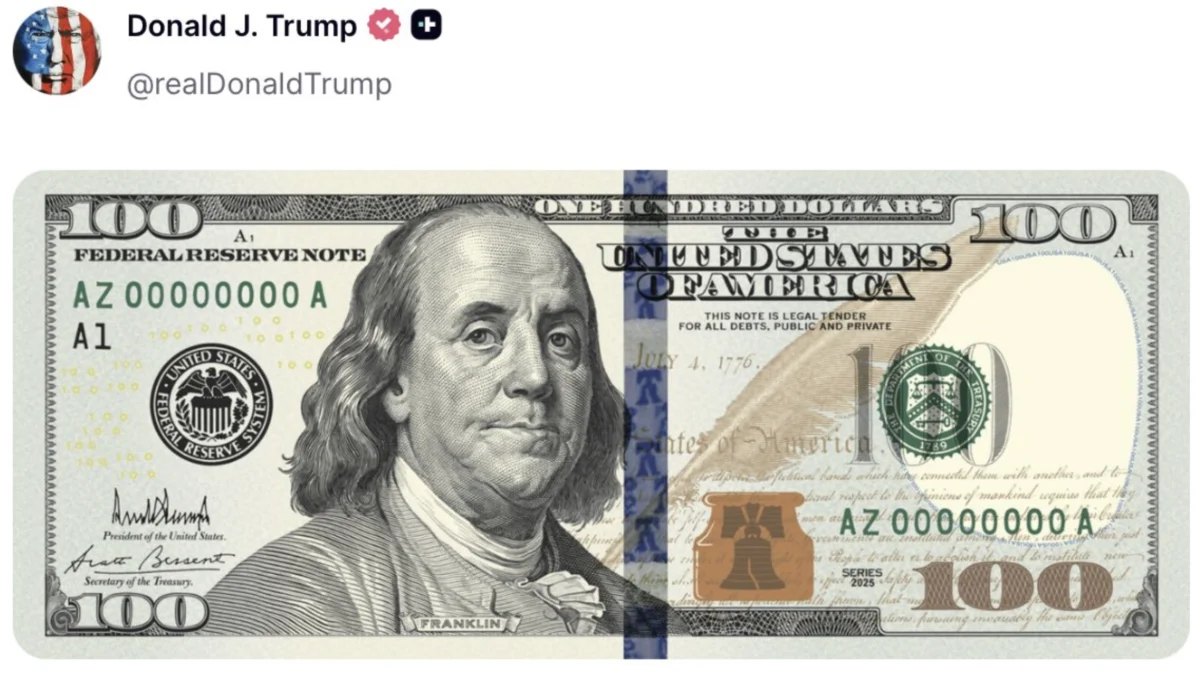
The core of the announcement centers on the introduction of U.S. dollar-denominated bills, specifically the $100 denomination, which will bear the distinctive, bold signature of Donald J. Trump. Traditionally, Federal Reserve notes carry the signatures of two officials: the Secretary of the Treasury and the Treasurer of the United States. The President’s signature has never been a standard feature of circulating U.S. paper currency.
Secretary Scott Bessent confirmed the move by reposting an image of a $100 bill featuring the President’s signature, which had been originally shared by Trump on Truth Social. Bessent’s accompanying statement characterized the move as a fitting tribute to both the country and the leader currently at its helm.
"There is no more powerful way to recognize the historic achievements of our great country and President Donald J. Trump than U.S. dollar bills bearing his signature," Bessent wrote. He further emphasized that the timing is intentional, aligning the release with the "semiquincentennial"—the 250th anniversary of the signing of the Declaration of Independence in 2026.
Key details of the plan include:
- Denomination: While the $100 bill was the primary focus of the announcement, officials have suggested the signature could appear across multiple denominations.
- Purpose: To celebrate the U.S. 250th anniversary (1776–2026).
- Authority: The Secretary of the Treasury holds broad statutory authority under the United States Code (specifically 31 U.S.C. § 5114) to determine the "form and tenor" of U.S. currency.
Chronology: The Road to the Semiquincentennial Signature
The path to this announcement is rooted in a series of branding efforts that have defined Donald Trump’s second term in office. To understand the significance of the currency change, one must look at the timeline of the administration’s efforts to rename and rebrand federal assets.
Late 2024 – Early 2025: The Appointment of Scott Bessent
Upon his confirmation as Treasury Secretary, Scott Bessent—a prominent macro investor and long-time supporter of the President—signaled a desire to modernize the Treasury while aligning its visual identity with the administration’s "America First" philosophy.
The Branding Campaign of 2025
Throughout the first year of his second term, President Trump moved aggressively to place his name on prominent Washington institutions. This included:
- The U.S. Institute of Peace: The administration successfully added the President’s name to the federally funded institution.
- The John F. Kennedy Center for the Performing Arts: In a highly publicized move, the administration sought to add Trump’s name to the board and the facility itself. This resulted in a protracted legal battle, where a federal judge eventually ruled that the name must be removed, citing specific charter restrictions of the arts complex.
- Palm Beach International Airport: Local and federal coordination began to rename the Florida transit hub after the President, a move that is currently in the final stages of implementation.
The Announcement (Saturday)
The specific news regarding the currency broke on a Saturday when President Trump posted a high-resolution rendering of the "Trump Signature Series" $100 bill on Truth Social. Hours later, Secretary Bessent utilized his official platform on X (formerly Twitter) to confirm that this was not merely a commemorative concept but an official Treasury directive.
Supporting Data: Historical Context and Currency Standards
To appreciate the gravity of this change, it is necessary to examine the historical standards of U.S. currency design and the rarity of presidential involvement in the physical signing of the "greenback."
1. The Tradition of Signatures
Since the passage of the Federal Reserve Act of 1913, the signatures on U.S. paper money have served as a guarantee of the note’s validity and the credit of the United States.
- The Secretary of the Treasury: Represents the executive’s fiscal policy and the department responsible for printing.
- The Treasurer of the United States: A role often held by women in recent decades, representing the oversight of the funds.
- Historical Exception: While presidents appear as portraits (Washington on the $1, Lincoln on the $5, etc.), their signatures are absent from the notes. Even the 1976 Bicentennial $2 bill did not feature the signature of the sitting president (Gerald Ford).
2. The Semiquincentennial (America250)
The United States Semiquincentennial Commission was established by Congress in 2016 to plan the 250th-anniversary celebrations. The Treasury’s move to alter currency design falls under the broader umbrella of these celebrations. Historical data shows that during the 1976 Bicentennial, the Treasury issued several special coins (the quarter, half-dollar, and dollar) with unique reverse designs, but the core elements of paper currency remained largely unchanged.
3. Public Perception and Branding
The "Trump brand" has historically been associated with gold-toned aesthetics and bold typography. Marketing experts note that placing a signature on a currency note is the ultimate form of "personal branding," as the U.S. dollar remains the world’s primary reserve currency. As of 2024, there were approximately $2.3 trillion worth of Federal Reserve notes in circulation globally.
Official Responses: Support and Contention
The announcement has triggered a wave of responses from across the political and legal spectrum, reflecting the polarized nature of the move.
Administration Support
Within the Treasury Department, the move is being hailed as a bold celebration of American leadership. A spokesperson for the Treasury stated, "The President’s signature is a symbol of the economic revitalization we have witnessed. Incorporating it into the 250th-anniversary currency honors the office and the era of American greatness we are currently building."
Congressional Reaction
Republican allies in Congress have lauded the decision. Senator Lindsey Graham noted, "The 250th birthday of America is a time for bold gestures. President Trump has redefined the American economy, and it is only right that his signature secures the value of our currency during this historic milestone."
Conversely, Democratic leaders have raised concerns regarding the politicization of the Treasury. "The dollar belongs to the American people, not to a single individual," said a senior member of the House Financial Services Committee. "Using the Bureau of Engraving and Printing as a personal branding machine is a departure from the neutral, institutional stability that the world expects from the U.S. Treasury."
Legal and Numismatic Perspectives
Legal scholars are currently debating whether the Secretary’s authority over "form and tenor" allows for the replacement or addition of a presidential signature without a specific act of Congress. While the Secretary has wide latitude, some argue that the historical precedent of the Treasurer’s signature is a "custom with the force of law."
Implications: Economic, Legal, and Cultural
The introduction of the "Trump-signed" dollar bills carries implications that extend far beyond the aesthetics of a $100 bill.
1. The Global Image of the U.S. Dollar
As the world’s reserve currency, the U.S. dollar is viewed as a symbol of stability. International economists have raised questions about whether partisan branding on the currency could affect its perception abroad. While the "full faith and credit" of the U.S. remains the backing of the bill, the move introduces a level of political personality into a medium that has traditionally been seen as technocratic and neutral.
2. Legal Precedent and Institutional Norms
This move sets a new precedent for future administrations. If the sitting President’s signature becomes a standard feature of commemorative or circulating currency, it may lead to a cycle where the design of U.S. money changes with every administration. This could potentially complicate the work of the Bureau of Engraving and Printing (BEP) and the Federal Reserve, which prioritize security and anti-counterfeiting measures over aesthetic or political changes.
3. The "Branding" of Washington
The currency change is the most significant step in what critics call the "Trumpification" of federal assets. By placing his signature on the dollar, the President is moving his name from the exterior of buildings (like the USIP or airports) into the wallets of every American and billions of people worldwide. This represents a shift in how the American presidency interacts with the public—moving from a role as a temporary steward of institutions to a permanent fixture of their identity.
4. The 2026 Celebration (Semiquincentennial)
The Semiquincentennial was intended to be a moment of national unity. The introduction of these bills ensures that the 250th-anniversary celebrations will be inextricably linked with the legacy of the 45th and 47th President. For supporters, this is a triumphant reclamation of American pride; for critics, it is an appropriation of a national milestone for personal legacy-building.
Conclusion
The announcement by Secretary Scott Bessent marks a watershed moment in the history of American numismatics. By breaking with a century of tradition to include President Trump’s signature on the $100 bill, the Treasury Department has signaled that the 250th anniversary of the United States will be defined by a new era of executive visibility. As the Bureau of Engraving and Printing prepares for the 2026 rollout, the "Trump Signature Series" will likely remain a centerpiece of national debate, symbolizing the administration’s broader mission to reshape the identity of the American state.