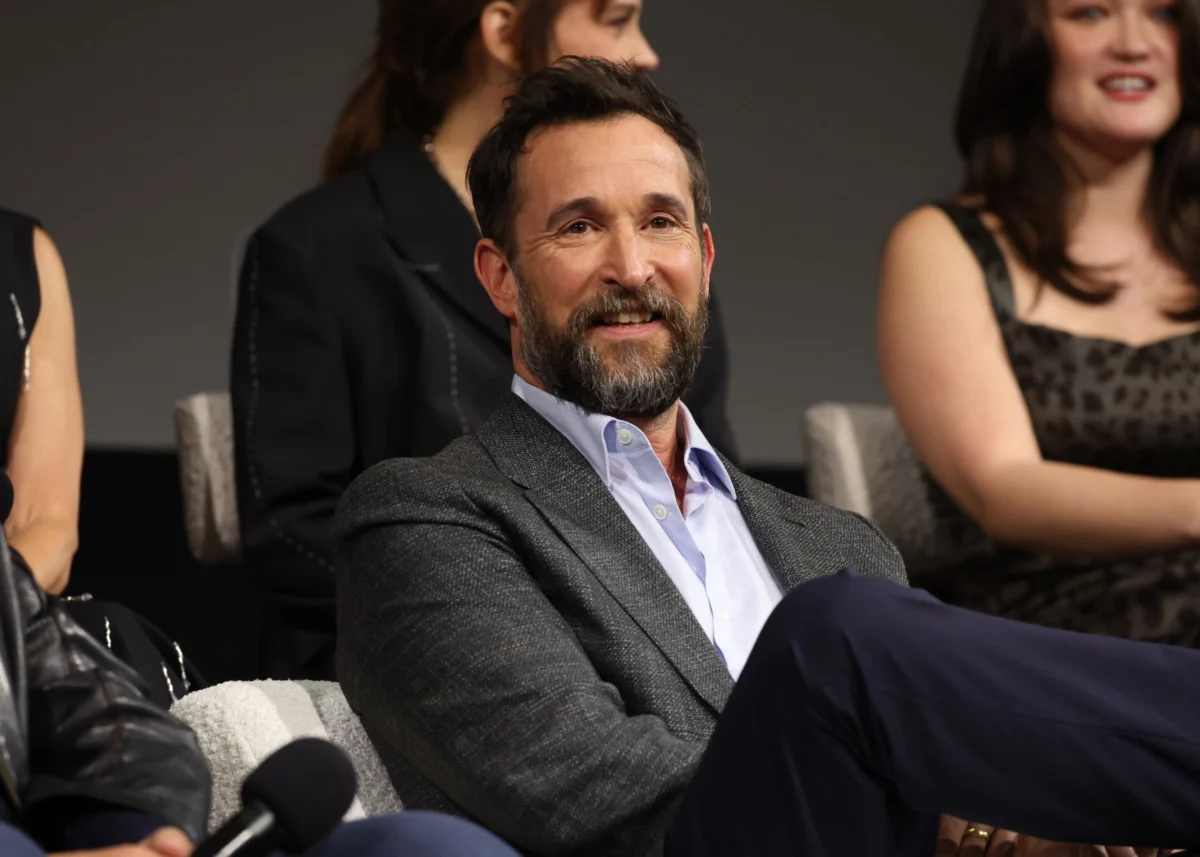
For an actor, the career trajectory is often defined as much by the roles they decline—or are forced to relinquish—as by the ones they accept. Noah Wyle, a fixture of American television for over three decades, recently opened a window into the "what-ifs" of his storied career. During a candid appearance on the Still Here Hollywood podcast, the ER and The Pitt star revealed that his commitment to the grueling production schedule of the seminal NBC medical drama ER cost him the chance to star in two of the most critically acclaimed films of the late 1990s and mid-2000s: Steven Spielberg’s Saving Private Ryan and George Clooney’s directorial effort Good Night, and Good Luck.
The revelations highlight the rigid, often unforgiving nature of network television contracts in the 1990s, where lead actors were frequently locked into ten-month production cycles, effectively barring them from pursuing major feature film opportunities.
The Constraints of Stardom: The ER Effect
To understand why Wyle missed out on these cinematic milestones, one must look back at the cultural phenomenon that was ER. Premiering in 1994, the show was not merely a hit; it was a juggernaut that redefined the medical drama genre. As Dr. John Carter, Wyle became the moral compass of the series, growing from a wide-eyed medical student into a seasoned attending physician over the course of his 11-season run.
However, that success came at a professional cost. In the mid-90s, the television industry was characterized by ironclad exclusivity clauses. Producers of prestige dramas demanded near-total availability from their stars. Wyle, reflecting on the podcast, noted that while he was being courted by industry titans for high-profile projects, his obligation to the County General Hospital set made participation an impossibility.
"Yeah, tons. It happens all the time," Wyle told Still Here Hollywood when asked about the roles that got away. "We talked about a couple of them, actually. Good Night, and Good Luck—George [Clooney] offered me a part in that. I couldn’t get out of ER to do it. I was offered the part of Private Ryan in Saving Private Ryan; couldn’t get out of ER to do it."
A Chronology of Missed Opportunities
The missed connections serve as a fascinating historical footnote in the careers of both Wyle and his frequent collaborator, George Clooney.
The Saving Private Ryan Paradox
In 1998, Steven Spielberg was casting his epic World War II drama, Saving Private Ryan. The film was a masterclass in ensemble acting, but the role of Private James Ryan—the soldier whose survival becomes the primary objective of the mission—was a high-stakes casting choice. Wyle was reportedly offered the role of Private Ryan, but as he clarified, the reality was more nuanced. He was also under consideration for the role of Corporal Upham, the sensitive, linguistically gifted translator eventually played by Jeremy Davies.
In hindsight, Wyle expressed a profound sense of humility regarding the casting. "I almost am glad that I didn’t do them, because, you know, those guys made those parts," he said. Regarding Jeremy Davies’ performance as Upham, Wyle was effusive: "He was so phenomenal in that I couldn’t imagine doing anything close to what he did."
The Clooney Connection: Good Night, and Good Luck
Years later, in 2005, George Clooney—who had left ER to pursue a directorial career—sought to cast Wyle in his black-and-white masterpiece about Edward R. Murrow and the McCarthy era. By then, Wyle was a veteran of the industry, but his commitment to the latter seasons of ER remained a barrier. Despite their close personal and professional friendship, the logistics of the television industry proved immovable.
Supporting Data: The Golden Age of Network Television
The irony of Wyle’s situation is that his sacrifice for ER cemented his status as a television icon, even as it limited his footprint in the film world. During his tenure on ER, the show frequently won the Emmy Award for Outstanding Drama Series, and Wyle himself earned five consecutive Emmy nominations for Outstanding Supporting Actor.
The financial and cultural impact of ER during its peak cannot be overstated. At its height, the show commanded advertising rates that were among the highest in the history of the medium, and its ensemble cast became household names. For a studio executive, letting a lead actor like Wyle off-set for three months to film a movie was seen as a risk to the production’s continuity. This tension between the "small screen" and the "big screen" was a defining feature of the era, one that has significantly loosened in the current age of limited series and streaming flexibility.
Professional Implications: The Evolution of the Actor’s Career
The implications of Wyle’s missed roles are twofold. First, they serve as a testament to the "good problem to have" scenario—the conflict of being in high demand across different mediums. Second, they demonstrate the evolution of Wyle’s own perspective on his work.
In the early stages of his career, the loss of a role like Private Ryan might have been viewed as a professional tragedy. Decades later, Wyle views these moments with a sense of karmic balance. He acknowledges that the actors who ultimately took those roles—Matt Damon and Jeremy Davies—imbued the characters with specific, indelible qualities that he might not have replicated.
Furthermore, Wyle’s career has proven that he did not need those specific films to maintain his relevance. His transition from the earnest Dr. Carter to the complex, gritty roles he occupies today highlights a maturation in his craft.
The Renaissance: The Pitt and Beyond
Wyle is currently enjoying a career renaissance as the star and executive producer of The Pitt, a medical drama that has garnered critical acclaim and a devoted audience. Since its debut, the series has become a flagship for HBO Max, bridging the gap between traditional television structure and modern, high-production-value streaming.
The success of The Pitt is not merely anecdotal; it is backed by significant industry recognition. In 2025, the series dominated the awards circuit, taking home five Emmy awards, including the top prize for Outstanding Drama Series. Wyle’s portrayal of Dr. Michael "Robby" Robinavitch earned him the Emmy for Lead Actor in a Drama Series, a long-overdue validation of his transition from the "intern" of the 90s to the "veteran lead" of the 2020s.
Production for Season 3 of The Pitt began in June, with the cast and crew returning to the set in November to continue the narrative arc that has captivated audiences. For Wyle, the success of The Pitt serves as a full-circle moment. Having spent his early career navigating the rigid constraints of a medical drama that he didn’t own, he now serves as an executive producer on a project where he has the creative autonomy to balance his workload more effectively.
Looking Back to Move Forward
The story of Noah Wyle’s missed opportunities is a poignant reminder of the fragility of casting decisions. Every iconic performance—from Tom Hanks in Saving Private Ryan to George Clooney’s own filmography—is the result of a complex interplay of scheduling, availability, and creative vision.
While fans may wonder what a "Noah Wyle version" of Saving Private Ryan might have looked like, the actor himself has moved past the regret. His focus remains firmly on the future of The Pitt and the characters he continues to bring to life. The lesson, for Wyle, is one of professional contentment: "Those guys made those parts," he noted, signaling a rare and refreshing lack of ego in an industry often defined by it.
As The Pitt continues to garner critical and commercial success, Wyle stands as a rare example of a performer who has successfully navigated the shift from the traditional network era to the prestige streaming age. He is no longer the actor waiting to be released from a contract; he is the architect of his own success, proving that while the roles that got away may have changed the shape of his career, they did not diminish his enduring impact on the craft of acting.
Conclusion
The journey of Noah Wyle from the halls of County General to the helm of The Pitt is a narrative of resilience, growth, and reflection. By sharing his experiences with Still Here Hollywood, he has provided fans and aspiring actors alike with a deeper understanding of the realities behind the curtain of fame. In the end, Wyle’s legacy is not defined by the roles he couldn’t play, but by the dedication he brought to every role he did. As he continues his work on The Pitt, he remains a testament to the idea that in Hollywood, as in life, one door closing often creates the space for a much more significant one to open.