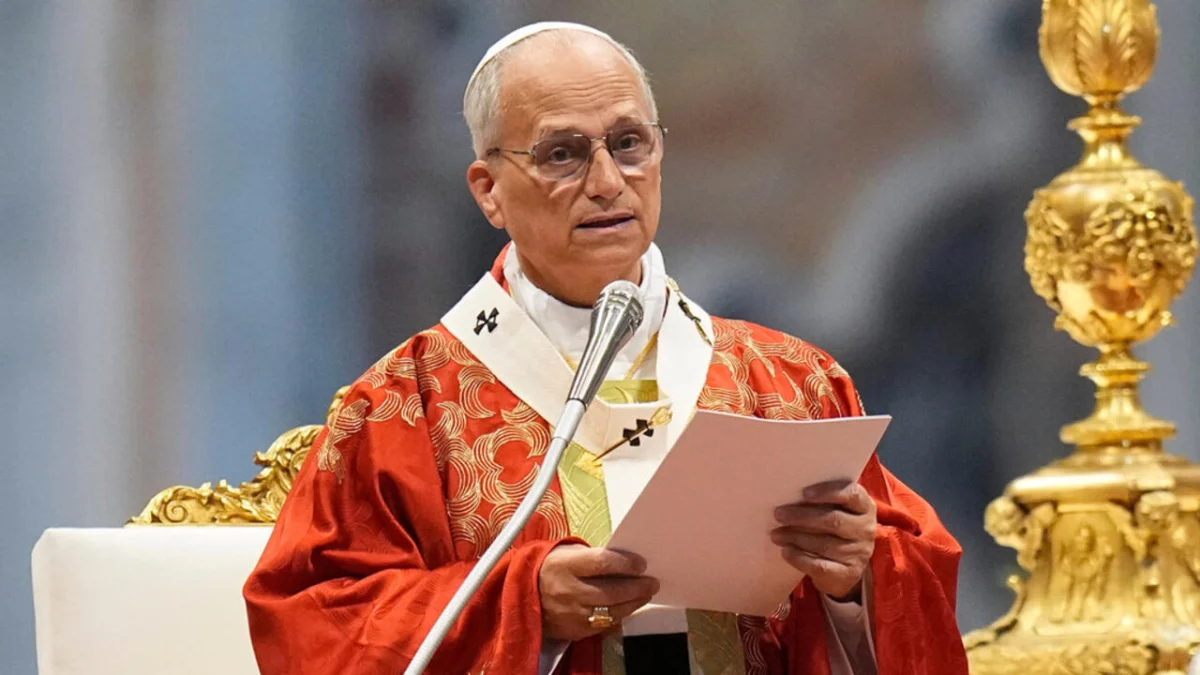
PHILADELPHIA – As the United States marked its 250th anniversary on Friday, the celebrations were punctuated by an extraordinary intervention from the Vatican. In a pre-recorded video address broadcast to a gathering at the National Constitution Center in Philadelphia, Pope Leo XIV delivered a pointed appeal for "moderation" and "common ground," marking the pontiff’s most direct foray into the volatile landscape of American domestic politics to date.
The address, coming on the heels of a milestone sestercentennial, served as both a celebration of the American experiment and a stark warning regarding the current state of its civic health. While the Pope refrained from mentioning President Donald Trump by name, the subtext of his message—calling for an end to divisive rhetoric and a renewed commitment to the nation’s founding ideals—was widely interpreted as a rebuke of the current administration’s combative political style.
The Core Message: A Call to Civic Virtue
Pope Leo XIV’s speech centered on the necessity of "civility" in an era of deepening partisan polarization. Speaking to an audience of historians, constitutional scholars, and government officials, the pontiff argued that the endurance of the American republic relies not merely on its legal frameworks, but on the temperament of its citizens.
"A public discourse marked by moderation, respect for the views of others, and an ongoing effort to find common ground is not a sign of weakness," the Pope stated, his words broadcast across the hall in Philadelphia. "It is the very lifeblood of a democracy that seeks to flourish in an increasingly complex world."
The Pope’s remarks served as a meditation on the American identity, highlighting the role that "successive waves of immigrants" have played in constructing the nation’s history. This emphasis on immigration was widely viewed as a deliberate counter-narrative to the "America First" nationalist policies championed by the Trump White House.
Chronology of a Deteriorating Relationship
The tension between the Vatican and the Oval Office has been a defining feature of the current geopolitical era. The following timeline outlines the escalating friction that led to the Pope’s landmark address.
- Early 2026: Tensions surface as the Holy See expresses formal concern over the U.S. administration’s aggressive crackdown on immigration, specifically citing the humanitarian conditions at border detention facilities.
- March 2026: Pope Leo XIV delivers a blistering critique of the administration’s foreign policy, particularly regarding the escalating rhetoric and military posturing surrounding the conflict with Iran.
- April 2026: In a public attack, President Trump labels the Pope "weak" on crime and describes his foreign policy as "terrible," marking a new low in diplomatic relations between the two entities.
- May 2026: U.S. Secretary of State Marco Rubio makes an unannounced trip to the Vatican in a "friendly and constructive" bid to ease tensions, signaling internal administration concerns over the optics of a public feud with the world’s most prominent moral leader.
- July 4, 2026: Pope Leo XIV delivers his sestercentennial address, explicitly calling for a return to founding ideals and urging Americans to move beyond the politics of division.
Supporting Data: The Widening Divide
The Pope’s intervention comes at a time when sociopolitical data suggests the American fabric is under unprecedented strain. According to recent longitudinal studies from the Pew Research Center and the Brookings Institution, the gap between partisan voters has reached its widest point since the U.S. Civil War.
The Polarization Index
Recent data indicates that nearly 70% of Americans believe the country is more divided today than it was at the turn of the decade. Key indicators include:
- Media Consumption: Over 80% of voters now rely exclusively on news outlets that align with their preexisting political biases, effectively eliminating a "shared reality" for civic debate.
- Immigration Sentiment: While historically a nation of immigrants, polling data from mid-2026 shows a stark 45-point divide between political parties regarding the economic and cultural impact of migration, mirroring the friction points raised by the Vatican.
- Institutional Trust: Public confidence in the judiciary, the legislature, and the electoral process has hit record lows, providing the backdrop for the Pope’s call for a "solemn recommitment" to the Constitution.
Official Responses: A Divided Reaction
The Vatican’s address has elicited a predictable, albeit intense, array of responses from the American political establishment.
The White House Perspective
President Trump, in a brief statement to reporters outside the White House, dismissed the Pope’s comments as "the musings of a man who doesn’t understand the realities of the modern world." Administration officials have maintained that the Pope’s "naive approach" to international security ignores the threats posed by foreign adversaries, doubling down on the claim that the Vatican is out of touch with the security needs of the American people.
The Congressional View
On Capitol Hill, the reaction was predictably split. Senate leadership praised the Pope’s message as a "necessary reminder of the moral foundations of our government." Conversely, a coalition of conservative lawmakers issued a statement arguing that the Vatican should "refrain from interference in the domestic policy decisions of a sovereign nation," emphasizing that the United States is not a theocracy.
The Intellectual Community
Prominent constitutional scholars at the National Constitution Center, where the address was delivered, lauded the Pope’s timing. "By framing his speech around the 250th anniversary, the Pope effectively held a mirror up to the nation," said Dr. Elena Vance, a historian of American democracy. "He wasn’t just criticizing a president; he was questioning whether the current political generation has the capacity to uphold the principles of 1776."
Implications: The Moral Authority vs. State Power
The implications of this standoff are profound, touching on the nature of soft power in the 21st century.
The Global Stage
For the international community, the public rift between Washington and the Vatican represents a significant shift in diplomatic norms. Historically, the U.S. and the Holy See have maintained a "working relationship," even when ideological differences existed. The current public sparring indicates a breakdown in traditional channels of influence. Analysts suggest that the Pope’s decision to speak directly to the American people—bypassing the White House—is a strategic move to appeal to the American Catholic electorate, a demographic that remains a critical swing bloc in national elections.
The Future of Civic Discourse
The Pope’s call for "moderation" faces an uphill battle. In an environment where political identity is increasingly equated with moral righteousness, the concept of "common ground" is often viewed as a form of surrender. By framing the issue as a "solemn recommitment" to founding ideals, the Pope has attempted to reframe the debate from a partisan squabble into a patriotic duty. Whether this can effectively influence the behavior of a deeply entrenched electorate remains to be seen.
Long-term Diplomatic Consequences
The Vatican’s involvement in U.S. politics may also herald a more active, and perhaps more provocative, role for the Holy See in Western domestic affairs. As populism rises across Europe and the Americas, Pope Leo XIV’s strategy suggests a transition toward a "prophetic" papacy—one that is willing to risk diplomatic isolation to uphold what it perceives as essential humanitarian and ethical truths.
Conclusion: A Republic at a Crossroads
As the fireworks faded over Philadelphia, the lingering question was not whether the Pope’s words would be heeded, but whether they would be heard above the noise of a fractious political climate. The 250th anniversary of the Declaration of Independence was intended to be a moment of national unity; instead, it has become a diagnostic test for a country struggling to reconcile its past with a polarized present.
Pope Leo XIV’s intervention is a stark reminder that even in a secular republic, the language of morality, history, and civic virtue continues to hold power. Whether that power is enough to bridge the divide between the White House and the Vatican—or more importantly, between the American people themselves—is the defining challenge of this next chapter in the American story.