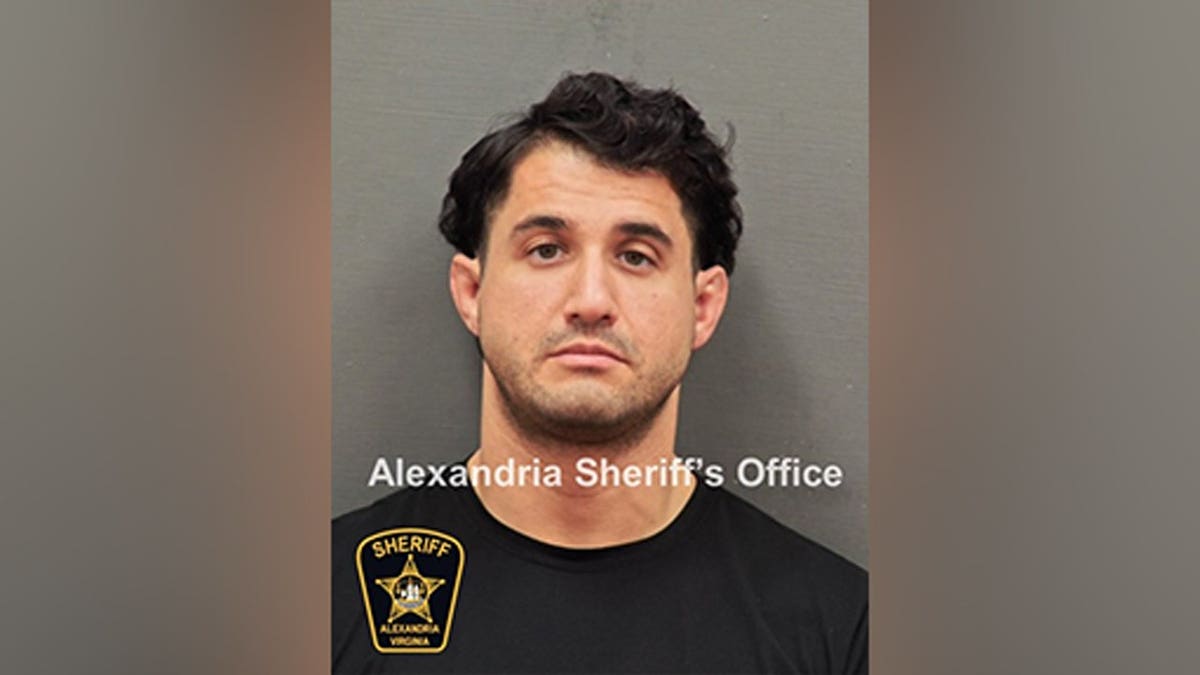
ARLINGTON, VA — A newly appointed Arlington County police officer has been arrested and charged with malicious wounding following an investigation into an off-duty physical domestic dispute. The arrest of 31-year-old Vincent Baglio has sent shockwaves through the local department, prompting swift condemnation from police leadership and raising critical questions about vetting processes, probationary oversight, and the standards of conduct expected of those who wear the badge.
Baglio, an Arlington resident who had only recently joined the department, was placed on administrative leave immediately following his arrest. The case highlights the ongoing challenges law enforcement agencies face nationwide regarding off-duty officer misconduct and the rigorous protocols required to maintain public trust.
Main Facts of the Case
The criminal charges against Vincent Baglio stem from a domestic incident that occurred in late May. According to official statements released by the Arlington County Police Department (ACPD), detectives initiated a comprehensive investigation after a victim came forward to report an assault.
The Defendant and the Accusation
Vincent Baglio, 31, faces a felony charge of malicious wounding under Virginia law. The arrest warrant was executed after ACPD detectives concluded their initial investigation into allegations that Baglio physically assaulted an acquaintance inside a private residence.
According to police documents, the altercation escalated from a verbal dispute. "During a conversation, the suspect allegedly physically assaulted the victim and made statements threatening harm to them," the ACPD stated in an official release. Authorities confirmed that Baglio and the victim were known to each other, indicating the incident was domestic in nature rather than a random act of violence.
Employment Status and Immediate Sanctions
Following his arrest, Baglio was stripped of his police powers and placed on administrative leave. This suspension will remain in effect pending the dual outcomes of an ongoing criminal prosecution and an internal administrative investigation conducted by the ACPD’s Office of Professional Standards.
Chronology of Events
The timeline of the case presents a complex series of events, particularly concerning the overlap between the date of the alleged assault, Baglio’s hiring date, and the subsequent filing of the formal police report.
+------------------+-------------------------------------------------------------+
| Date             | Event                                                       |
+------------------+-------------------------------------------------------------+
| May 24, 2024     | Alleged off-duty physical assault occurs at a residence     |
| June 2024        | Vincent Baglio officially joins Arlington County Police     |
| June 30, 2024    | Victim formally reports the assault to law enforcement      |
| Early July 2024  | ACPD detectives investigate; arrest warrant executed        |
| July 2024        | Baglio placed on administrative leave; investigations begin |
+------------------+-------------------------------------------------------------+
The Assault (May 24, 2024)
The alleged physical altercation occurred inside a residence. At the time of the incident, Baglio was off-duty. Details regarding the severity of the victim’s injuries have not been fully disclosed to protect the victim’s privacy, but the charge of malicious wounding indicates that significant physical harm or the intent to cause permanent disfigurement or disability was present.

Employment Commencement (June 2024)
According to official department records, Baglio was hired by the Arlington County Police Department in June 2024. The chronological gap between the alleged incident on May 24 and his official employment start date in June suggests the offense occurred just prior to, or during the final administrative stages of, his induction into the department. This timing has drawn intense scrutiny regarding the background check processes utilized during the hiring phase.
The Report and Arrest (June 30, 2024)
More than a month after the alleged altercation, the victim formally reported the assault to law enforcement on June 30. Because the suspect was an active-duty police officer, the ACPD mobilized its investigative units to ensure an objective and thorough inquiry. Following a multi-day probe by detectives, sufficient probable cause was established to secure an arrest warrant for malicious wounding, which was subsequently executed.
Supporting Data and Legal Context
To understand the gravity of the allegations against Baglio, it is necessary to examine the specific legal definitions and potential penalties associated with the charges in the Commonwealth of Virginia.
Understanding Virginia’s Malicious Wounding Statute
In Virginia, malicious wounding is prosecuted under Virginia Code § 18.2-51. The statute defines the offense as follows:
"If any person maliciously shoot, stab, cut, or wound any person or by any means cause him bodily injury, with the intent to maim, disfigure, disable, or kill, he shall be guilty of a Class 3 felony."
To secure a conviction for malicious wounding, prosecutors must prove two distinct elements beyond a reasonable doubt:
- The Physical Act: The defendant caused bodily injury to the victim by wounding, cutting, stabbing, shooting, or other physical means.
- The Intent (Malice): The defendant acted with "malice" and with the specific intent to maim, disfigure, disable, or kill the victim.
Under Virginia law, a Class 3 felony is an exceptionally serious charge. If convicted, Baglio faces a mandatory minimum sentence of five years, with a maximum penalty of up to 20 years in a state correctional facility, alongside potential fines of up to $100,000. If the prosecution establishes that the wounding was "unlawful" but lacked premeditated malice, the charge may be reduced to unlawful wounding, which is a Class 6 felony carrying a maximum sentence of five years.
Official Responses
The response from Arlington County leadership was immediate, emphasizing a policy of zero tolerance for domestic violence and officer misconduct.
Statement from Police Chief Andy Penn
Arlington County Police Chief Andy Penn issued a strongly worded statement addressing the arrest, seeking to reassure the public that the department would not shield its own members from criminal prosecution.
"I want to assure our community that the serious criminal allegations in this case represent conduct that is wholly unacceptable and fundamentally inconsistent with the values, standards and responsibilities of our agency," Chief Penn stated. "Such actions are in direct contradiction to the oath we take and the professional expectations we place on every law enforcement officer."
Chief Penn emphasized that the department is pursuing a parallel, two-pronged investigation to ensure absolute accountability:
- The Criminal Investigation: Managed by detectives to gather evidence for the Commonwealth’s Attorney to prosecute the case in court.
- The Internal Administrative Review: Conducted by Internal Affairs to determine policy violations, which will dictate Baglio’s future employment status independent of the criminal trial’s outcome.
"We remain steadfast in our commitment to holding ourselves accountable and taking appropriate action based on the findings of those investigations," Penn added.
Implications and Broader Context
The arrest of Officer Baglio occurs at a time of heightened national scrutiny regarding police accountability, background screening efficiency, and the handling of domestic violence allegations within law enforcement families.
The Challenge of Police Domestic Violence
Studies compiled by the National Center for Women & Policing indicate that domestic violence is a systemic issue within law enforcement families, with some estimates suggesting domestic abuse occurs at higher rates among police households than the general population. The power dynamics, access to weapons, and knowledge of victim shelter protocols can make domestic violence cases involving officers uniquely dangerous and difficult to prosecute.
The ACPD’s decision to publicly arrest Baglio and proceed with felony charges reflects a modern shift toward transparency, contrasting with historical criticisms that police departments occasionally sought to resolve domestic disputes internally or through informal mediation to protect officers’ careers.
Comparative Case: On-Duty vs. Off-Duty Prosecutions
The controversy surrounding Baglio’s off-duty arrest shares headlines with other high-profile prosecutions of law enforcement officers across the nation, illustrating the diverse legal challenges agencies face today.

For instance, in Boston, Massachusetts, Police Officer Nicholas O’Malley was recently charged with manslaughter following an on-duty shooting of a carjacking suspect. In that case, Suffolk County District Attorney Kevin Hayden asserted that body-worn camera footage and witness statements directly contradicted O’Malley’s self-defense claims.
The Boston incident sparked intense debate, with law enforcement advocates, including former Bristol County Sheriff Tom Hodgson, criticizing the prosecution as an unprecedented overreach that undermines an officer’s ability to make split-second decisions in life-threatening situations.
While the Boston case involves on-duty tactical decisions, and the Arlington case involves off-duty domestic conduct, both highlight a broader societal demand: the expectation that law enforcement officers must be held to the same—if not higher—legal standards as the citizens they protect.
Vetting and Recruitment Pressures
The timing of Baglio’s hiring raises significant questions regarding the efficacy of background investigations. With law enforcement agencies across the United States facing severe staffing shortages, many departments have streamlined hiring pipelines or increased recruitment incentives.
Because the alleged assault took place on May 24, and Baglio was officially hired in June, investigators will likely look into whether any red flags were missed during his final vetting phase, or if the incident simply occurred after his background check had already been completed but before his formal swearing-in ceremony. This gap exposes a vulnerability in municipal hiring practices, suggesting that continuous monitoring or final-stage behavioral checks may be necessary before new recruits are granted police powers.
Next Steps in the Judicial Process
Vincent Baglio’s criminal case will proceed through the Arlington County court system. As a defendant, he is presumed innocent until proven guilty in a court of law. Legal experts anticipate that preliminary hearings will focus on the severity of the victim’s physical injuries and the presence of malicious intent, which are critical to sustaining the high-level felony charge of malicious wounding.
Meanwhile, the Arlington County Police Department faces the task of restoring community trust, reinforcing internal ethical standards, and ensuring that its recruitment procedures are robust enough to prevent similar incidents in the future.