The landscape of Indian sports cinema is about to witness a monumental shift. Jio Studios and Aatpat Productions have officially unveiled the teaser and a global release date for Khashaba, the highly anticipated biographical sports drama directed by the visionary filmmaker Nagraj Manjule. The film, which chronicles the life of Khashaba Dadasaheb Jadhav—the wrestler who etched his name in history as independent India’s first-ever individual Olympic medalist—is slated for a worldwide theatrical premiere on January 1, 2027.
By returning to his roots in Marathi-language cinema, Manjule, the force behind modern masterpieces like Fandry and Sairat, promises a raw, visceral, and deeply patriotic exploration of a man who rose from the humble mud-pits of Maharashtra to the global podium in Helsinki.
The Genesis of a Legend: Main Facts and Narrative Scope
Khashaba is not merely a sports biopic; it is a period piece that captures the spirit of a nation finding its footing. The film centers on the life of Khashaba Dadasaheb Jadhav, whose bronze medal victory at the 1952 Helsinki Olympics served as a beacon of hope for a country that had only recently cast off the shackles of colonial rule.
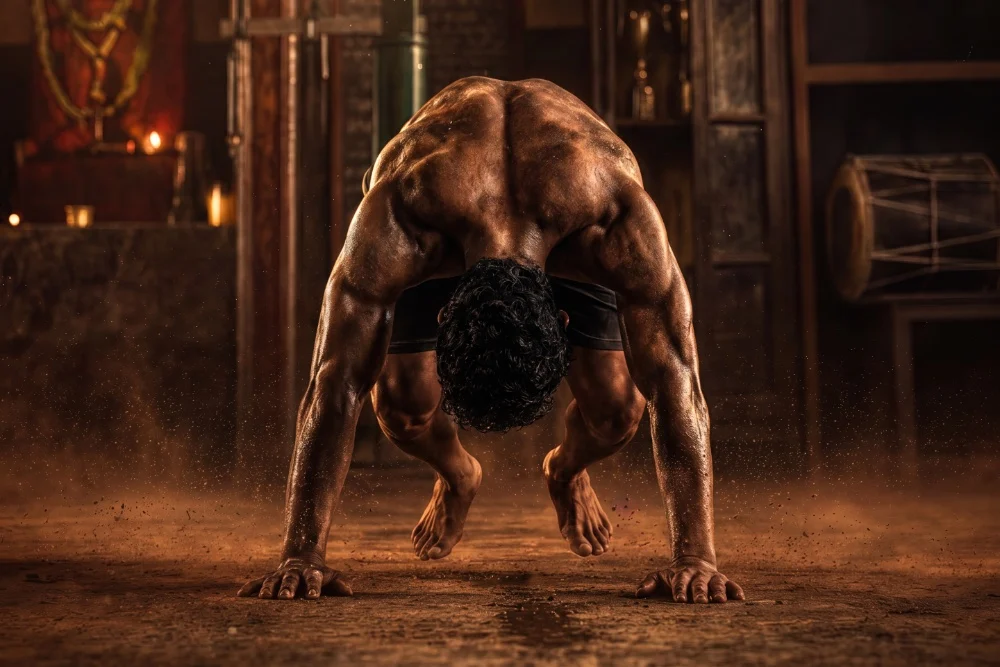
The teaser, which has already begun to generate significant buzz, offers a glimpse into the traditional akharas—the sacred, mud-filled wrestling pits of Maharashtra where Jadhav honed his craft. It contrasts the gritty, earthy reality of rural Indian wrestling with the cold, high-stakes international arena of the Olympics, setting the stage for a narrative that balances personal struggle against the backdrop of national identity.
Director Nagraj Manjule, known for his unflinching gaze on societal structures and human resilience, brings a distinct directorial sensibility to the project. The film is produced by Jyoti Deshpande of Jio Studios and Gargee Kulkarni of Aatpat Productions. While the identity of the lead actor remains a closely guarded secret—selected through an exhaustive audition process that screened thousands of hopefuls—the supporting cast is a powerhouse of Marathi talent, including Jitendra Joshi, Mahesh Manjrekar, Girish Kulkarni, Vaibhav Mangale, and Chhaya Kadam.
A Cinematic Chronology: Manjule’s Artistic Evolution
To understand the significance of Khashaba, one must trace the trajectory of Nagraj Manjule’s career. Manjule burst onto the national consciousness with Fandry (2013), a searing indictment of caste discrimination that won the National Film Award for Best First Film of a Director. He followed this with Sairat (2016), a seismic shift in regional cinema that became the highest-grossing Marathi film of its time, capturing the hearts of millions with its tragic yet poetic romance.
After the overwhelming success of Sairat, Manjule’s career took a pan-Indian turn. His 2022 Hindi-language feature, Jhund, starring the legendary Amitabh Bachchan, was a poignant commentary on class and the transformative power of sport. Earlier this year, he further cemented his reputation for high-concept storytelling with the Prime Video crime series Matka King, starring Vijay Varma.
Khashaba represents a homecoming of sorts. By returning to Marathi cinema to tell a story of regional pride that transcends into national glory, Manjule is effectively bridging the gap between his grassroots aesthetic and the scale of a grand biographical epic. The inclusion of the legendary composer duo Ajay-Atul—frequent collaborators of Manjule—ensures that the film’s sonic landscape will be as emotionally resonant as its visuals.
The Historical Context: Khashaba Dadasaheb Jadhav
The legacy of Khashaba Dadasaheb Jadhav is one of the most overlooked chapters in Indian sporting history. Born in Goleshwar, Satara, in 1926, Jadhav was a product of the akhara culture. His journey to the 1952 Olympics was fraught with financial hurdles and bureaucratic apathy. Unlike modern athletes who benefit from state-of-the-art infrastructure and sponsorships, Jadhav had to rely on the generosity of his community and his own indomitable willpower to reach Helsinki.
His bronze medal in the bantamweight wrestling category was not just a personal triumph; it was a defiant statement of intent for a young republic. For decades, his achievement was relegated to the footnotes of history books, often overshadowed by the team-based successes of Indian field hockey. Khashaba seeks to rectify this, elevating the man who once famously said that he did not receive the recognition he deserved during his lifetime.
Production Insights and Official Perspectives
The production of Khashaba reflects the evolving ambition of Jio Studios. Having previously backed high-profile projects like the Dhurandhar duology and the historical epic Raja Shivaji, Jio Studios has demonstrated a clear intent to invest in stories that are culturally rooted yet globally relevant.
Jyoti Deshpande, in her capacity as producer, has emphasized that Khashaba is a project of national importance. The collaborative synergy between Jio and Aatpat Productions aims to marry the high production values of a major studio with the grounded, authentic storytelling that defines Nagraj Manjule’s filmography.
The audition process for the title role was intentionally rigorous. By selecting a relatively unknown face to portray an icon, the makers are ensuring that the audience connects with the character’s struggle rather than a pre-existing star persona. This decision highlights the production’s commitment to authenticity. The ensemble cast, featuring stalwarts like Mahesh Manjrekar and Girish Kulkarni, serves as a testament to the depth of the Marathi film industry, which continues to produce some of the most intellectual and socially conscious content in India.
Implications: The Future of the Sports Biopic
The release of Khashaba on January 1, 2027, marks a significant moment for the Indian film industry. In an era where biopics often lean toward stylized hero-worship, Manjule’s take is expected to be more nuanced.
1. Resurgence of Regional Stories
The success of films like Kantara and Kantara: Chapter 1 has proven that regional narratives, when scaled with the right vision, can dominate the national box office. Khashaba is poised to reinforce the idea that India’s greatest stories are found in its villages, not just its metros.
2. A Blueprint for Sports Dramas
Historically, Indian sports films have focused heavily on cricket. By focusing on wrestling—a sport deeply woven into the fabric of Indian tradition—Khashaba could pave the way for a more diverse exploration of India’s Olympic history, potentially inspiring films on other forgotten legends across archery, athletics, and shooting.
3. Cultural Preservation
Through the lens of cinematography and music, Khashaba acts as an archival tool. The depiction of 1950s India, the traditional wrestling techniques, and the socioeconomic reality of post-independence Maharashtra will serve as a cultural touchstone for future generations.
Conclusion: A Date with Destiny
As the countdown to January 1, 2027, begins, the expectations surrounding Khashaba are immense. Nagraj Manjule has never been a filmmaker to choose the easy path. He prefers the complex, the difficult, and the overlooked. In choosing to tell the story of Khashaba Dadasaheb Jadhav, he is not just reviving a memory; he is challenging the audience to re-examine what it means to be a hero in a country that is often quick to forget its own history.
The film is more than a biopic; it is a mirror held up to the struggles of every Indian athlete who has had to fight against the odds to represent the tricolor on the world stage. With the combined creative force of Manjule, the backing of Jio Studios, and a story as powerful as Jadhav’s, Khashaba is poised to be one of the defining cinematic achievements of the decade.
For the audiences waiting to witness this transformation, the teaser is merely the beginning of an epic journey that starts in the mud-pits of Satara and ends in the halls of immortality.